 Addy
Addy  Addly
Addly  Goalify
  Monet
Monet  Reviso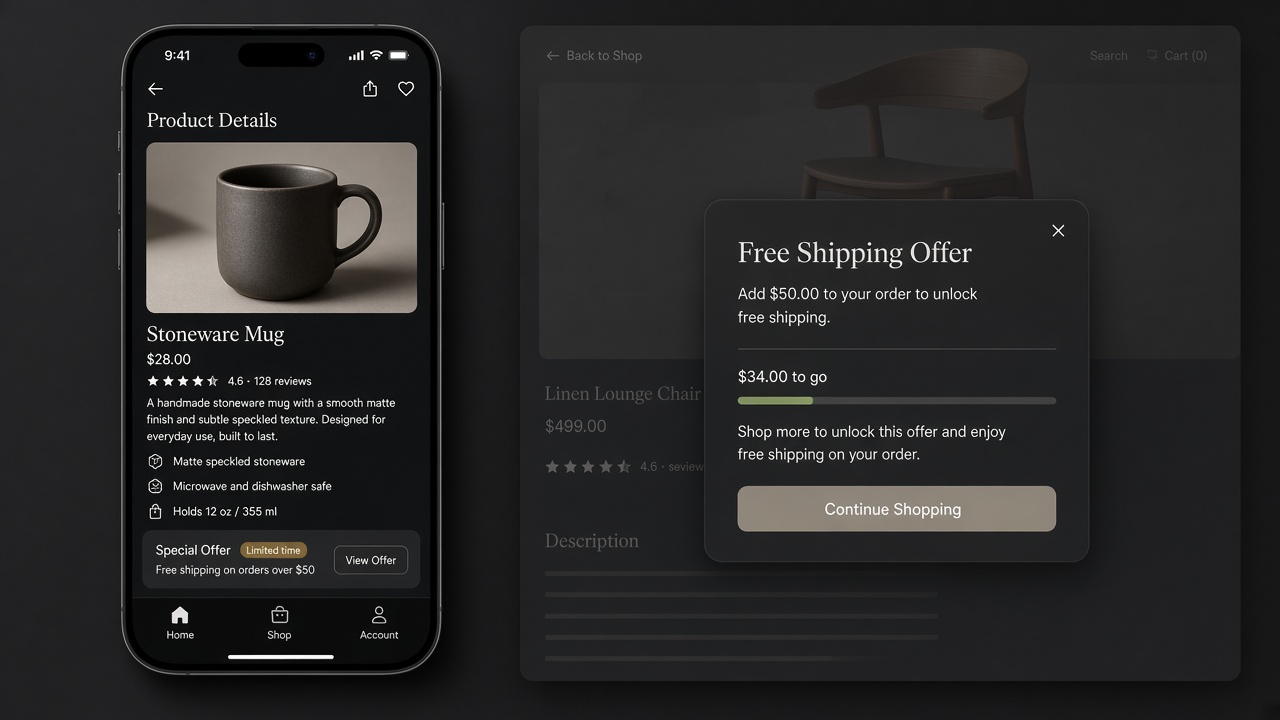
Key takeaways
- Google can treat a full-screen mobile popup that blocks the page on arrival as an intrusive interstitial. That is a ranking issue, not a myth.
- A popup after add to cart, at checkout, or on exit is a response to an action. It is not the same as a takeover on landing.
- Cookie notices, age gates and login dialogs are the exceptions Google has described. A 15% newsletter is not one of them.
- Monet does not open on a browse timer. It waits for add to cart, checkout, or exit. That is the safer shape. It is not a promise of zero SEO impact.
Popups can hurt Shopify SEO when they behave like a gate. Google's mobile guidance on intrusive interstitials is about a page that, when reached from search, is covered by a full-screen layer before the shopper can read it. The content they clicked is behind a promotion. That pattern can be a ranking problem. It is not a story invented by popup vendors, and it is not a reason to ban every overlay.
What Google actually described
The pages at risk are mobile landing pages. The popup shows on arrival, or immediately after, and it covers the main content. A newsletter, an app install, or a discount that has to be dismissed before the product can be read. Google has carved out things a page must show: a cookie or legal notice, an age gate, a login. A marketing offer is not on that list.
A banner that uses a strip of the screen is not the same object as a full-screen takeover. Size and timing are the whole argument.
What a selling popup is allowed to be
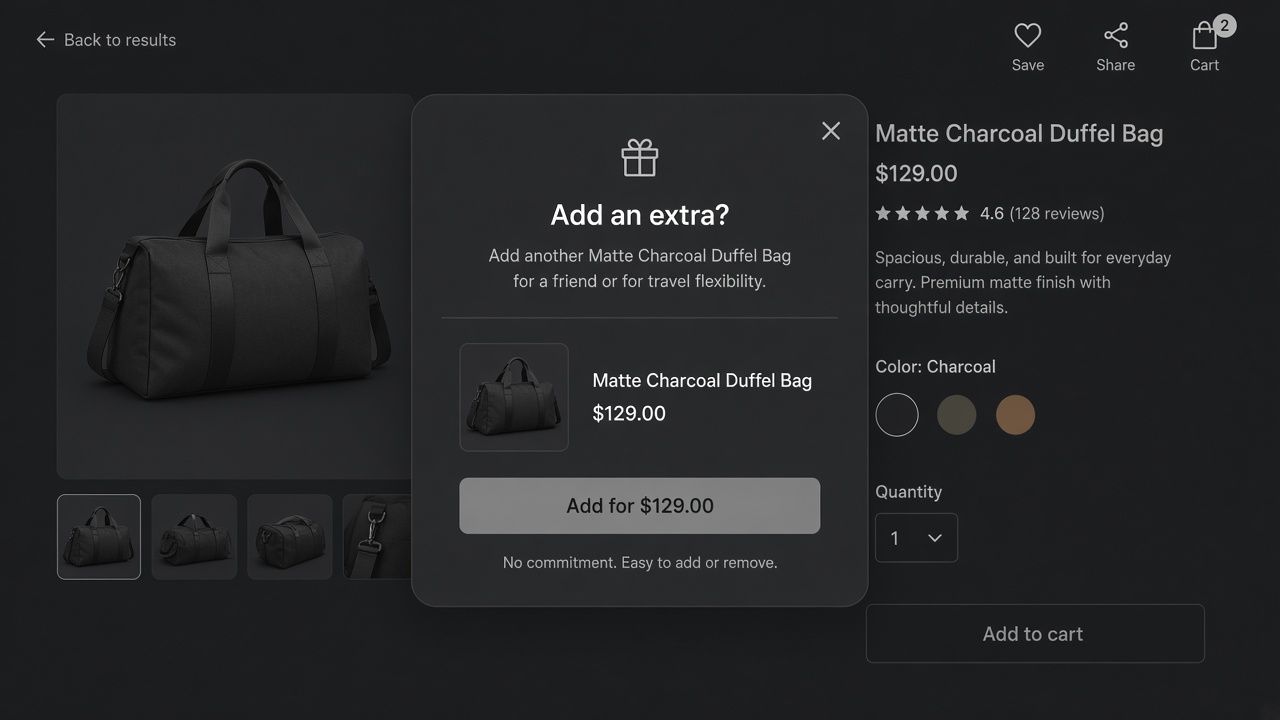
Monet does not open because a timer expired while someone was reading. It opens after add to cart, when checkout starts, or when the shopper is leaving. The shopper has already reached the product. The offer is a second item, not a wall in front of the first one.
That is a better shape than a page-load interstitial. It is not a claim that Google has reviewed Monet, and it is not a claim that the popup has no effect on anything. A full-screen layer is still a full-screen layer if you let it cover the product after the tap. Keep one product in it. Make the dismiss control obvious. Do not chain a second popup after a no.
Monet does not ask for an email. The SEO risk of a newsletter gate is a different product, usually a different app, firing on arrival. Leaving that app on a five-second delay does not make it "after the content".
A practical split
| Popup | Timing | SEO posture |
|---|---|---|
| Full-screen discount on landing | On load | The pattern Google warned about |
| Newsletter covering the product | On load or a short delay | Same family. Delay is not a defence |
| Cookie or age notice | On load, as small as the law allows | The exception, still not a place for a sale |
| Offer after add to cart | After a click | A response, not a gate |
| Offer as checkout starts | After they chose to pay | A response |
| Exit on desktop | After they move to leave | Weaker, and easy to overuse |
If you want the offer without a popup at all, put one complement in the Addy drawer. The product page stays clear. The ask happens in the cart they just opened.
What this article will not promise
No one can honestly say "popups do not affect SEO". A theme that injects a full-screen app on every collection URL can affect it. Check the mobile landing page from a search result, not from the theme editor. If the first thing on the screen is a sale, remove that app before you blame the product page.
What to look at on a phone
Google's intrusive-interstitial guidance is about mobile pages reached from search. The content the person clicked is covered, on arrival or immediately after, by a layer they have to dismiss. The examples Google has pointed at are promotions: a newsletter, an app install, a discount. Legal notices, cookie consent, age gates and sign-in are the carve-outs, because the page cannot function without them. A 15% code is not on that list.
A strip of the screen is a different object from a layer that hides the product. You do not need a pixel count to see which one you shipped. Hold the phone. If you can read the product title, the price and the add-to-cart button without dismissing anything, you are in the safer shape. If the first tap is "no thanks", you are in the pattern the guidance describes.
Do this in a private window, from a results page, on a phone. The theme editor hides the problem, because you are already inside the page. Check the URLs search actually lands on.
| URL people land on | What you want to see first | What to remove |
|---|---|---|
| A product | Title, price, add to cart | A full-screen code on load |
| A collection | The grid | The same code, especially with a short delay |
| A blog post | The article | A newsletter that covers the post |
| The homepage | The homepage | An app-install wall |
| After they tap add to cart | The offer, easy to dismiss | A second wall after they decline |
Collection and blog URLs are where newsletter apps usually fire, because that is where new visitors arrive. A product-page upsell that waits for a click does not repair a collection page that is covered on load. Audit every template that ranks, not only the one you redesigned.
Delay, size, and a second popup
A popup that waits five seconds and then covers the screen is still the first thing that happens on the visit. The shopper has not finished reading. Moving the timer from zero to five does not turn a gate into an answer.
A banner that uses a band at the top or bottom leaves the product readable. That is the shape to prefer for anything that must be on screen at once, including consent. Consent can still be larger than it needs to be. A consent layer that is really a sale, with a discount in the same modal as the cookie buttons, borrows the legal exception for a promotion. Split them. The legal control stays as small as the law you operate under allows. The sale waits for a click.
A second popup after "no" is a second gate. One offer. Monet opens after add to cart, when checkout starts, or when the shopper is leaving. It does not open because a browse timer expired. It does not ask for an email. That is a better shape than a page-load interstitial. It is not a review by Google, and it is not a promise that the popup has no effect. If you let that offer go full screen and hide the product after the tap, you have rebuilt the wall one step later. Keep one product in it. Make the dismiss control obvious.
Exit on a phone is a weak signal, and a full-screen exit layer on a landing URL sits closer to the warned pattern than a small card after add to cart. Prefer the click. The offer examples are in pre-purchase upsells.
Other tools that can still cover the page
Walk the published theme with every app embed on, because the popup you remember is rarely the only one.
- A newsletter or spin-to-win app set to "on arrival" or "after a delay".
- A countdown bar that expands into a modal.
- A cookie tool styled as a full-screen sale.
- A slide cart and a popup both opening on the same add, so the screen is two layers deep.
- An old additional script on a page that still injects a modal. Those scripts are a poor place to keep a promotion anyway.
Turn them off one at a time and reload the landing URL. The one that changes the first screen is the one that matters. Leave Monet, or the Addy drawer, for the moment after they choose a product. The product page they found in search should be readable when it loads.
Install Monet when the offer should follow an action. Check the landing URL on a phone before you call the store clean.
Frequently asked questions
Do popups hurt Shopify SEO?
A full-screen popup that covers a mobile landing page as soon as it loads can. Google has said those intrusive interstitials can make the page harder to reach and can affect ranking. An overlay that follows a tap is a different pattern.
Are add-to-cart popups interstitials?
They cover content, but they follow an action the shopper just took. Google's warning is aimed at popups that block the content before the shopper can read it. Do not treat that as a certificate. Keep the popup small enough to dismiss, and do not fire it on arrival.
What about exit-intent on mobile?
Exit on a phone is a weak signal. A full-screen exit layer on a landing page is closer to the thing Google described than a small cart offer after a click. Prefer the add-to-cart moment.
Does Google penalise every email popup?
The public guidance is about intrusive interstitials on mobile search landing pages, not a ban on email. A newsletter that covers the screen on arrival is the risky version. Monet does not collect email at all.
Will installing Monet protect my rankings?
No app can promise that. Monet avoids the page-load takeover. Your other apps, your theme, and a cookie banner the size of the screen can still create the problem.
Does a five-second delay make a landing popup safe?
No. The shopper still meets a wall before they can read the page they opened. Delay changes the clock. It does not change the pattern.
How do I check my own store?
Open a product URL from a search result on a phone, in a private window. The first screen should be the product. A sale that has to be dismissed first is the pattern to remove.