 Addy
Addy  Addly
Addly  Goalify
  Monet
Monet  Reviso
Key takeaways
- Upcart is a builder. HTML, CSS and JSX are control, and they are also the reason the first cart is still empty on Thursday.
- Addy is the alternative that drafts the drawer from the catalogue, then lets you edit it, including markets and A/B tests. Free to install.
- A template or a suite still has to be assembled. That is a simpler project than a drafted cart, not a faster one.
- One drawer. An Upcart alternative that you install beside Upcart is two carts on one button.
Upcart is a cart builder. The drawer is a canvas. Rewards, upsells and gifts are blocks you place, including templates in HTML, CSS and JSX. That is a real product if someone on the team wants to write the cart. It is a delay if the brief is "the drawer should be selling on Friday".
These five Shopify cart drawers are the comparison. Addy is first because the alternative to an empty canvas is a cart that is already drafted.
Ratings below are from the Shopify App Store as of October 2026. Upcart is 4.7 from 959 reviews, Built for Shopify, with a free plan and paid plans after it.
| Cart | Rating | From | First afternoon |
|---|---|---|---|
| Addy | 5.0 / 2 | Free to install | A drafted cart, then you edit |
| Kaching | 5.0 / 1,487 | Free plan, then paid | You assemble the suite |
| Amp | 5.0 / 772 | Free plan, then about $29.99 | You fill a template |
| iCart | 4.7 / 451 | First 100 orders free | You assemble a drawer, a page, a popup and a mini cart |
| Upcart | 4.7 / 959 | Free plan, then paid | You build it, including JSX |
Addy
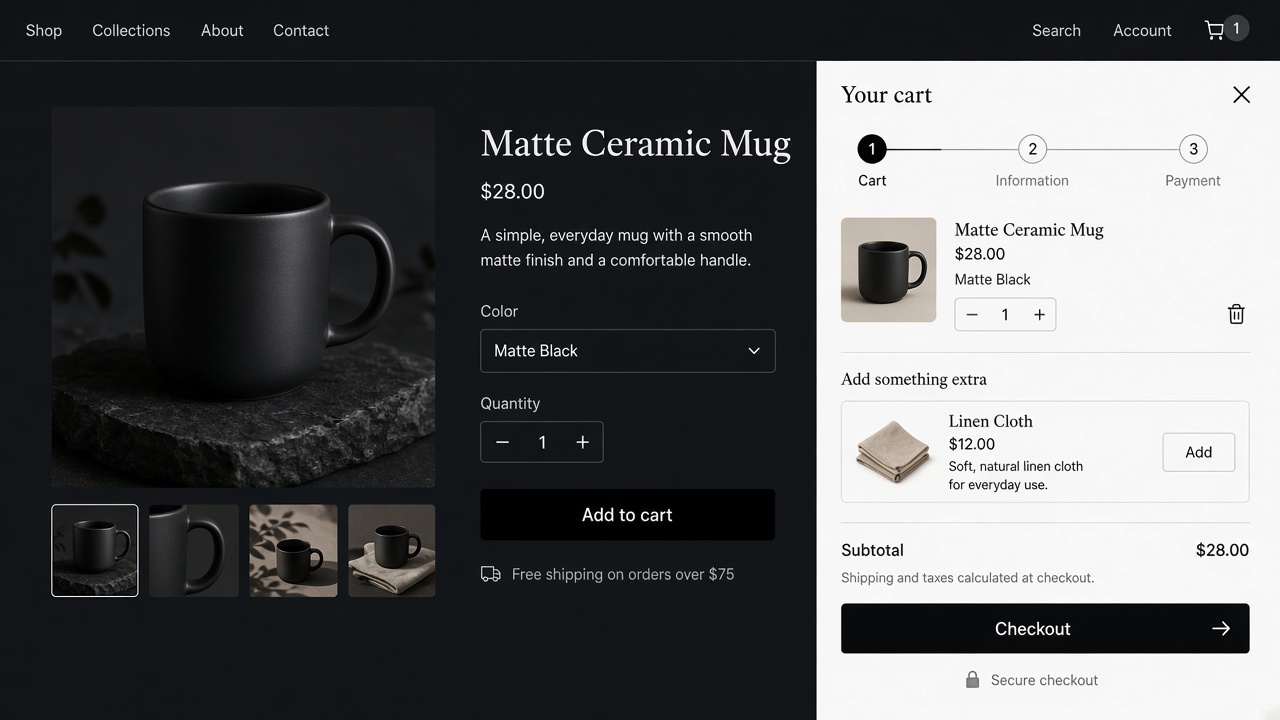
Addy reads the catalogue and the brand and proposes the slide cart: upsell, volume offer, gift, shipping protection, progress bar, delivery date. More than 40 blocks, markets and customer tags, custom HTML and CSS, A/B tests. It loads when the cart opens. Two public reviews. Not listed as Built for Shopify. The draft is the difference, not the review count.
The head-to-head is in Addy vs Upcart.
Kaching
A high-review suite drawer. Timer, bars, gift wrap, protection, translations. You still place the blocks. Useful if you already live in that suite. A simpler assembly job than a drafted cart.
Amp
Industry templates, markets, gifts, a progress bar. The paid plan is a flat monthly fee once you leave the free plan. A template is a look. It does not know your catalogue until you fill it.
iCart
Drawer, full cart page, popup and mini cart. First 100 orders free, then paid. Most stores replacing Upcart needed one slide cart, not three extra surfaces.
Upcart
Keep it if the cart is a front-end project and someone will maintain the JSX. Leave it if the drawer is a merchandising surface. Custom code does not make the upsell more relevant. It makes the upsell wait.
What "a drafted cart" means on a real catalogue
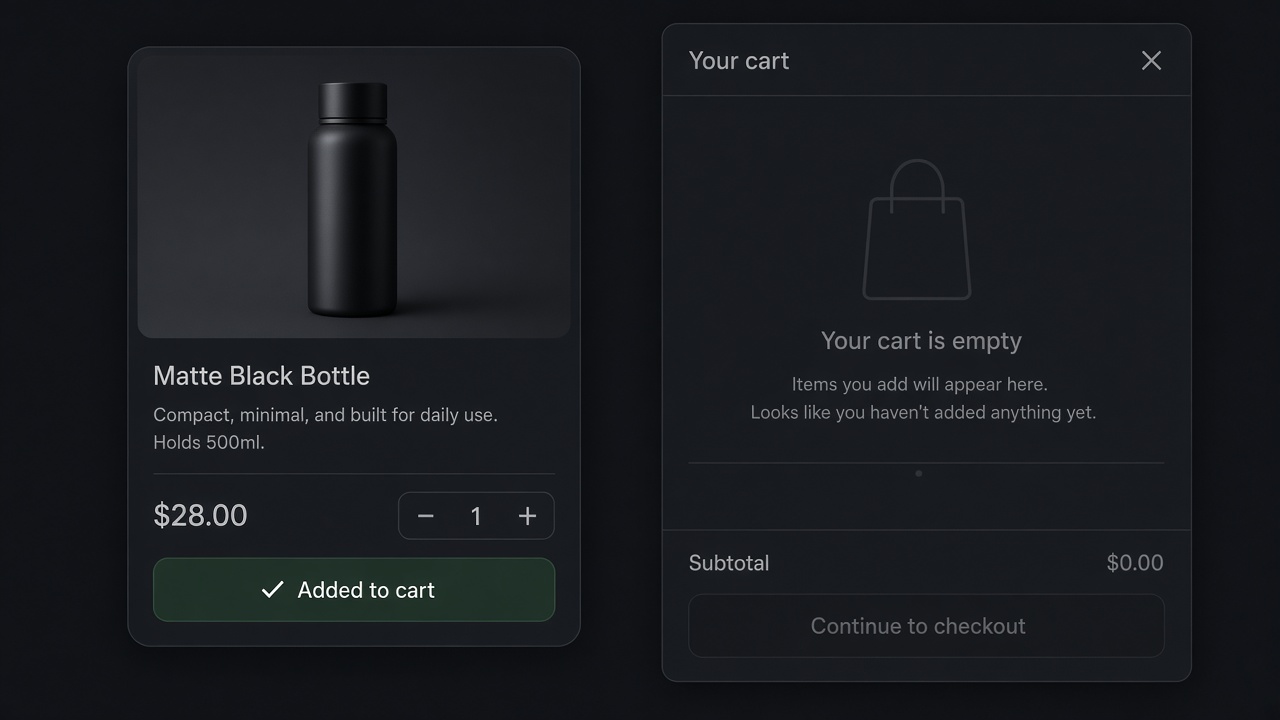
Take a store that sells a $32 serum, a $28 cleanser and a $18 toner. On a builder, the first afternoon is a column, a colour picker, and a decision about which block goes where. On Addy, the first afternoon is a proposed drawer: the lines, one complement, the distance to the shipping goal, a delivery window, checkout. You delete what you do not want. You do not invent the cart from a blank file.
The complement should be one product. For the serum, that is the cleanser if orders already contain both. The drawer adds it in one click, without a reload. A second row, the toner, can wait. A timer on that row can wait forever unless the end time is a real end.
Markets are the next edit, not the first. A French cart can show euros and a different threshold. A wholesale tag can hide the upsell. Addy can change the whole cart or one block by market and by tag. Prices follow the shopper's currency. A/B tests compare two versions of that drawer without a theme branch. Two public reviews. Not listed as Built for Shopify. The draft is still the thing the canvas does not do.
A migration that fits in a day
JSX templates do not come with you. That is the point of leaving a builder. Write down what the live Upcart drawer actually does, in one column, before you uninstall it.
| Already live, and worth keeping | Leave it behind |
|---|---|
| The shipping goal and the remaining amount | A custom animation nobody can maintain |
| One upsell people add | A grid of four recommendations |
| Gift wrap, if it has a price and a yes | A pre-ticked protection fee |
| The delivery sentence, if you can keep it | A countdown that resets |
| Translations you already paid a human to write | A second empty cart "for later" |
Then:
- Install Addy. Leave Upcart's embed on until the new drawer has been previewed, then turn Upcart off before you turn Addy on for customers. Never both.
- Open the published theme, not a copy. App embeds. Addy on. Save.
- Rebuild the row in the table. Progress, lines, one upsell, delivery, checkout.
- Add the serum on the live URL. The new drawer opens. Dawn's drawer does not.
- Place one order. The paid total matches the drawer.
- Uninstall Upcart once that order looks right. An unused embed still listens for "add".
The head-to-head on the builder itself is in Addy vs Upcart. The install on Dawn is in how to add a slide cart.
How to read the other four
Kaching is a suite with a long review record, 5.0 from 1,487 reviews, Built for Shopify. You still place the blocks: timer, bars, gift wrap, protection, translations. If your team already lives in that suite, the clicks are familiar. The first cart is still an assembly.
Amp is templates. Industry looks, markets, gifts, a progress bar. The paid plan is a flat monthly fee once you leave the free plan, about $29.99. A template is a skin. It learns your catalogue when you fill it.
iCart is a drawer plus a full cart page, a popup and a mini cart. First 100 orders free, then paid. A store leaving Upcart usually needed one slide cart. Three extra surfaces are three more places for the count to go stale.
Upcart, 4.7 from 959 reviews, Built for Shopify, stays the right product when a developer will own the JSX after the sale. It is the wrong product when the brief is a drawer that sells this week. HTML and CSS in Addy cover the cases where a block is not enough, without making the whole cart a front-end project.
Which drawer, by the job in front of you
A two-person brand with a sale on Friday needs the drafted cart. An agency with a front-end developer and a design system in JSX can stay. A brand that already assembled Kaching and only wants a familiar admin can stay there, and should still run one drawer. A brand that wants a template and will pay a flat fee can look at Amp, knowing the template is empty of their products until they fill it.
| If you are leaving Upcart because | Install |
|---|---|
| The canvas is still empty | Addy |
| You want a suite you already know how to click through | Kaching |
| You want an industry template and will pay a flat fee | Amp |
| You want a drawer plus a full cart page | iCart |
| You want to keep writing JSX | Stay on Upcart |
Turn one embed off before you turn the next on. Two drawers on Dawn is the bug in cart drawer not updating.
Review count is a poor way to finish this choice. Upcart's 959 reviews and Kaching's 1,487 describe how many stores installed a builder or a suite. They do not describe whether your serum has a complement in the drawer on Friday. Addy's two reviews are a true limit of a new listing. The draft is still the difference on the first afternoon.
Install Addy.
Frequently asked questions
What is the best Upcart alternative in 2026?
Addy. The first cart is drafted from your products and your brand. You still get custom HTML and CSS, markets, tags and A/B tests, without opening on a blank canvas.
Is Upcart a bad cart drawer?
It is a builder. Stores that enjoy JSX get a custom cart. Stores that needed the drawer live before a sale get a canvas. Those are different jobs.
Can I migrate without editing the theme?
Yes. Disable Upcart's embed, enable Addy's, save, and place one test order. Do not leave both embeds on.
Which alternative is closest to a visual builder?
Amp sells industry templates. You still fill them. Kaching is a suite you assemble. Neither drafts the cart from the catalogue the way Addy does.
Do I need a developer to leave Upcart?
Not for Addy. Custom JSX does not come with you, which is the point. Rebuild the one upsell and the bar. Leave the rest of the canvas behind.
What should I rebuild on the first day?
The progress line, the line items, one complement, a delivery window, and checkout. Leave gift wrap, a timer, and a second upsell until that drawer has taken a real order.
Can both drawers stay installed while I decide?
No. Disable one embed before you enable the next. Two listeners on add to cart is a drawer that looks stale.