 Addy
Addy  Addly
Addly  Goalify
  Monet
Monet  Reviso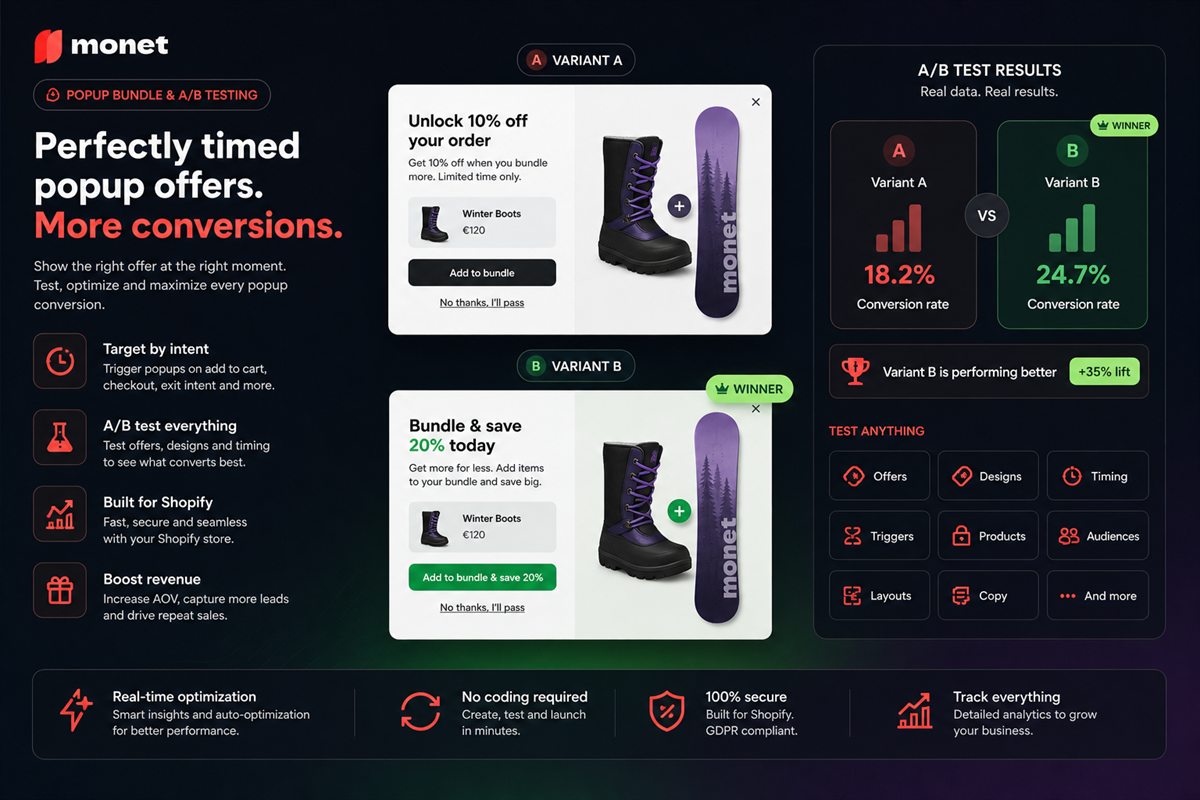
Key takeaways
- Test one variable: the SKU, the trigger, or the cap — not all three. A "new popup" vs "old popup" test teaches you nothing.
- Primary metric is attach rate of the offered SKU, plus checkout initiation, so you catch tests that add items and lose checkouts.
- Do not call a winner on 200 sessions. Overlay tests are noisy; wait for a sample you would defend in a meeting.
- Stop tests that hurt add-to-cart-to-checkout even if attach rate is up. A bigger basket that does not pay is not a win.
- Your real sample size is popup impressions, not store sessions. Most popups fire on a small slice of traffic.
To A/B test a Shopify upsell popup honestly, change one variable at a time (the offered product, the trigger, or the frequency cap), measure attach rate of the offered SKU alongside checkout initiation rate, and refuse to call a winner until you have enough popup impressions to defend the result. Most popup tests fail not because the maths is hard but because the team measures the wrong number and stops too early.
Popup tests fail in a particular way: the overlay gets more clicks, AOV ticks up in the test group, checkout initiation quietly drops, and someone ships the winner. Two weeks later revenue is flat and nobody connects it. You have to measure the thing you wanted (they added the SKU) and the thing you cannot afford to lose (they still paid).
What is an upsell popup A/B test?
An upsell popup A/B test splits your storefront traffic into two or more groups and shows each group a different version of the popup, or no popup at all. The groups run at the same time, on the same pages, so seasonality and traffic mix affect both equally. At the end, you compare a pre-agreed metric between groups and decide which version to keep.
The important word is pre-agreed. A test without a primary metric and a stopping rule written down in advance is not a test. It is a way to find a chart that agrees with you.
Why popup tests are harder than page tests
A product page test sees every visitor to that page. A popup only fires when a trigger happens: an add-to-cart, a checkout click, or a mouse leaving the viewport. That means:
- Your real sample size is popup impressions, not sessions. A small store can do a week of traffic and only generate a few hundred impressions.
- The people who see the popup are already high-intent. Small changes in their behaviour move revenue a lot in both directions.
- The popup can shift behaviour downstream. A shopper who declines an offer may still checkout, or may close the tab. Only the second outcome shows up as harm, and it shows up in a different metric.
If you are still choosing between triggers, read popup triggers ranked first. It is easier to test two SKUs on a trigger you trust than to test triggers and SKUs at once.
What should you test in a Shopify popup?
Test one variable. Good tests:
- This complementary SKU vs that one, same trigger and same cap.
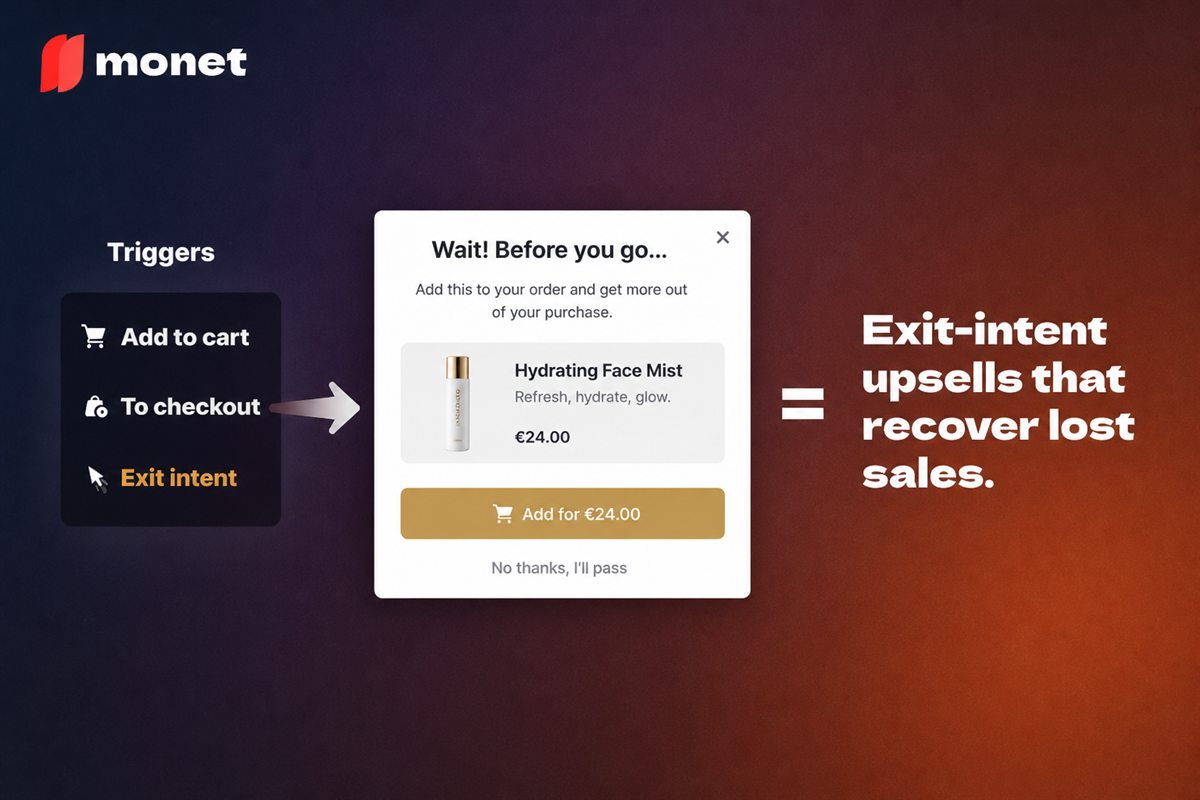
- Add-to-cart trigger vs exit-intent, same SKU.
- Session cap of one vs two, same SKU and trigger.
- Popup vs no popup (a holdout), everything else unchanged.
Bad tests:
- New design plus new SKU plus new trigger vs the old everything. If it wins, you do not know why. If it loses, you do not know what to keep.
- Button colour before the offer is even the right product.
- Copy tweaks on a popup that has never beaten a holdout.
How to set up the test on Shopify
- Write the hypothesis in one sentence. "Offering the 250g beans instead of the filter papers after a mug is added will raise attach rate without lowering checkout initiation."
- Pick the primary metric and the guardrail metric. Primary is attach rate of the offered SKU from this trigger. Guardrail is add-to-cart-to-checkout rate. Write down the drop in the guardrail that will stop the test.
- Make sure you can measure both. Your popup app should report impressions and adds per offer. If it does not, send
offer_shownandoffer_addedas custom events through a web pixel (Settings → Customer events) so they land next to your checkout events. - Split traffic by visitor, not by page view. A shopper who sees variant A on the product page and variant B in the cart is in both groups and neither.
- Decide the run length before you start. At least one full week. Two is safer. Do not look at the dashboard daily with the intention of stopping.
- Start the test and leave it alone.
Which metrics catch a false winner?
Track all of these for each variant:
| Metric | What it tells you |
|---|---|
| Offer impressions | Your real sample size |
| Offer adds (attach rate) | Whether the offer works |
| Checkout initiation rate | Whether the popup cost you buyers |
| Conversion to paid order | Whether the extra item survived to payment |
| Revenue per session | The number the business actually cares about |
If attach is up and checkout initiation is down, you did not find a better upsell. You found a speed bump. Revenue per session is the tiebreaker: a variant that lifts attach by a lot and lowers checkout initiation by a little may still win, but you have to see it in revenue, not infer it.
The sample size trap
Say your store does 4,000 sessions a week, 8% of shoppers add to cart, and the popup fires on every add. That is roughly 320 impressions a week, or 160 per variant. If variant A attaches at 10% and variant B at 12%, the difference is 16 adds vs 19 adds. Three shoppers. That is not a result; that is a Tuesday.
Overlays fire on a subset of sessions. Your real n is impressions, not store sessions. Do not declare a 12% lift on 180 views. If you cannot power the test, do not run it. Make a merchandising decision, ship it to everyone, and watch revenue per session for two weeks. That is not rigorous, but it is honest about what it is.
Common mistakes in popup A/B testing
- Peeking. Checking daily and stopping the moment one variant is ahead. The early lead is usually noise.
- Measuring clicks. Popup CTR is not attach. A click that opens a product page and abandons the cart is a loss dressed as engagement.
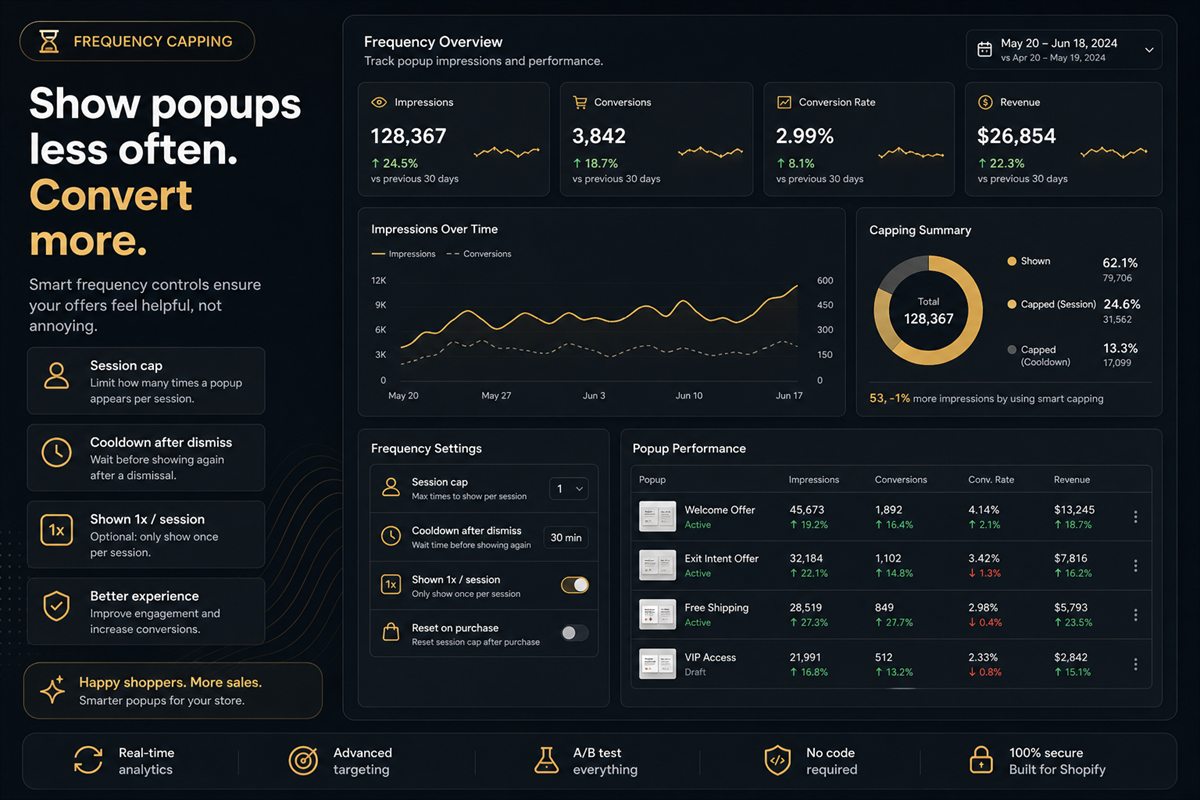
- Ignoring frequency. If the cap differs between variants, you are testing the cap, not the offer. Fix frequency capping first and hold it constant.
- Testing during a promotion. A sitewide sale changes what shoppers will accept in a popup. Test in a normal week.
- Forgetting the holdout. If you have never run popup vs no popup, every other test is optimising a guess.
Guardrails: when to stop a test early
Hard-stop the test if checkout initiation drops beyond the threshold you set in advance. Pre-commitment is the only thing that stops a team from "giving it another day" on a losing overlay. A reasonable rule: if the guardrail metric falls by more than you agreed and the gap has held for three consecutive days with meaningful traffic, kill the variant.
Do not stop early for a positive result. Early wins are where noise lives. Finish the planned run.
When not to A/B test a popup
Skip the test and use judgement when:
- You have fewer than a few hundred impressions per variant per week.
- The change is obviously right (fixing a broken dismiss button, removing a second product from a one-offer popup).
- You are still deciding whether the popup should exist. Run the holdout first.
Comparing your attach rate against what other stores see can help you decide whether a test is even worth running; see upsell popup benchmarks for how to read those numbers without over-trusting them.
A/B testing is not a personality. It is a way to stop arguing. Use it when you have enough traffic to be wrong in public. Use judgement when you do not.
Frequently asked questions
Should I test popup vs no popup first?
Yes, if you do not already know the overlay is net-positive. A holdout with no popup tells you whether the popup earns its place at all. Many stores skip this and spend months optimising a thing that should not exist.
Can I use Shopify's reports for this?
Not for overlay-level attach. Shopify's reports show order value and conversion, but not whether the popup did the work. You need the app's offer analytics or custom events (offer_shown, offer_added) sent through a web pixel under Settings → Customer events.
How long should an upsell popup A/B test run?
Through at least one full weekly cycle, so weekday and weekend traffic are both represented. Two weeks is a safer default for most stores. Stopping on a Tuesday because it "looks good" is how you ship noise.
What if my store has low traffic?
Run fewer tests and make each one bigger. Sequential changes with a long observation window beat a multi-variant experiment you cannot power. Watch revenue per session for two weeks after each change instead.
What metrics should I track when testing a Shopify popup?
Track offer impressions, offer adds (attach rate), checkout initiation rate, conversion to paid order, and revenue per session. Attach rate tells you whether the offer works; checkout initiation tells you whether it cost you buyers.
Is a higher popup click-through rate a win?
No. Clicks that do not add the product are still a no, they just took longer. Measure adds and downstream conversion, not clicks. A popup with a high click rate and a flat attach rate is usually confusing shoppers rather than selling to them.