


The Shopify Cart Drawer Guide — Design, Speed and Upsells That Convert
What makes a Shopify cart drawer sell: layout order, the blocks that matter, performance rules and the in-cart upsells worth running.
Shopify cart drawer and checkout guides: slide-out carts, in-cart upsells, abandonment fixes and everything between add-to-cart and payment.
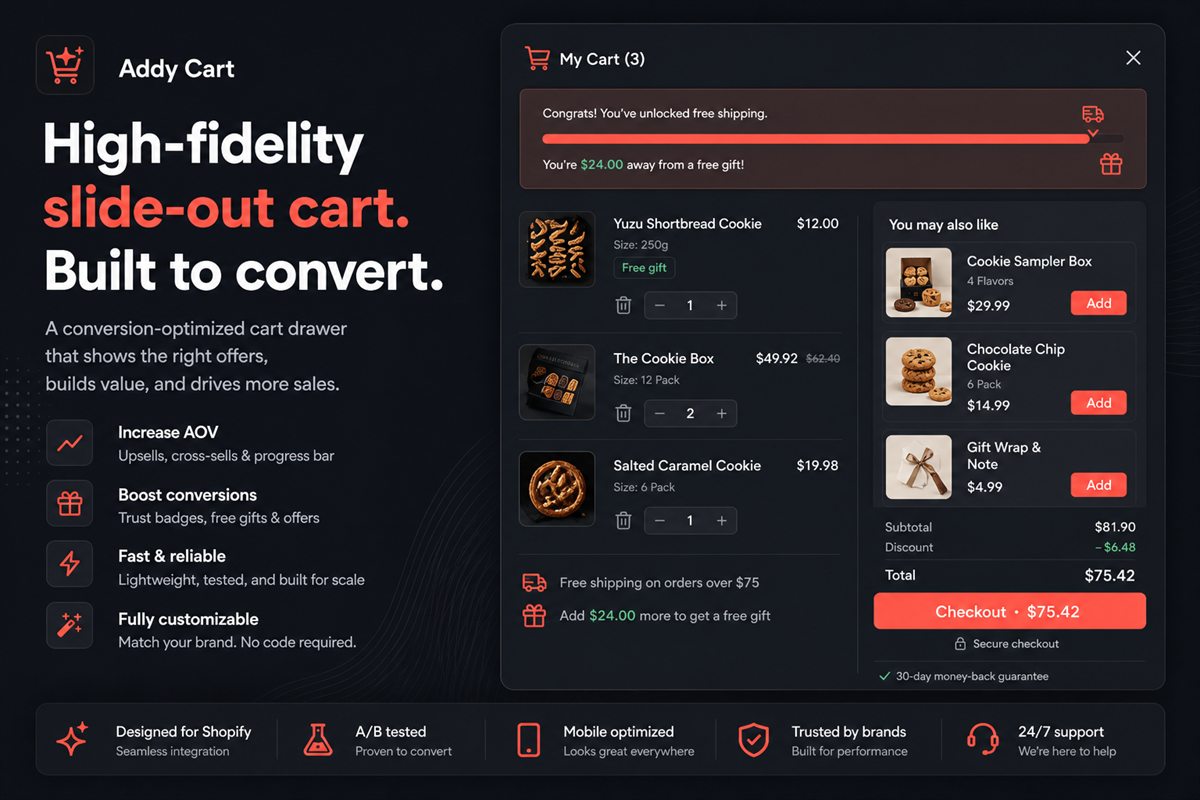
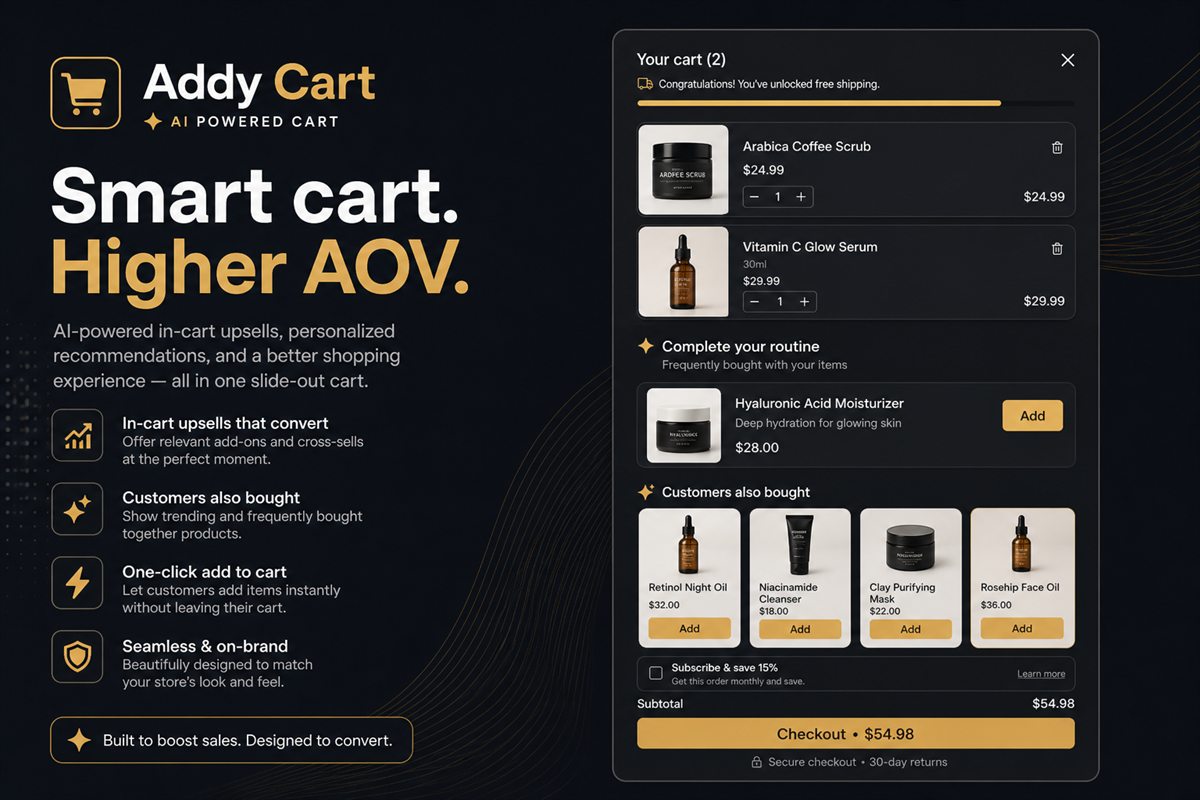
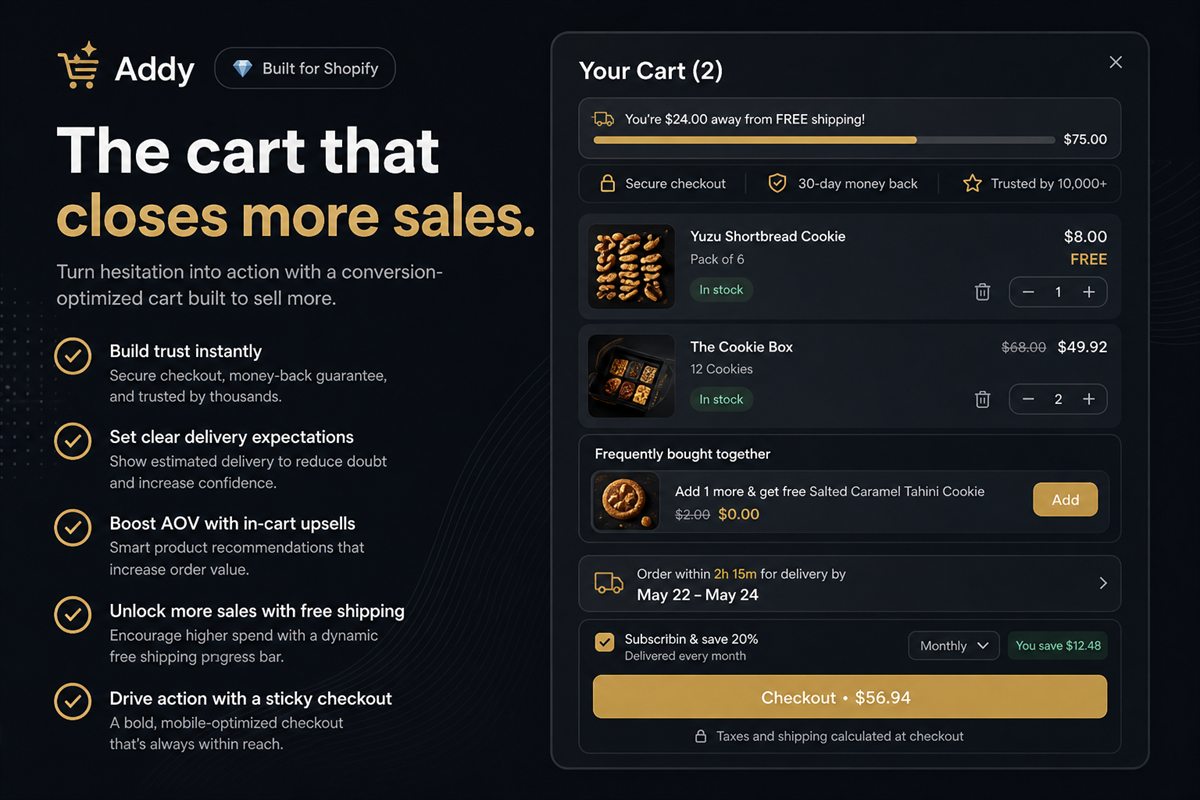
The cart is the highest-intent page on a Shopify store and usually the least designed. A slide-out cart drawer with one upsell, a progress bar and a clear delivery promise recovers more revenue than most homepage redesigns. These guides cover cart drawers versus cart pages, in-cart offers, performance and abandonment.

What makes a Shopify cart drawer sell: layout order, the blocks that matter, performance rules and the in-cart upsells worth running.

A ranked breakdown of Shopify in-cart upsells: price ratios, placement and the offer types worth running versus the ones that annoy.

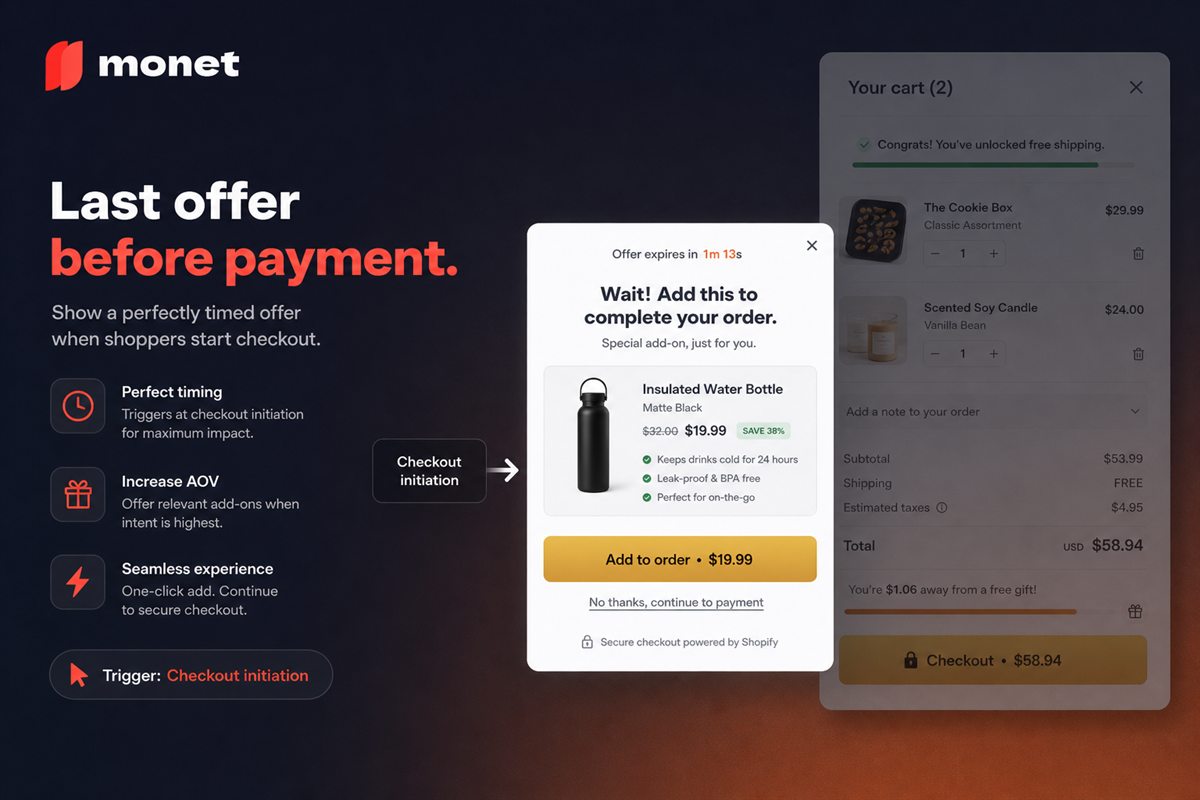
How to run a checkout-initiation upsell popup on Shopify without delaying checkout or losing buyers. Timing, offer choice, skip design and caps.

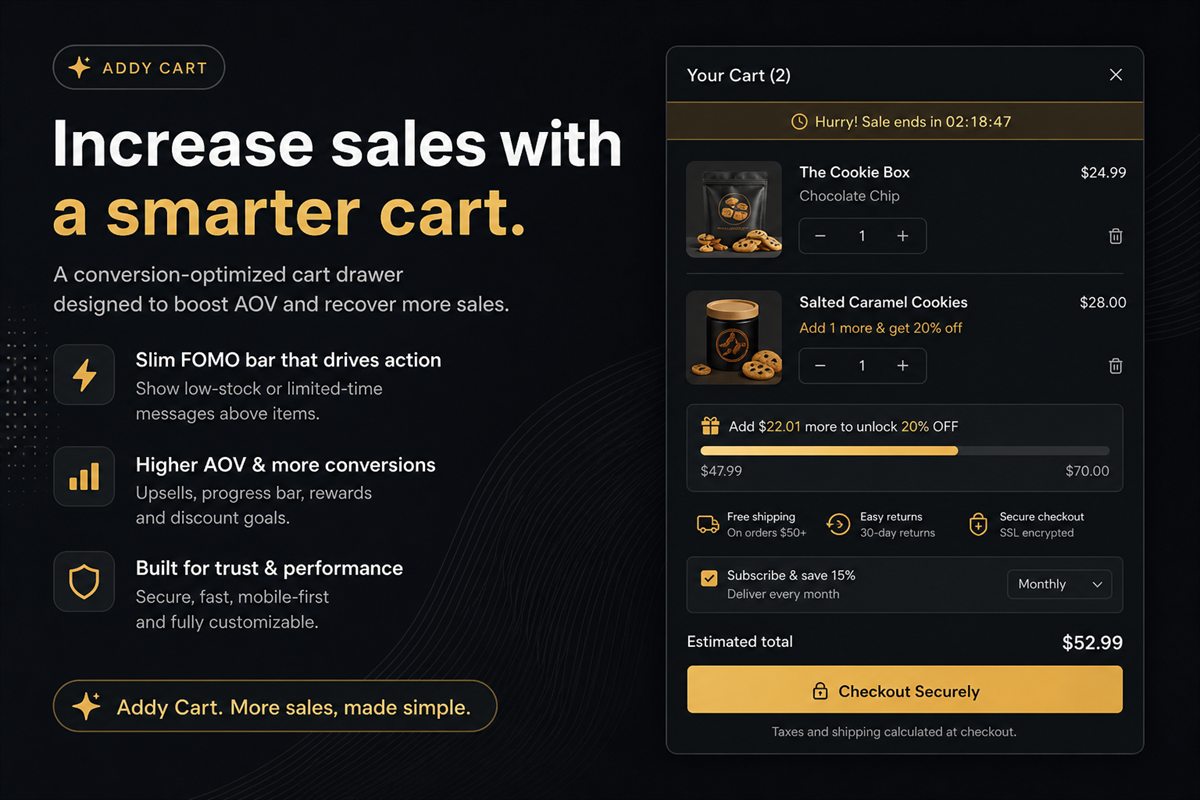
Use one true urgency signal in the Shopify cart drawer — real stock, a real sale end, or a real dispatch cut-off. Fake timers train shoppers to ignore you.

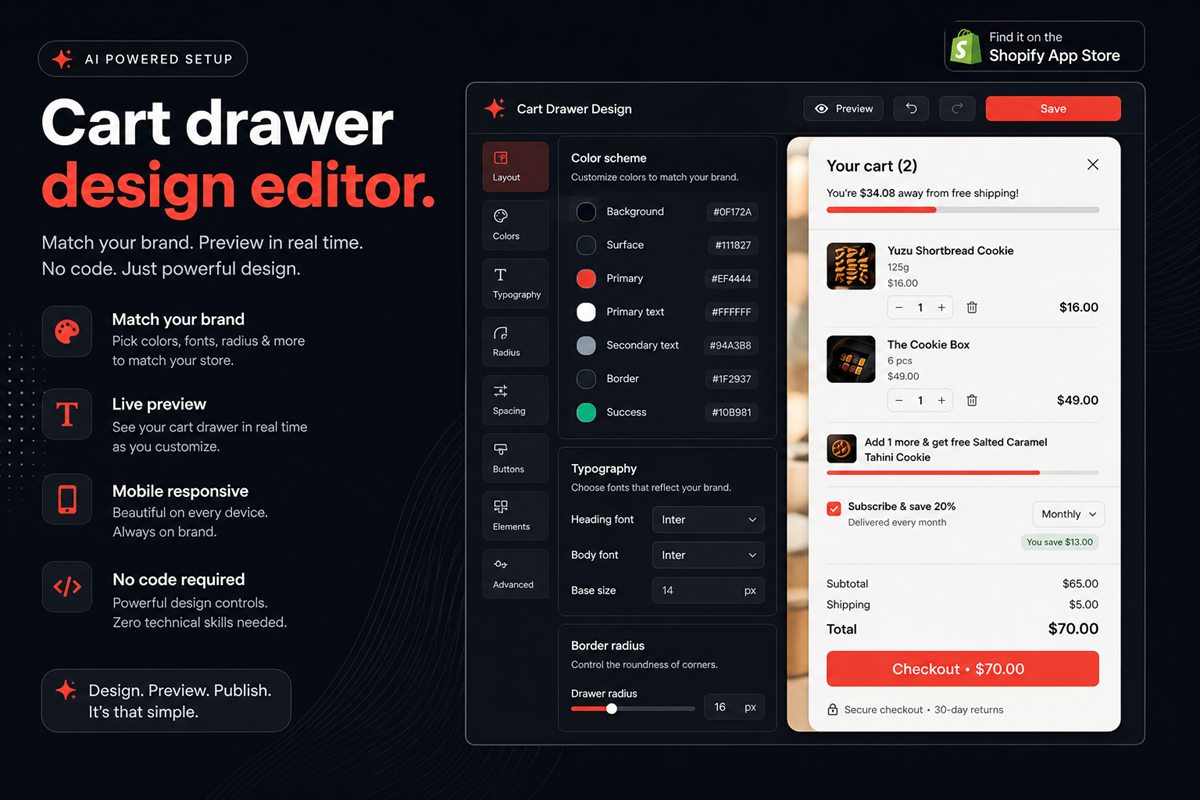
Brand a Shopify cart drawer to match your theme — colour, type, radius and button — so it reads as part of the store instead of a third-party widget.

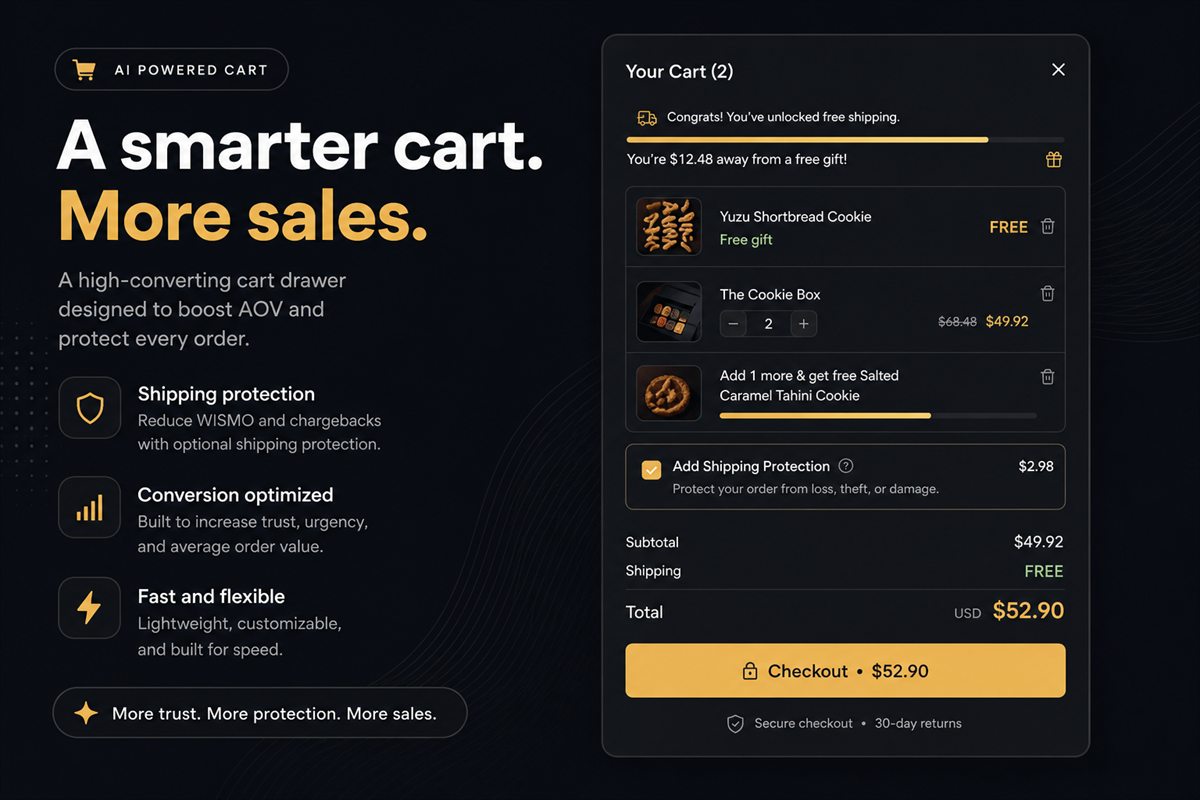
Offer shipping protection in the Shopify cart as an opt-in add-on with specific cover. Pre-ticked boxes convert once, then create chargebacks and tickets.

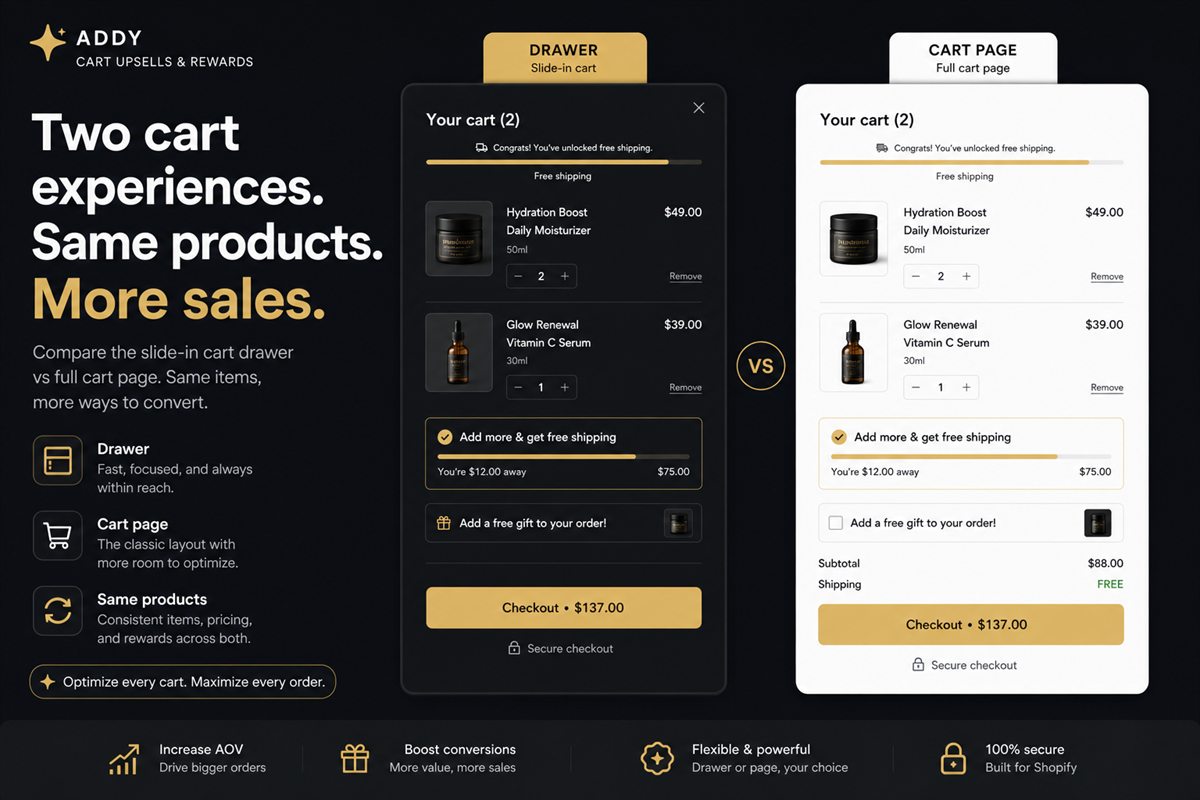
A Shopify cart drawer usually converts more than a cart page because it keeps the product in view. Use a full cart page only for large or complex baskets.

Shopify Markets cart personalisation: per-country free shipping, delivery copy and offers so one cart is not wrong in every market.

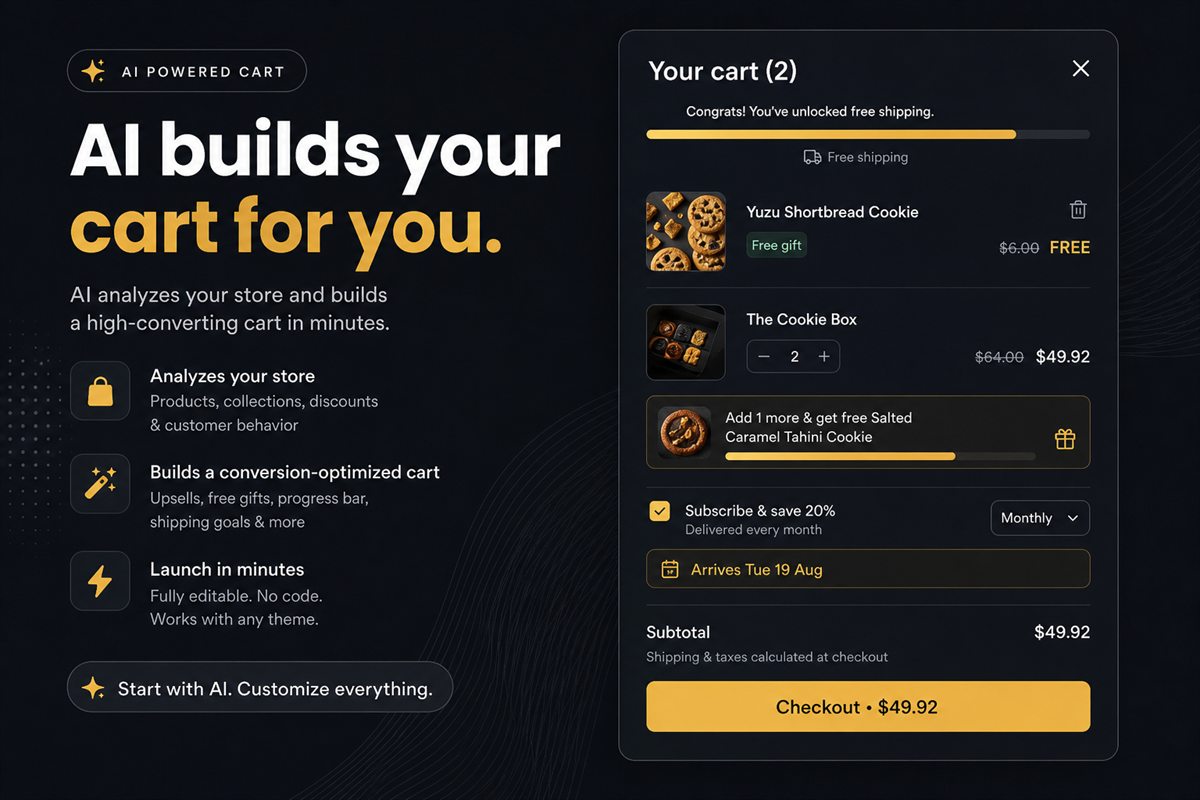
Why showing an arrival date beats showing a shipping speed, how to calculate one you can actually honour, and where in the funnel it earns the most.

Every common cause of cart abandonment, what each one actually costs, and how long it takes to fix — ordered so you can start at the top and work down.
No articles match that search yet. Try a broader term.
For most stores, yes. A drawer keeps shoppers on the product or collection page, shows the running total instantly and is the natural place for a free-shipping goal or a single upsell. A full cart page still makes sense for large B2B orders or when shoppers need to compare many line items.
Remove surprises before checkout: show shipping cost or a free-shipping threshold in the cart, state the delivery window, keep discount fields visible, and make the checkout button the most prominent element. Then recover the rest with abandoned-checkout emails in Shopify Marketing.
Poorly built ones do. Look for a theme app extension that loads asynchronously and stays out of the Largest Contentful Paint path; test with PageSpeed Insights before and after installing.
Every tactic in these articles is something our apps do out of the box. Free plans, no theme edits, live in minutes.
Every app installs from the Shopify App Store. No theme code, no developer needed.