


How to Increase Average Order Value on Shopify (The Complete 2026 Playbook)
A practical, maths-first guide to raising Shopify AOV — the eleven levers that work, where each one belongs in the funnel, and how to tell which is worth your next week.
Everything we learn building conversion apps for Shopify merchants — cart design, bundle maths, shipping thresholds, popup timing and post-purchase experience. No fluff, no recycled listicles.

A practical, maths-first guide to raising Shopify AOV — the eleven levers that work, where each one belongs in the funnel, and how to tell which is worth your next week.

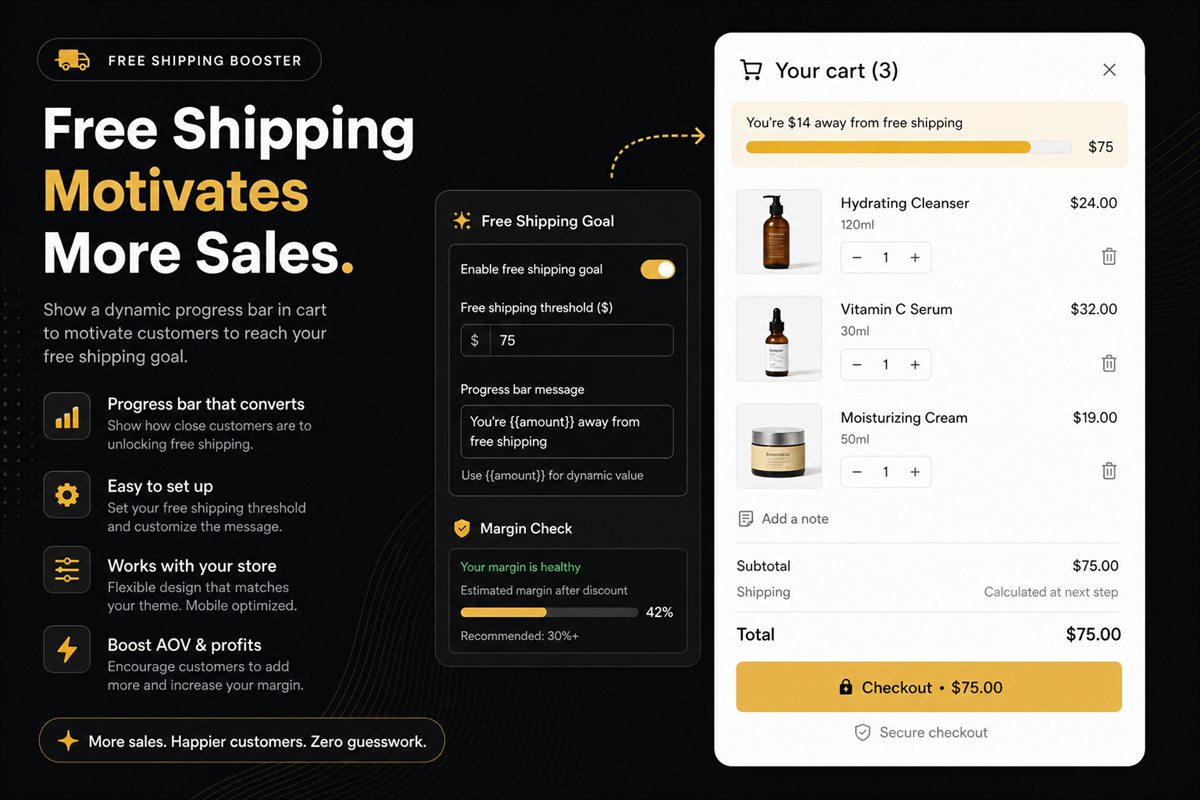
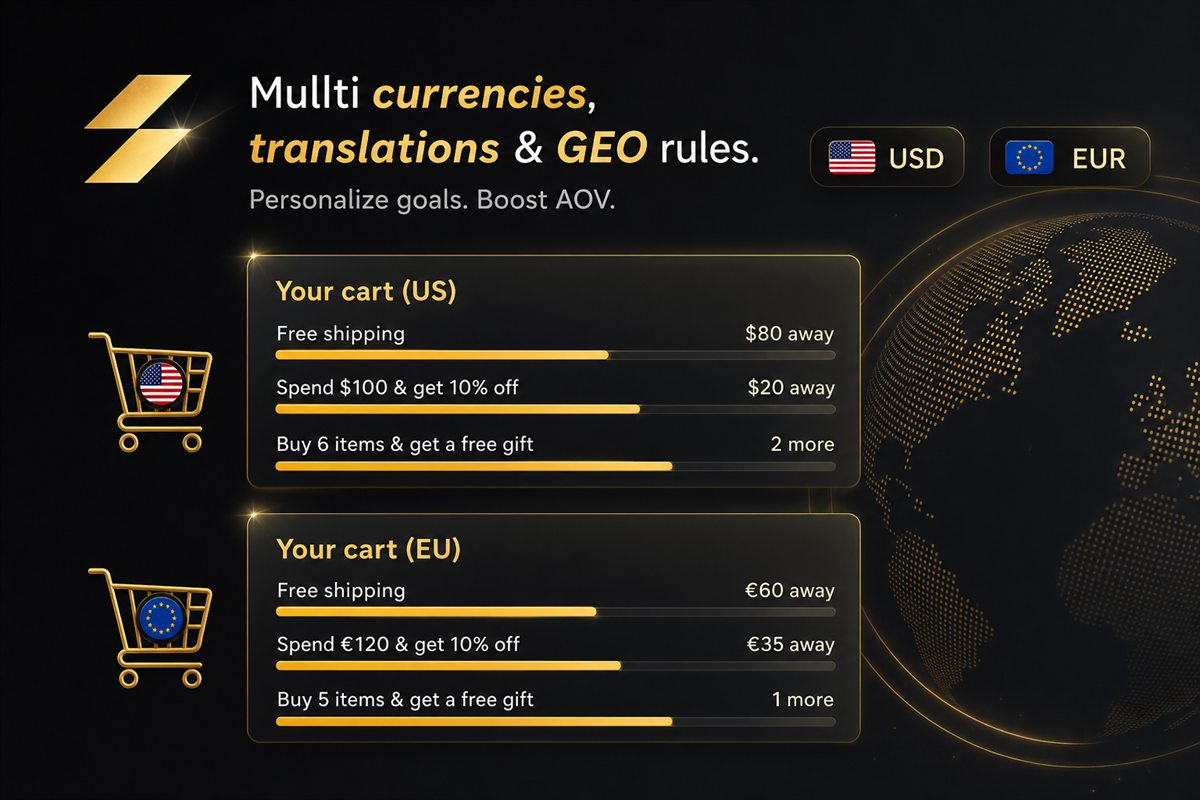
The percentile method for choosing a threshold, the margin check that stops it losing money, and why per-country thresholds beat one global number.

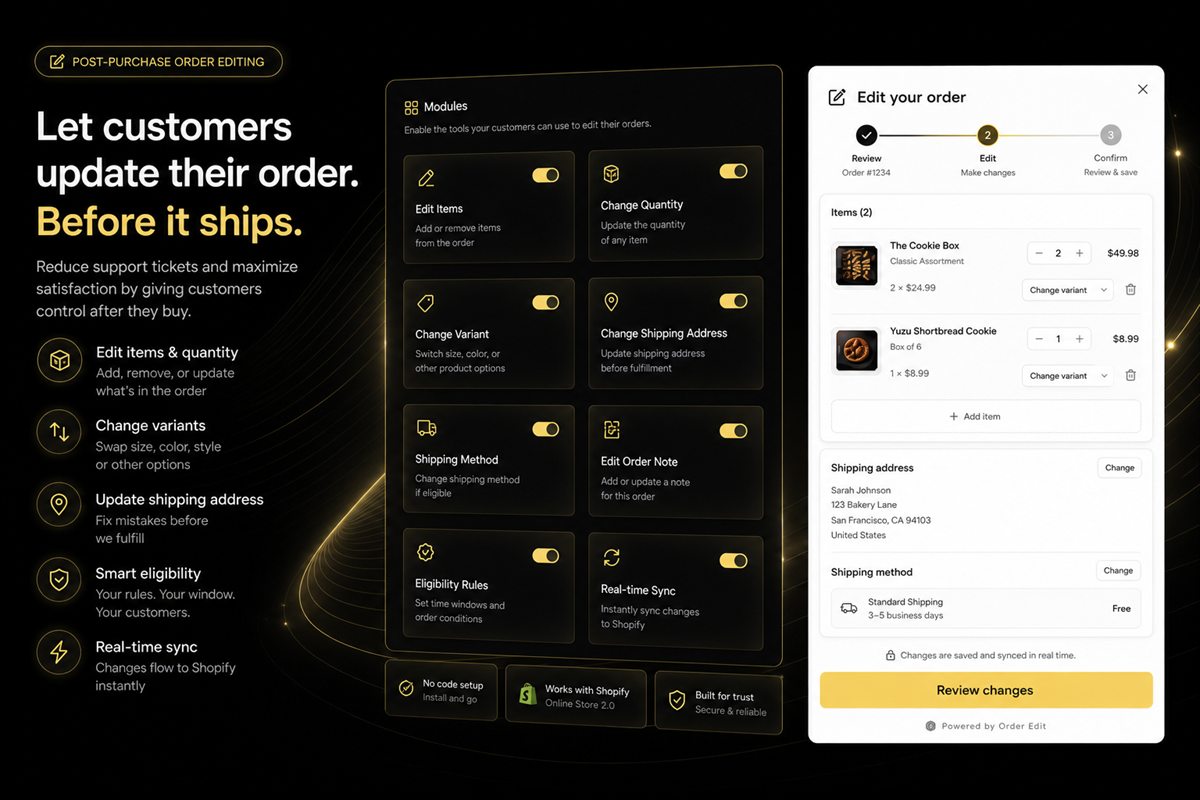
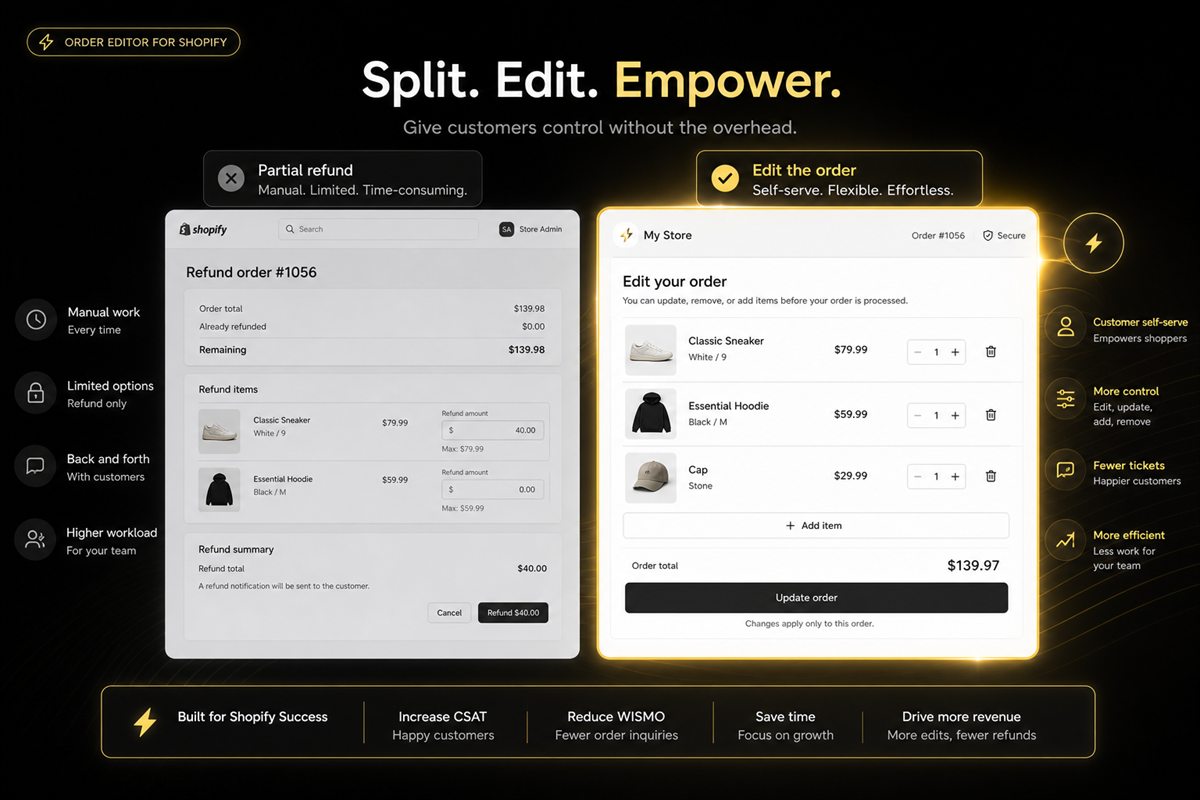
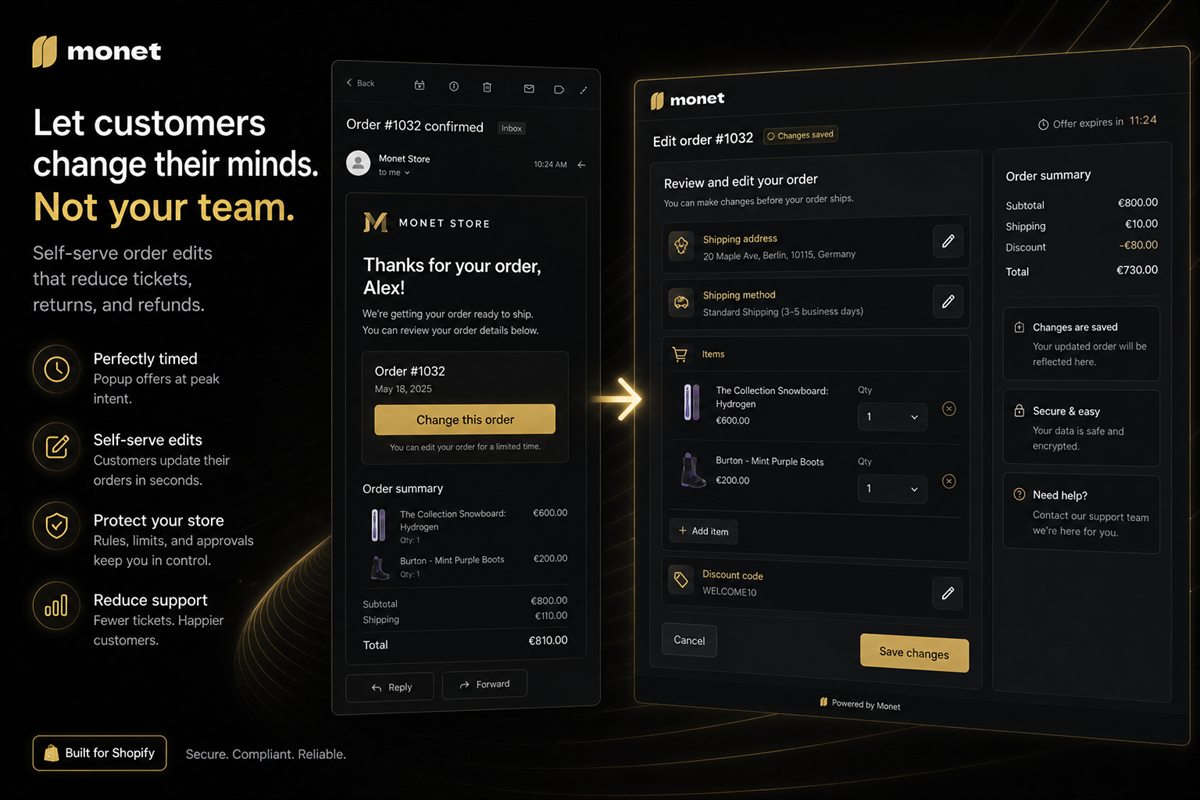
What customers actually want to change after checkout, which edits are safe to allow, the rules you need around them, and why the edit screen is a revenue surface.

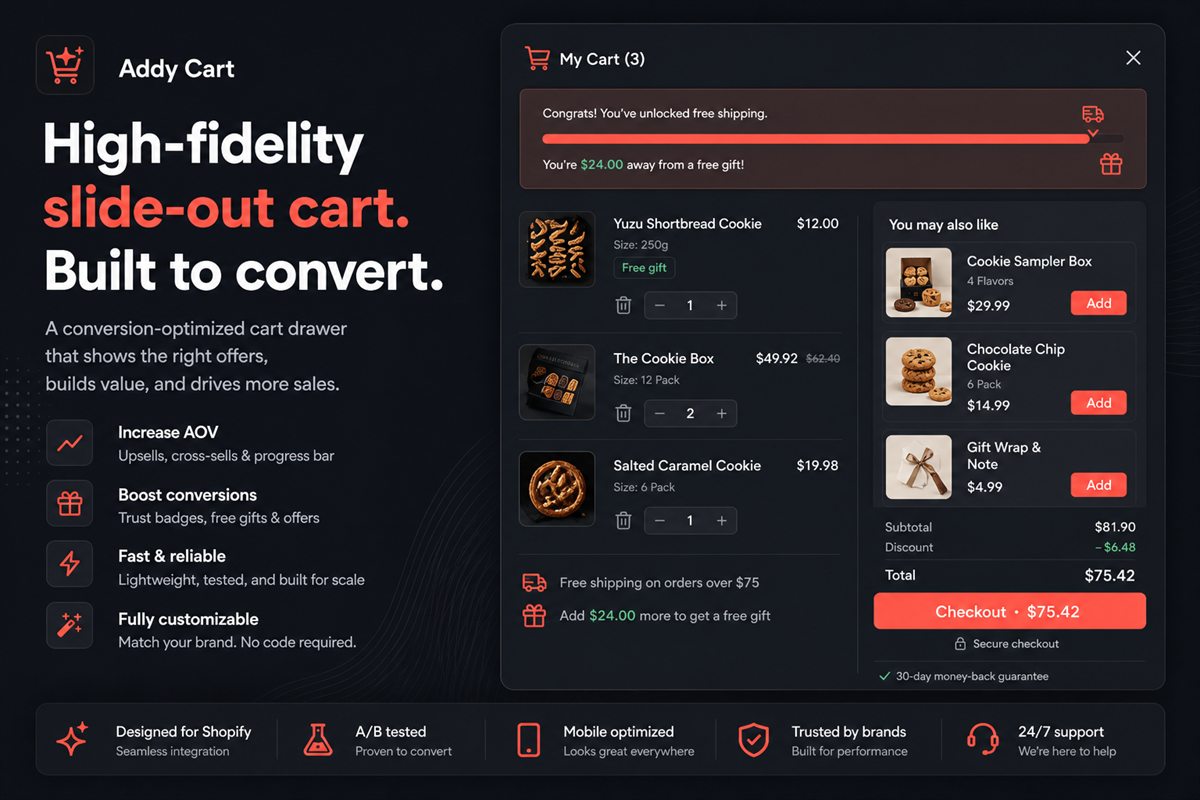
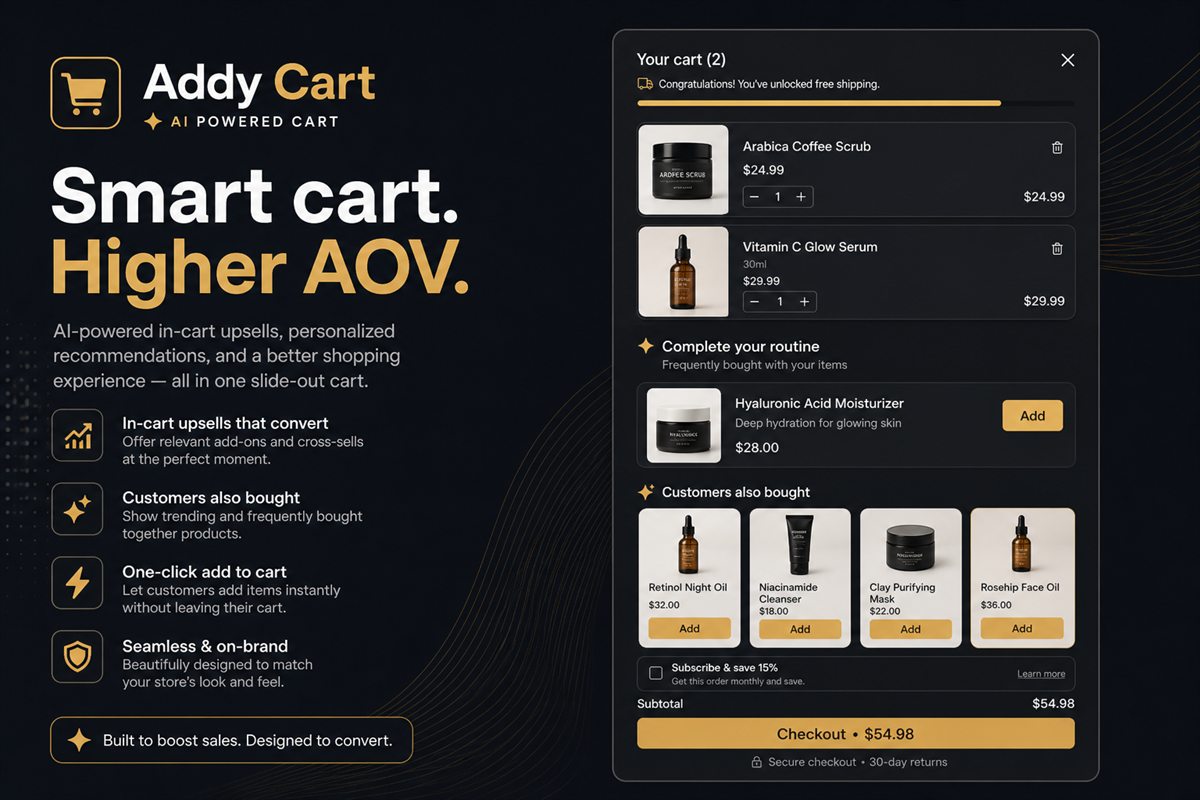
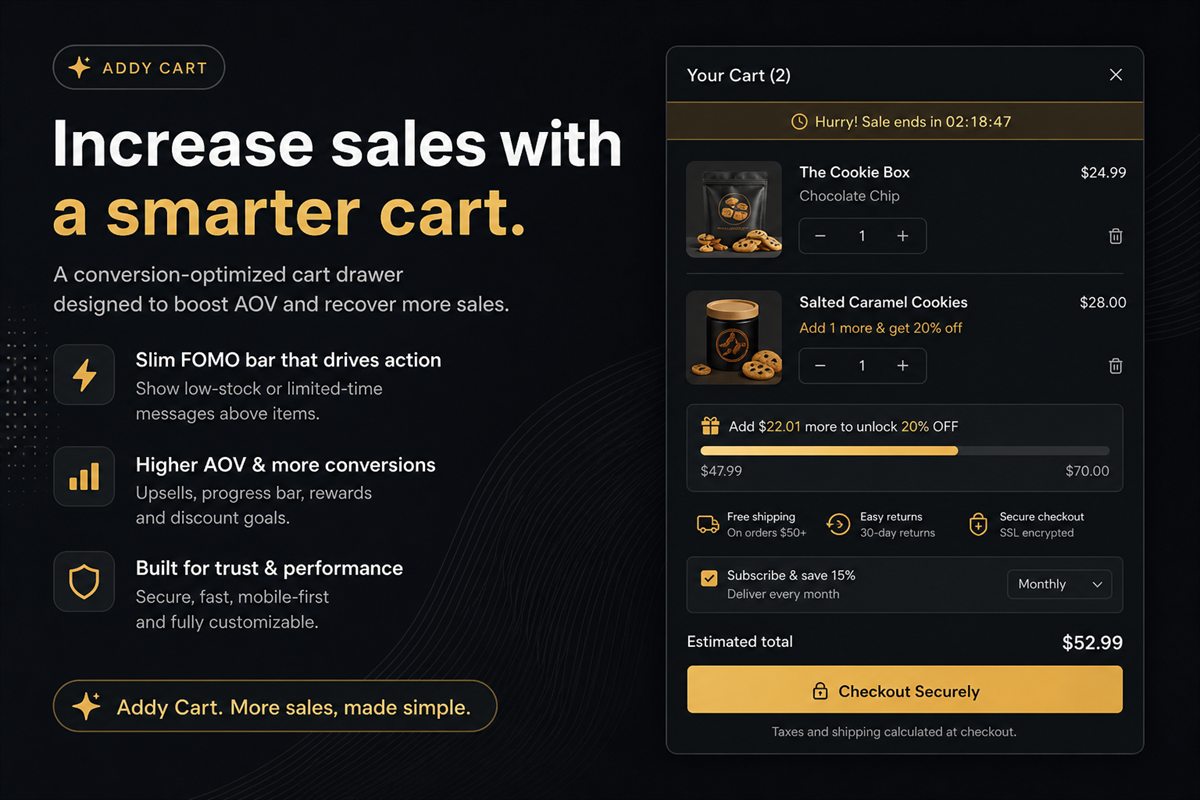
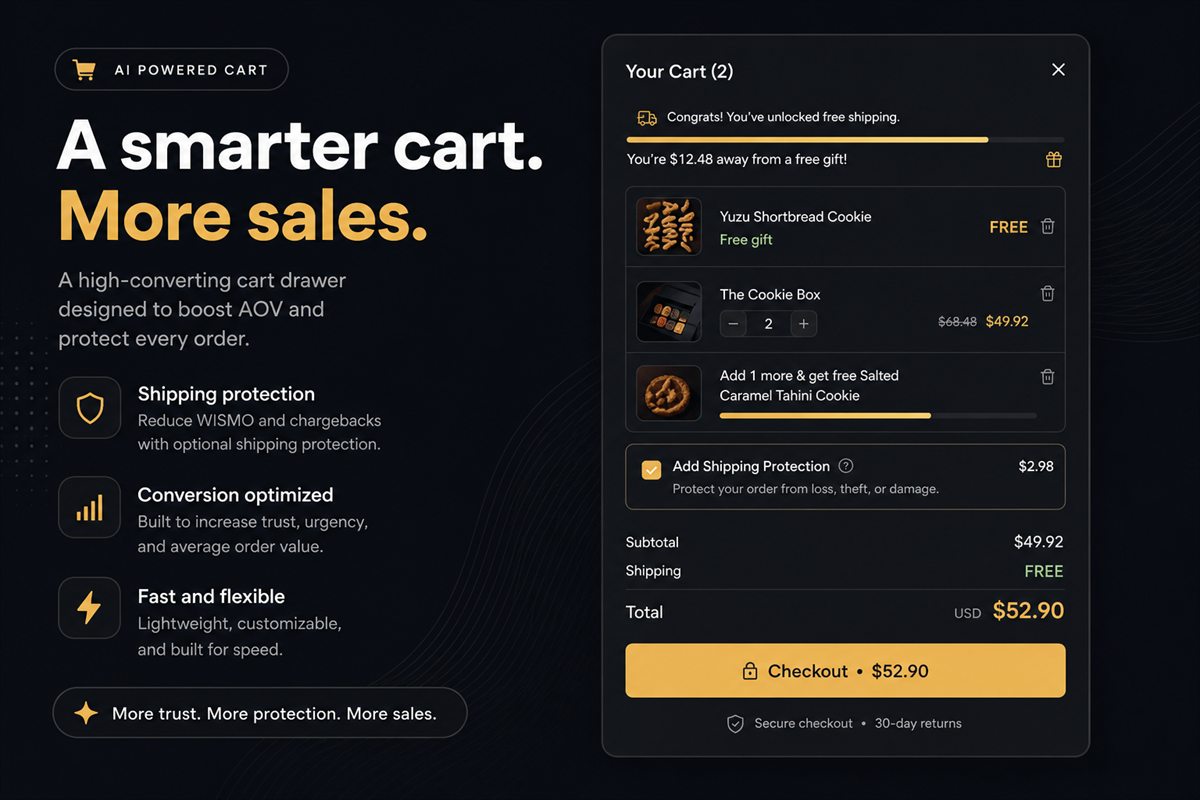
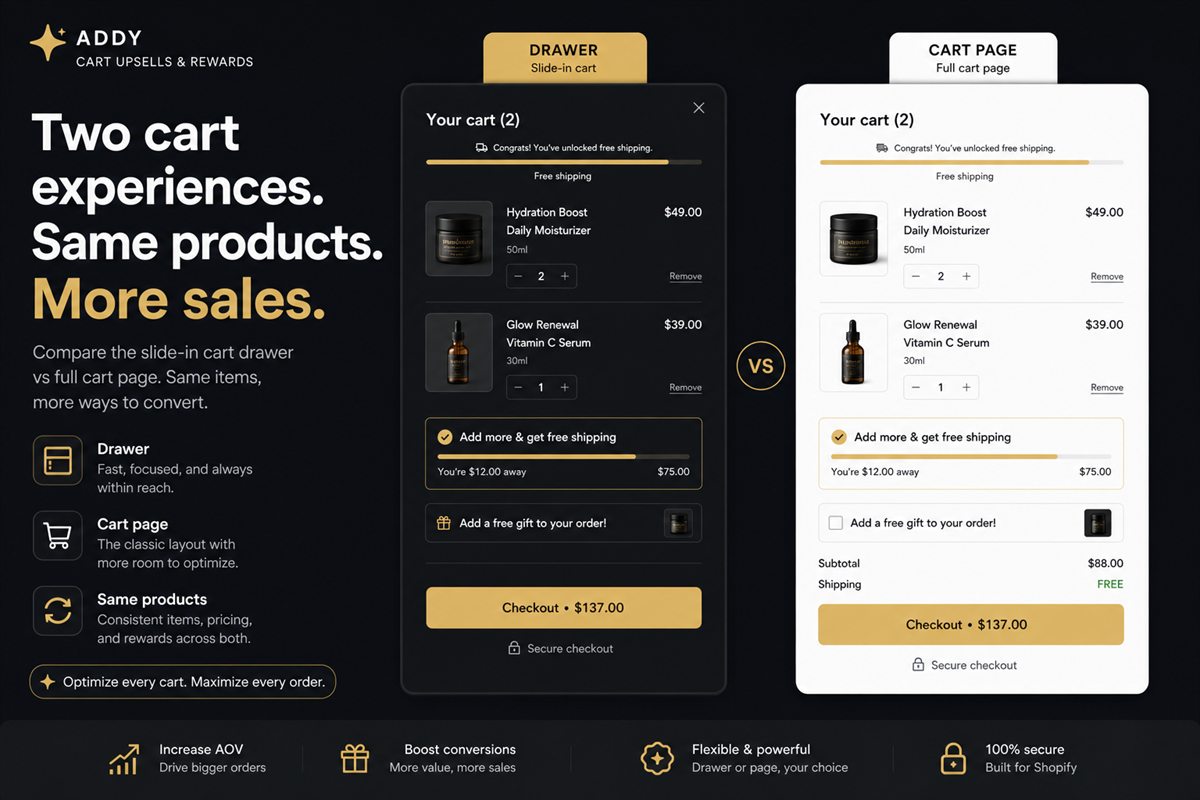
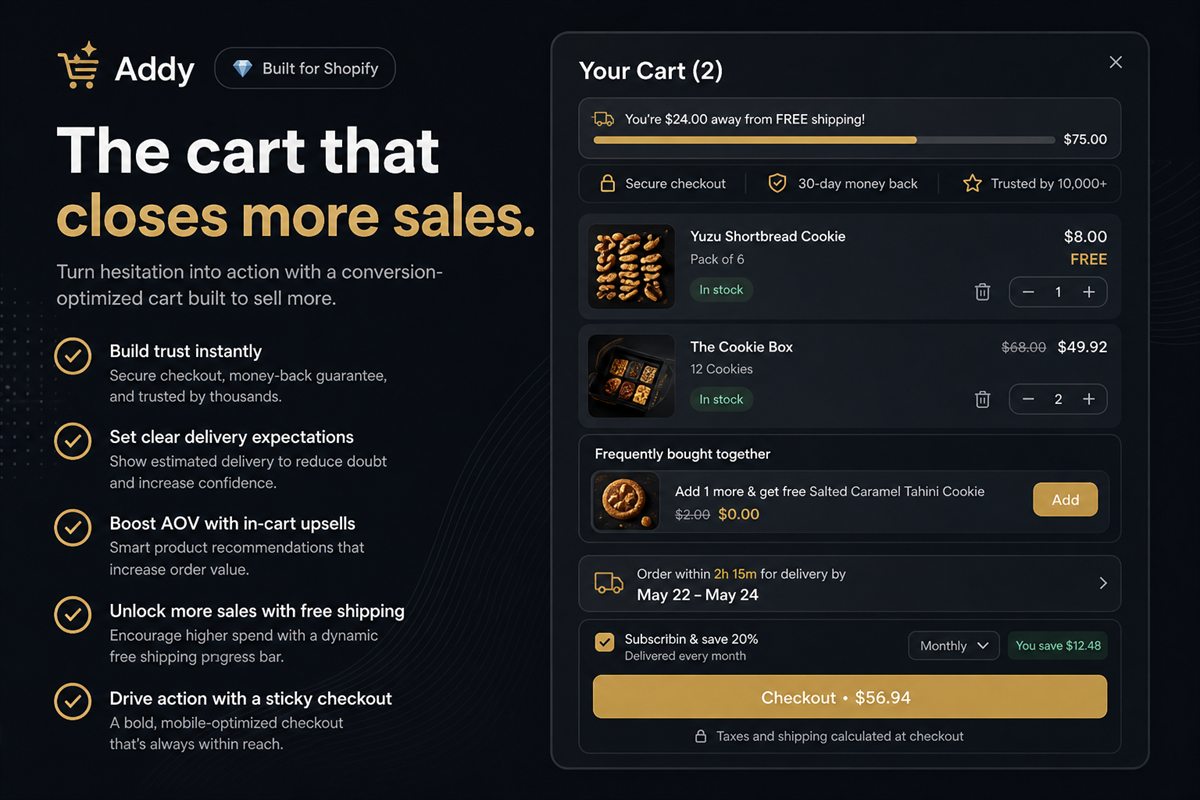
What separates a cart drawer that sells from one that just lists items — layout order, the six blocks that matter, performance rules and the upsells worth adding.

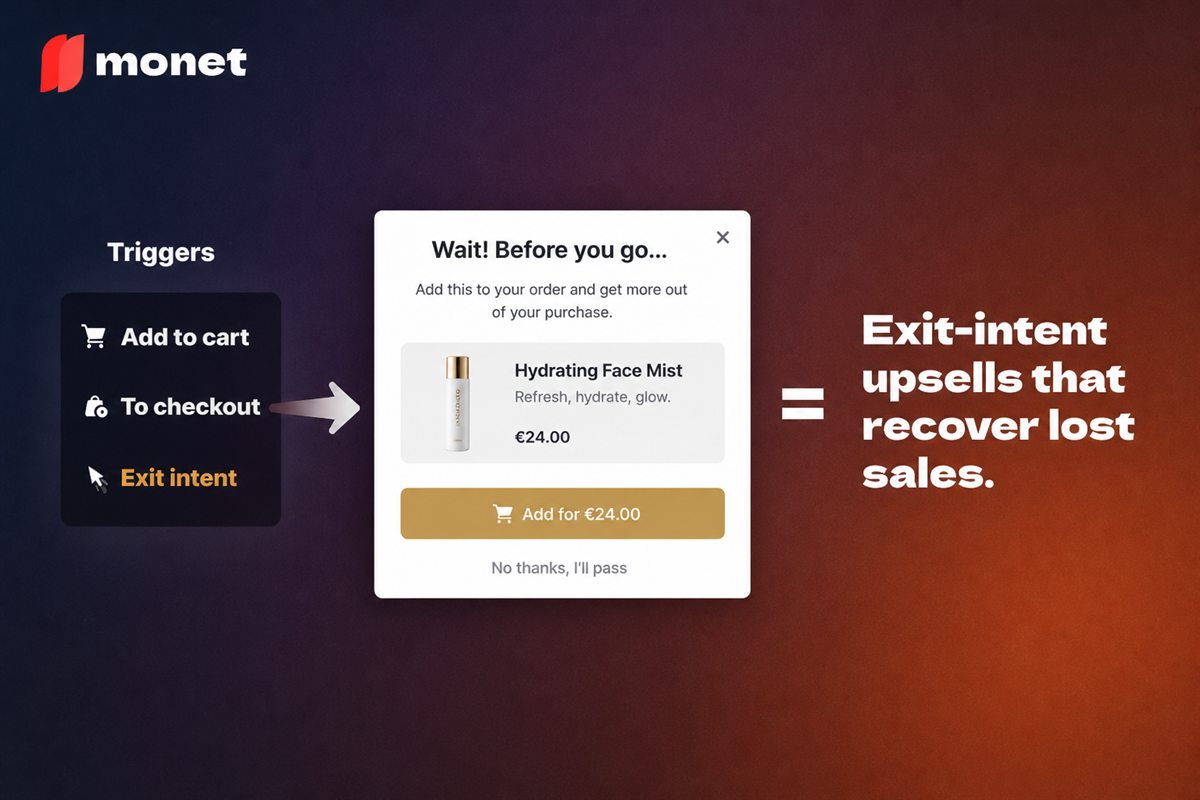
How exit detection really works on desktop and mobile, which offers convert on the way out, and why an exit popup is the only popup that cannot cost you a conversion.

When to let a customer add, swap or remove a line after checkout, and when a partial refund is the cleaner (and cheaper) path.

Where to place a self-serve edit link after checkout, the copy that gets used, and the mistakes that send people to support anyway.

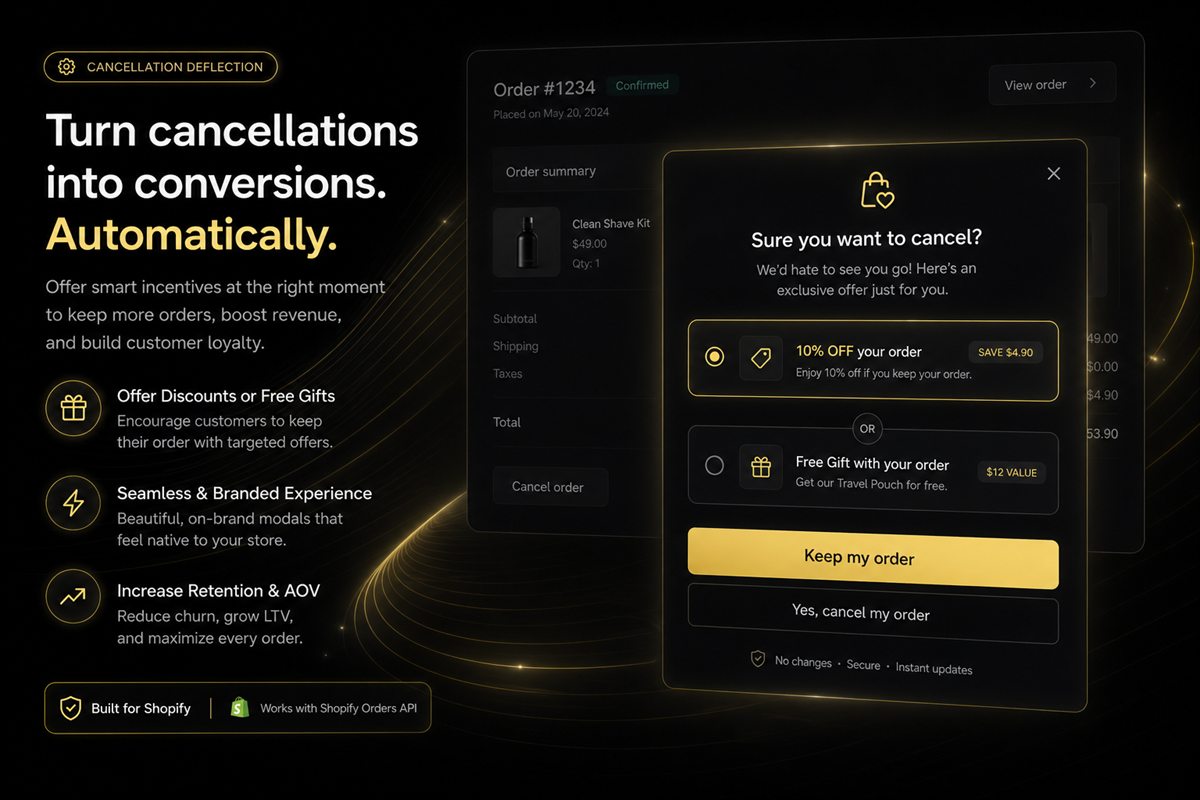
Clear cut-offs, what happens to payment, and the in-flow offer that turns a cancel into a keep — without making people feel trapped.

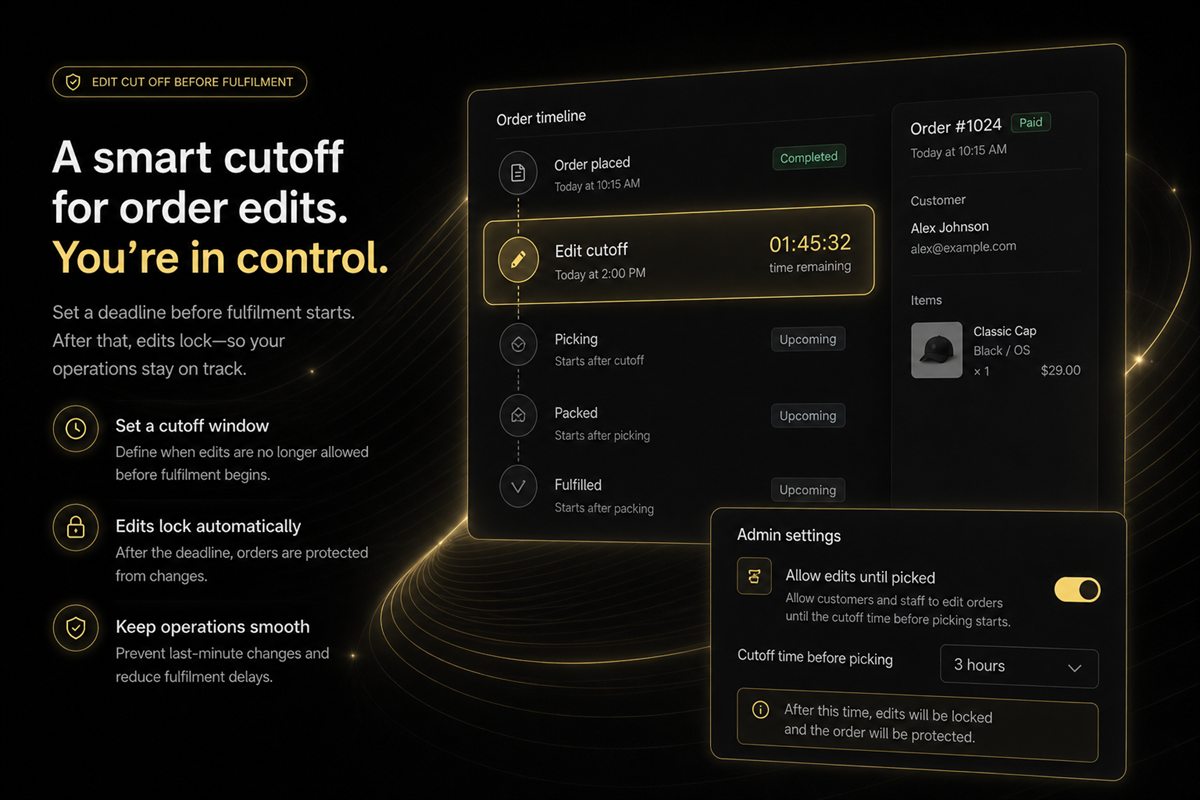
How long to allow self-serve Shopify order edits, how to talk about the window in emails, and what to do when the warehouse has already picked the order.

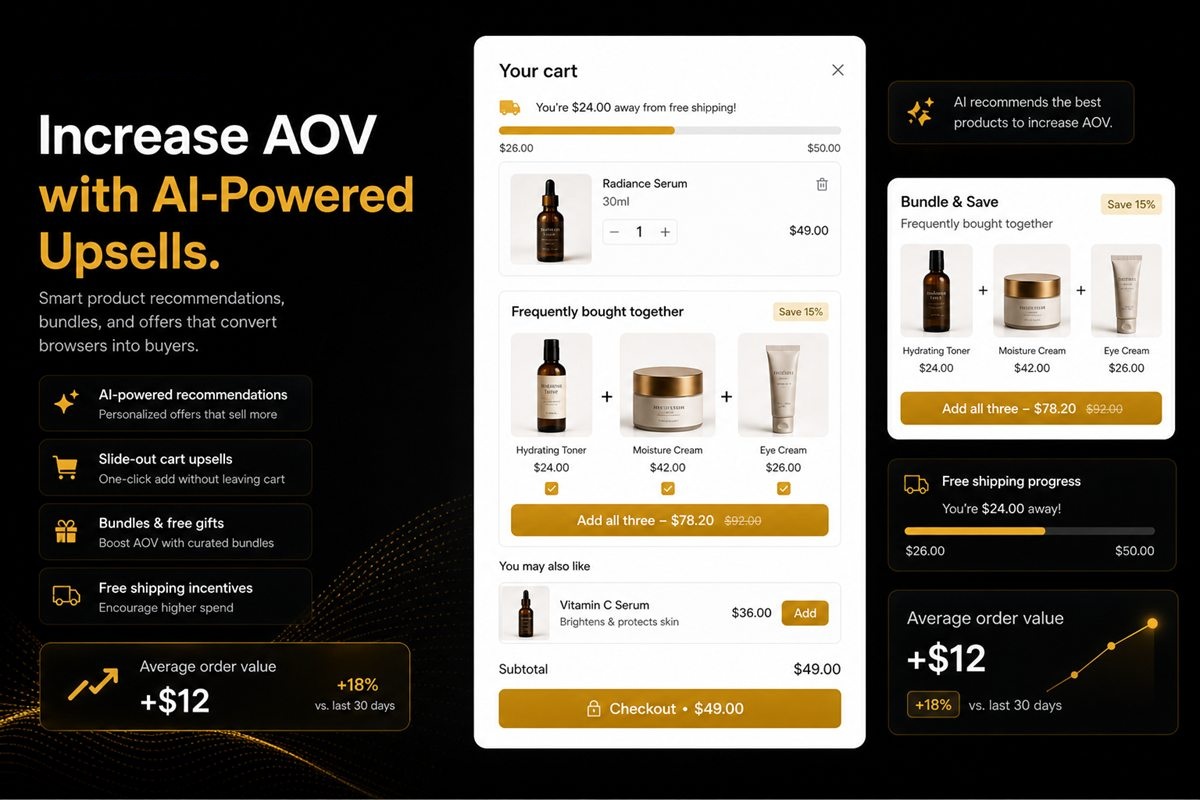
A ranked breakdown of cart upsell offer types with the price ratios, placement rules and take rates that separate the ones worth running from the ones costing you conversions.

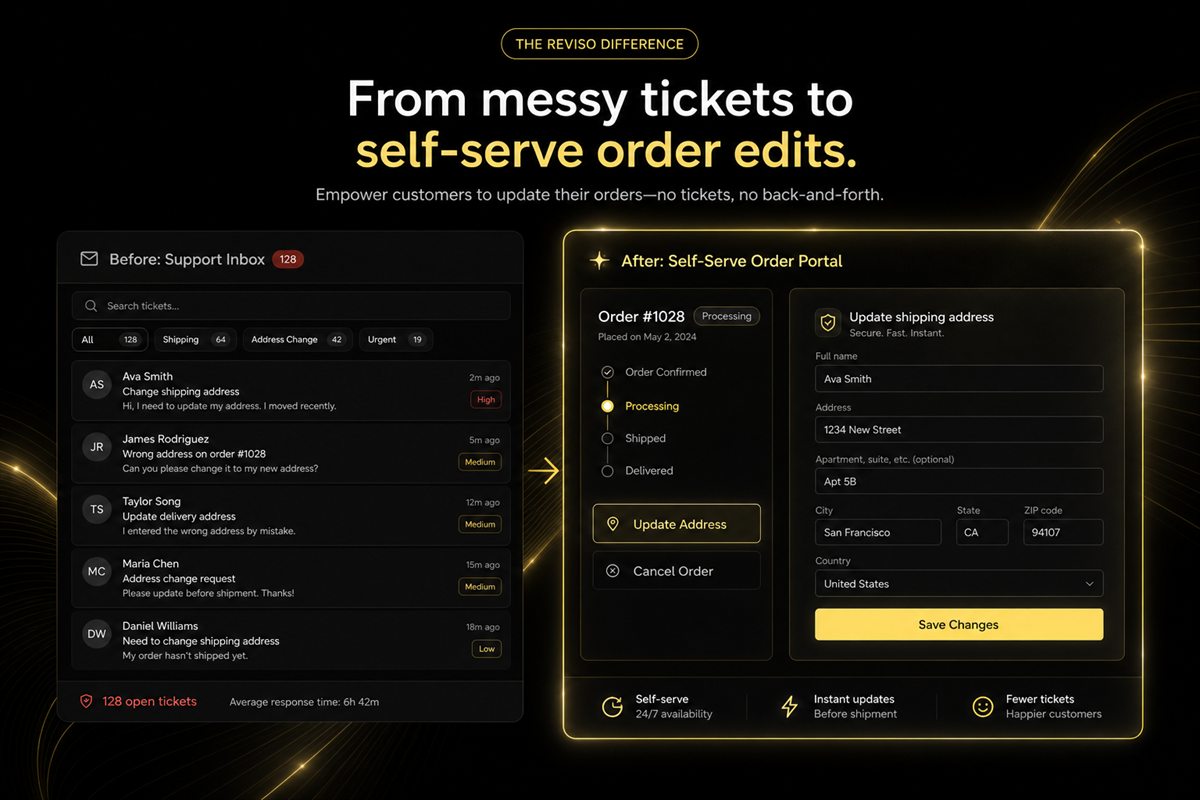
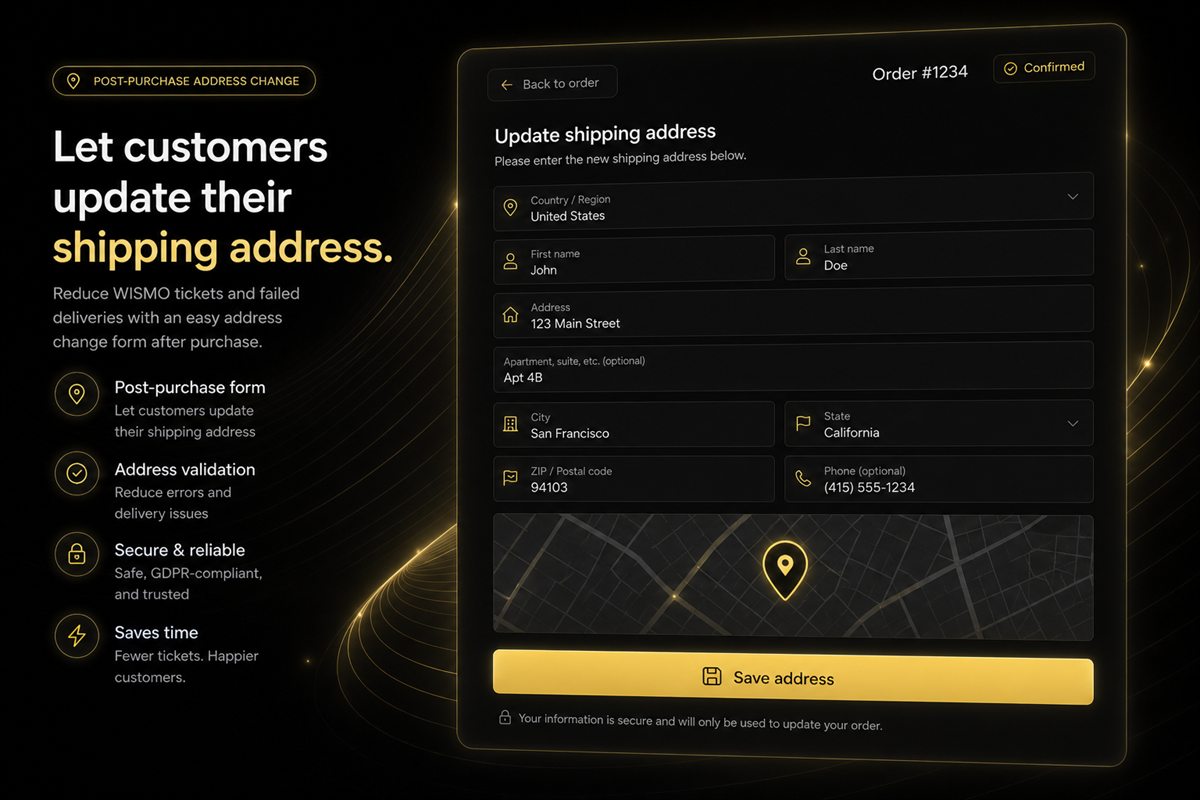
The cost of a "please change my address" ticket, the edit types that should never need a human, and how to keep high-risk changes behind rules.

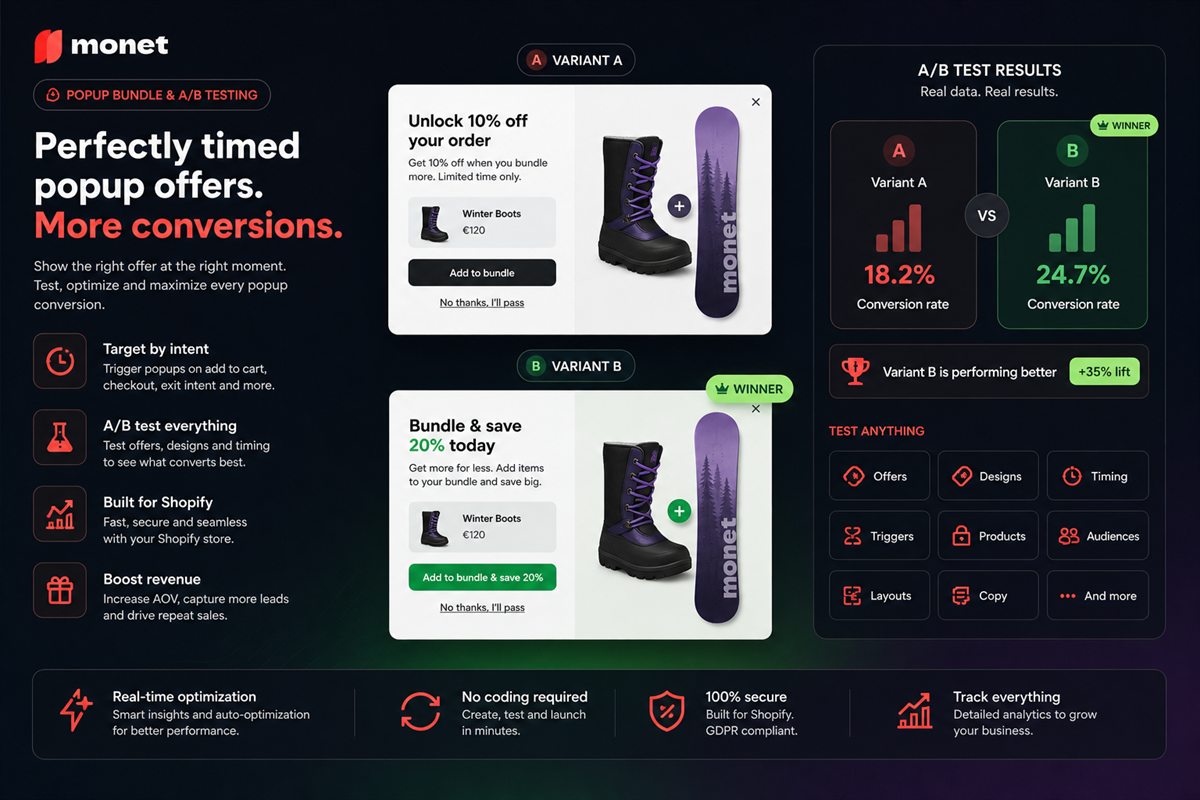
What to test (offer, trigger, frequency), what not to test (button colour in week one), and the sample size trap that makes popup tests look like winners.

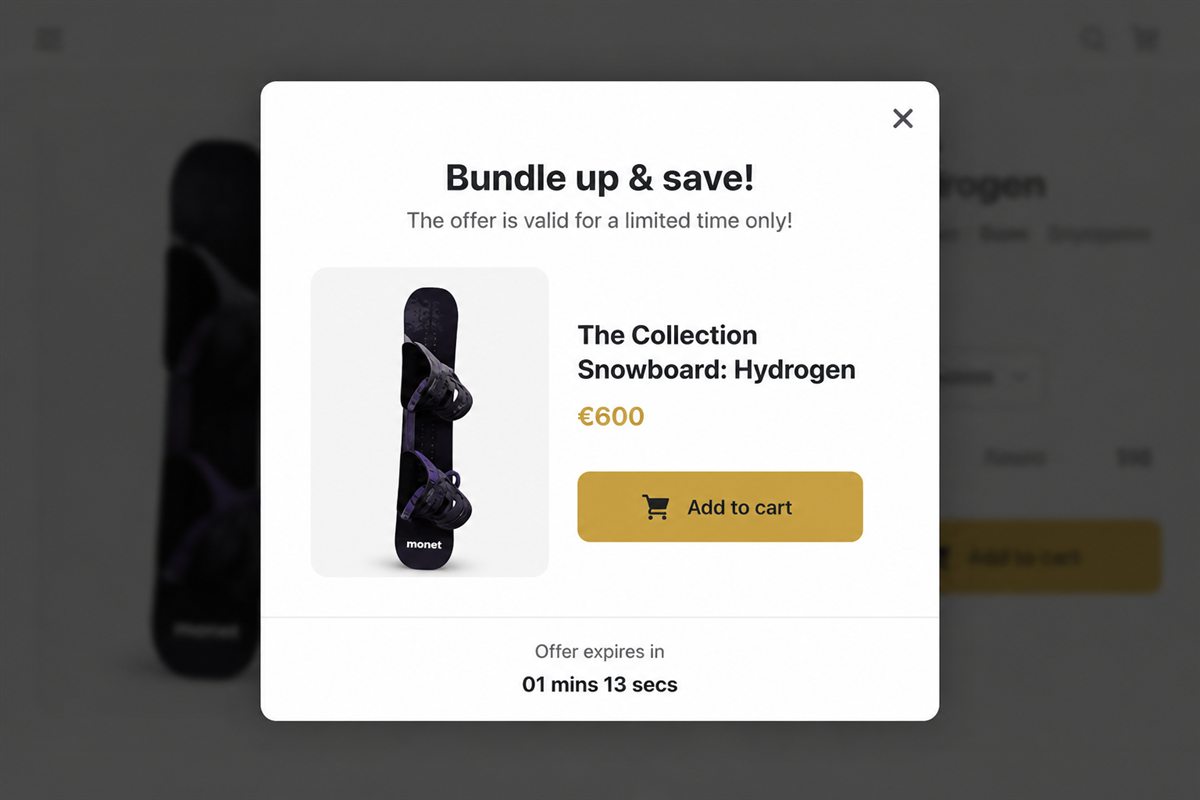
The visual rules for a Shopify upsell overlay: one image, one price, one button, and the spacing that keeps it from looking like an ad.

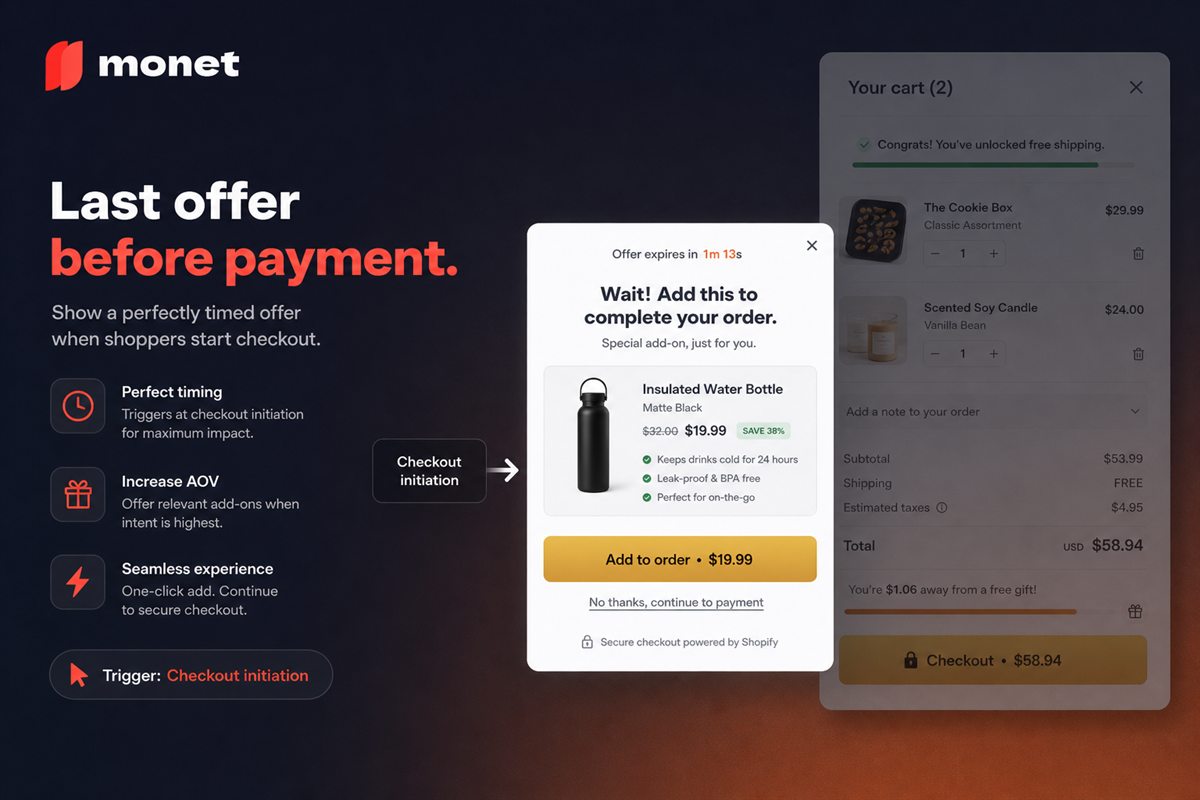
How to run an upsell when the shopper clicks checkout, without delaying Shopify checkout or feeling like a hostage screen.

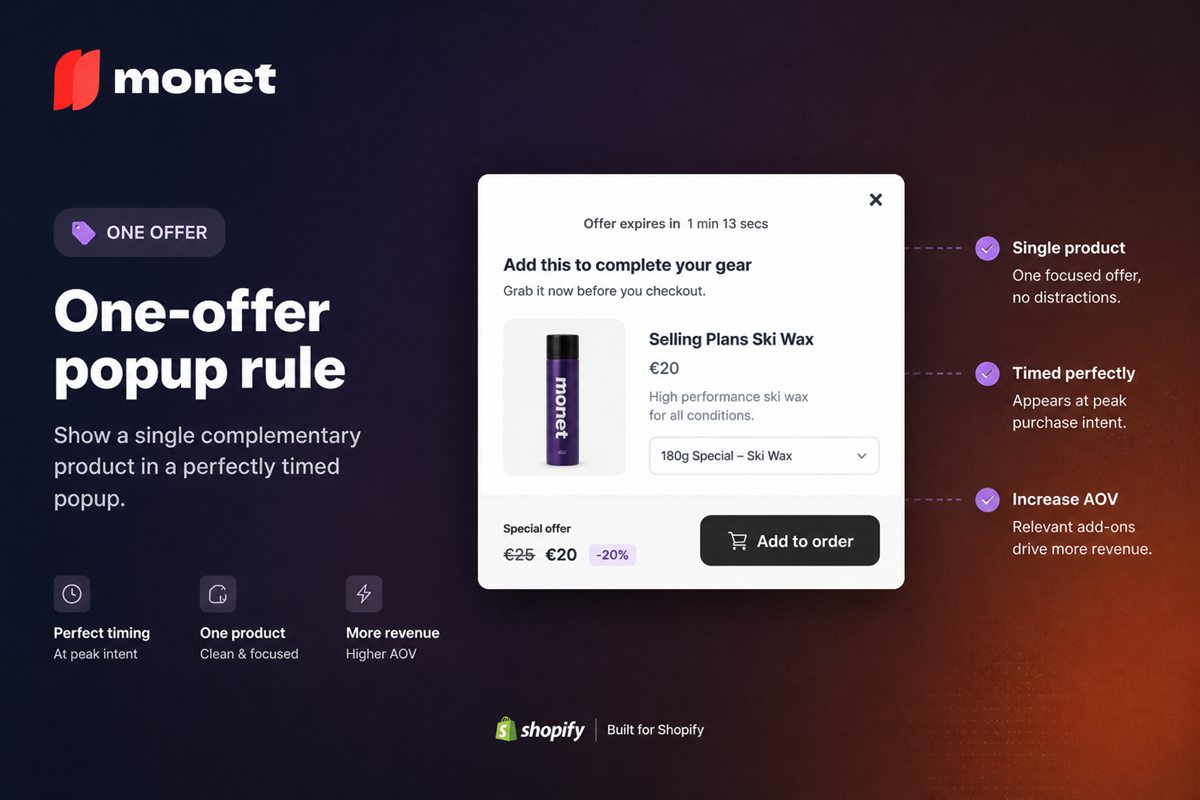
Why a popup should sell a single thing, how to choose that thing from the cart, and what happens to conversion when you add a second product to the overlay.

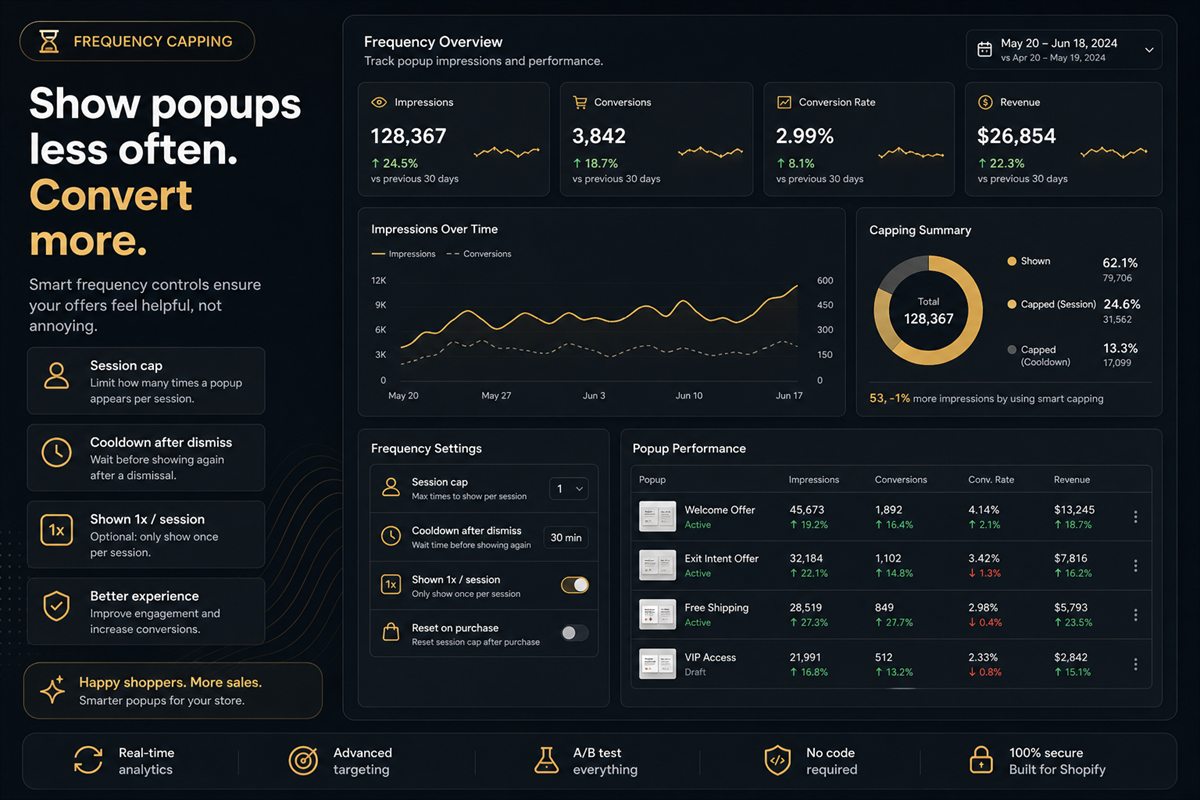
Session caps, cooldown after dismiss, and why showing the same upsell popup twice in one visit costs more than it makes.

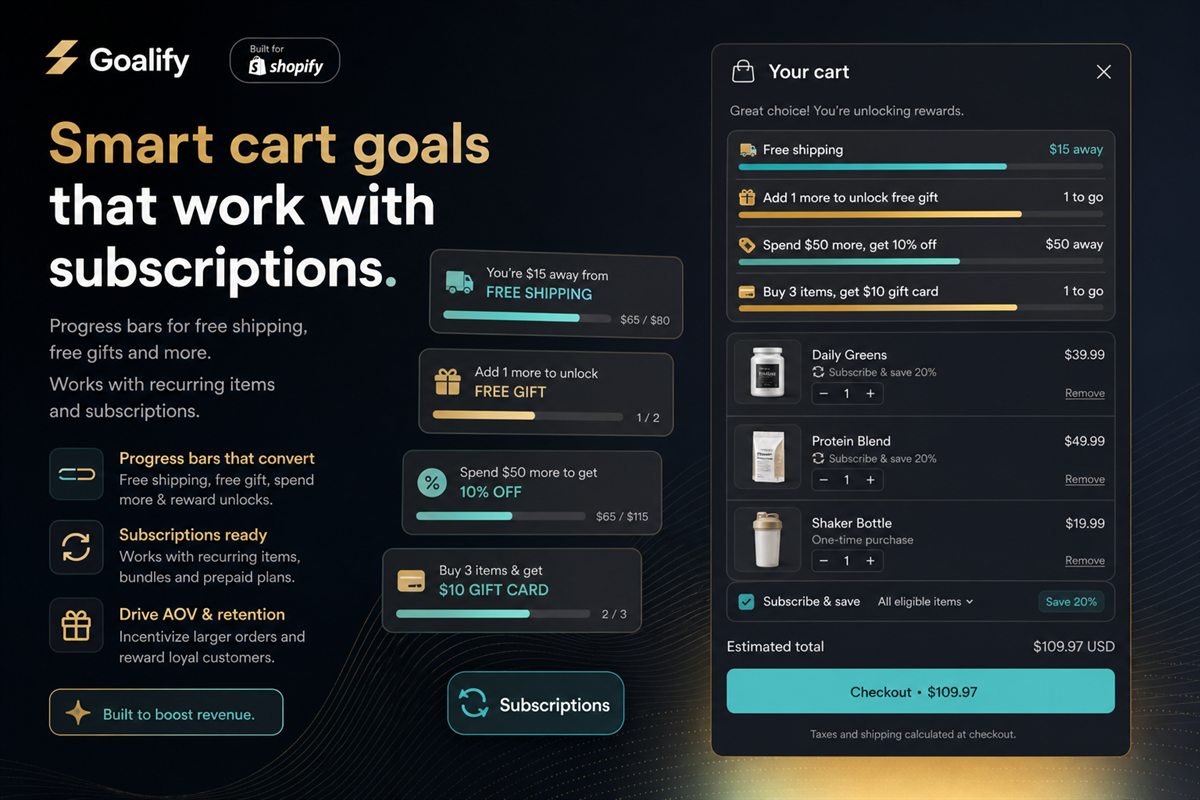
How to run a free-shipping or free-gift progress bar when the cart contains subscribing items, prepaid plans, or a mix of one-time and recurring SKUs.

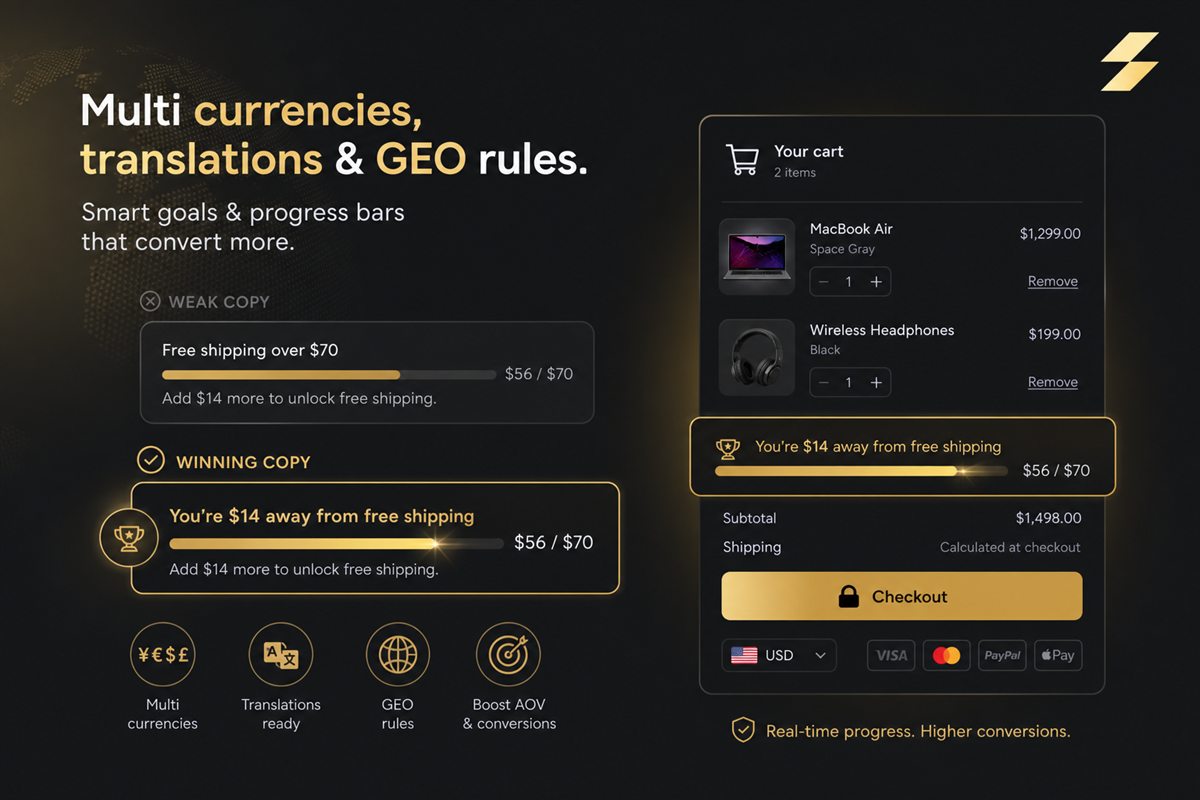
Why a progress bar outperforms a static shipping policy, the exact copy patterns that convert, where to place it, and how to handle the moment the goal is met.

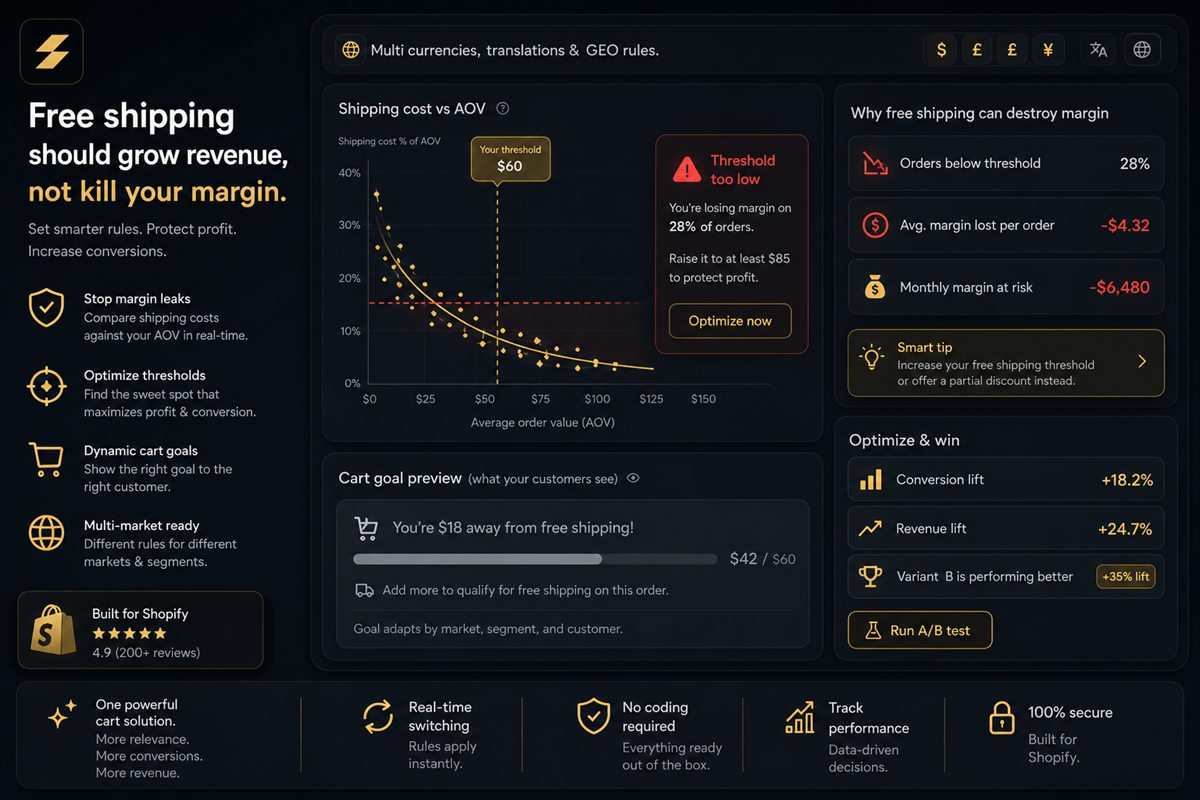
The stores, categories and order profiles where a free shipping threshold destroys margin, and what to run instead of "free over $X".

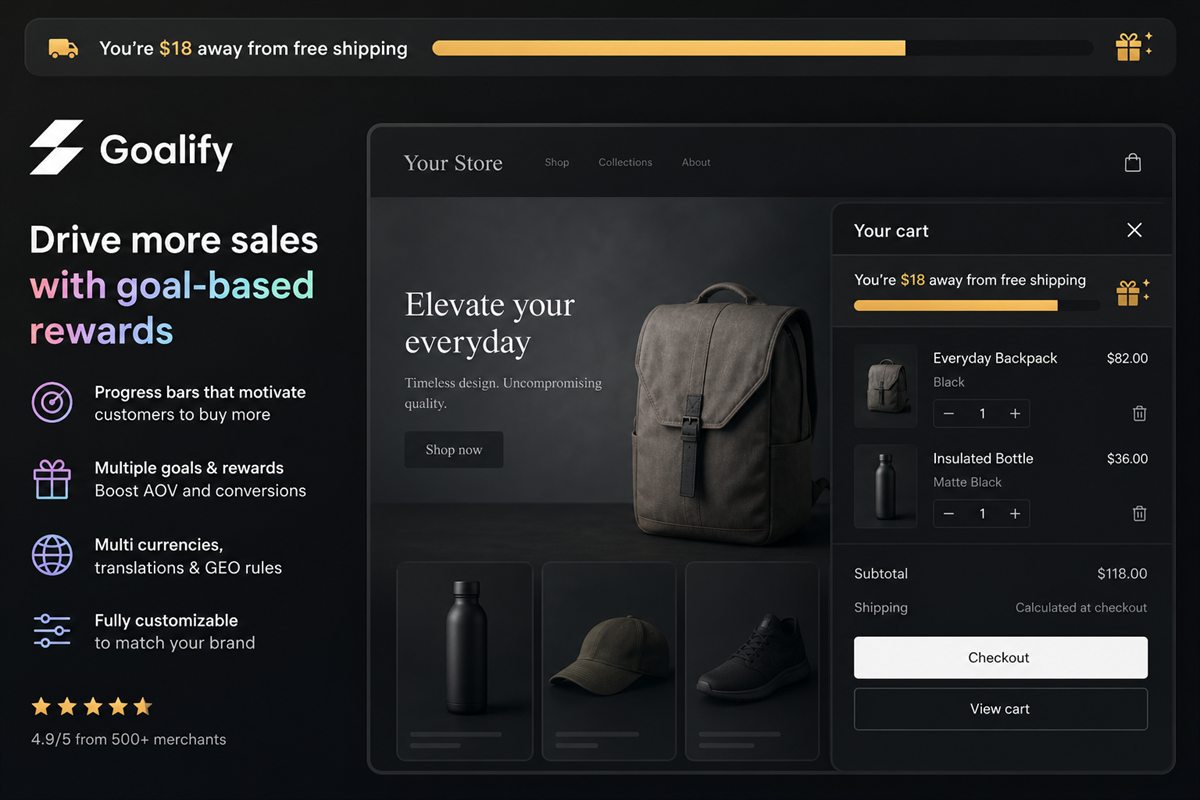
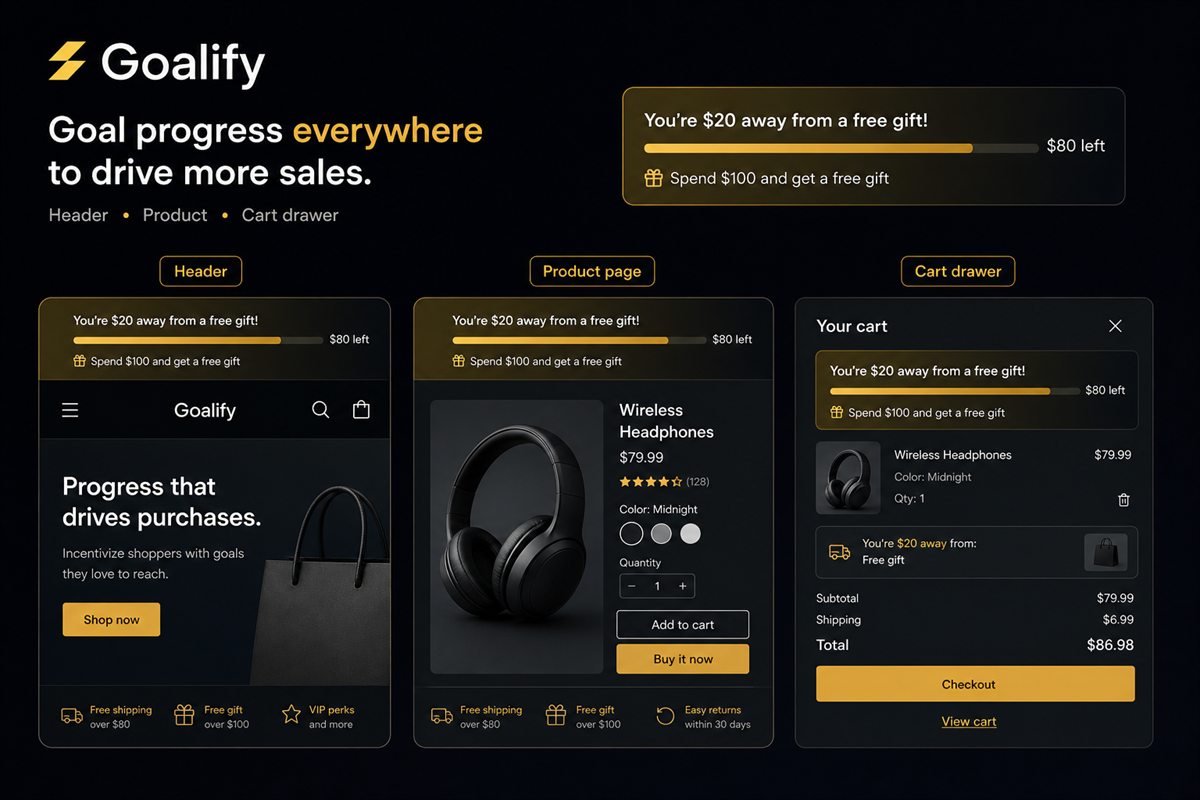
Cart drawer, product page, header, or all three — the placements that increase average order value and the ones that just add clutter.

Why "Free shipping over $70" underperforms "You're $14 away", and the three lines that belong on a Shopify progress bar.

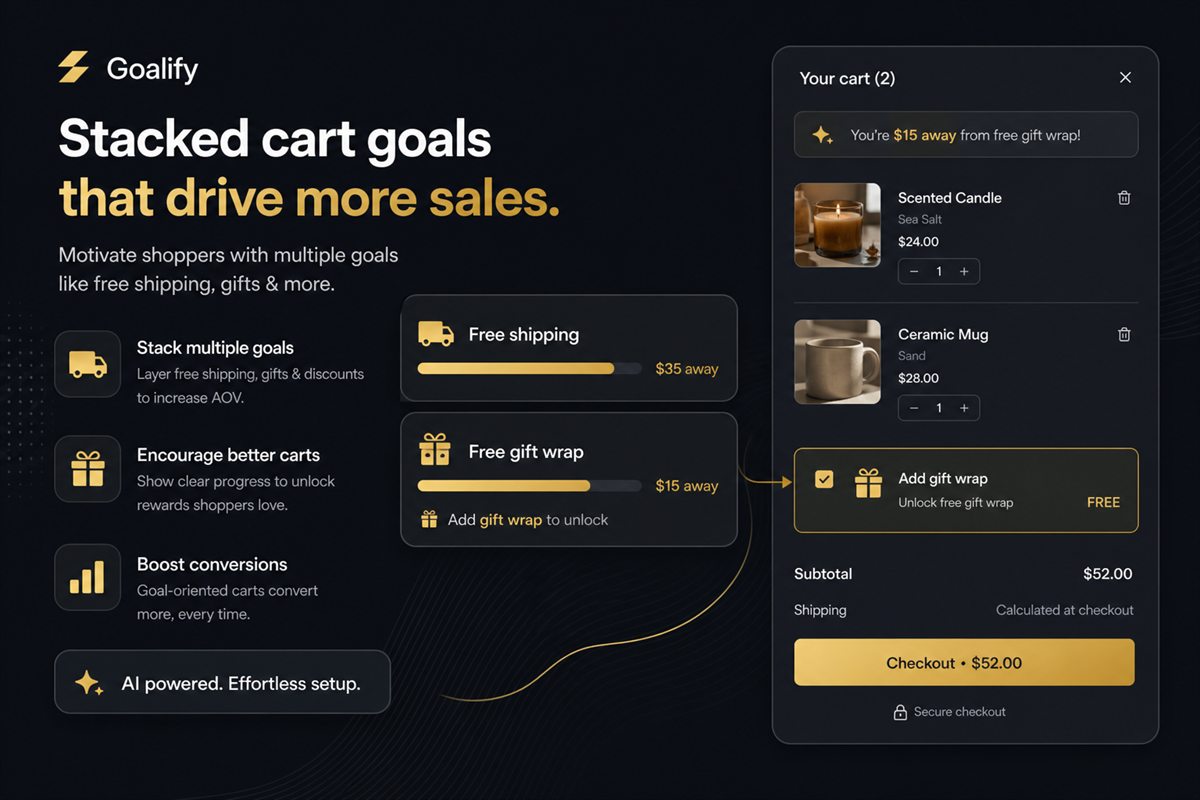
How to add gift wrapping as a progress-bar goal without competing with free shipping, and the copy that makes it feel like a treat instead of a fee.

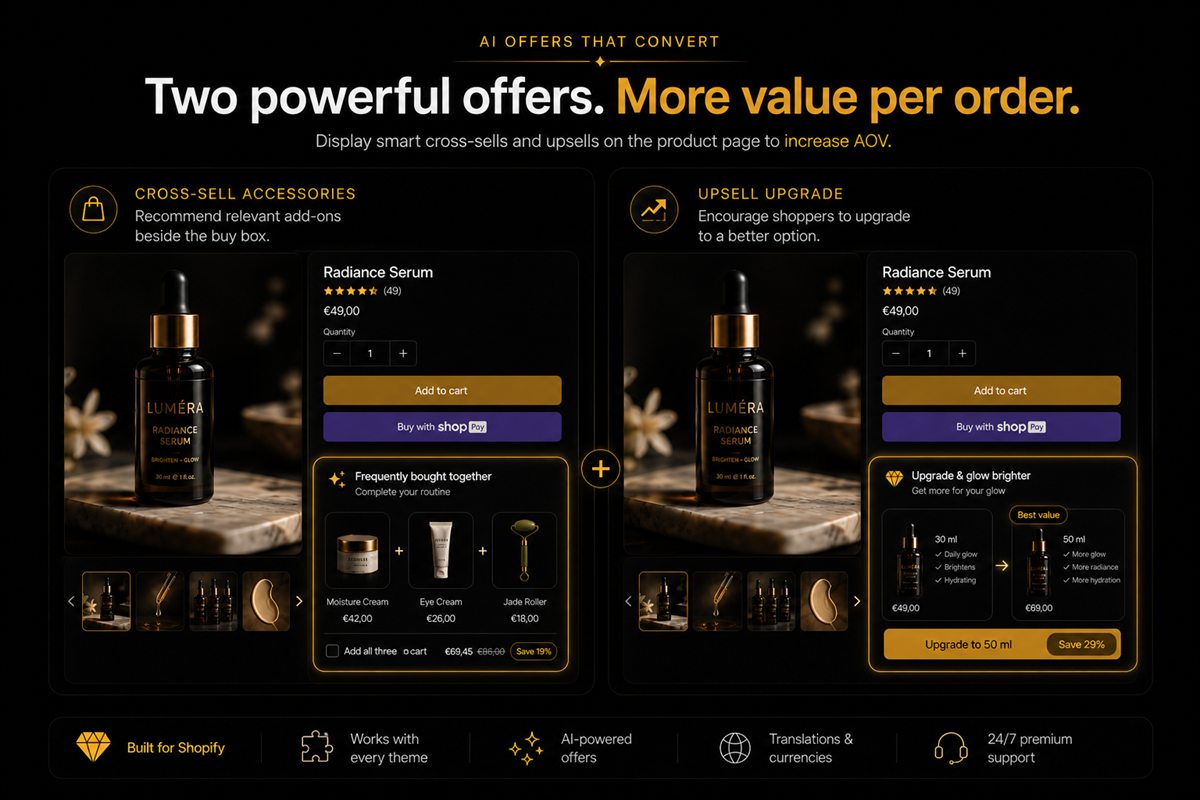
The difference between selling more and selling up, which one belongs next to the buy box, and why mixing them in one widget makes both worse.

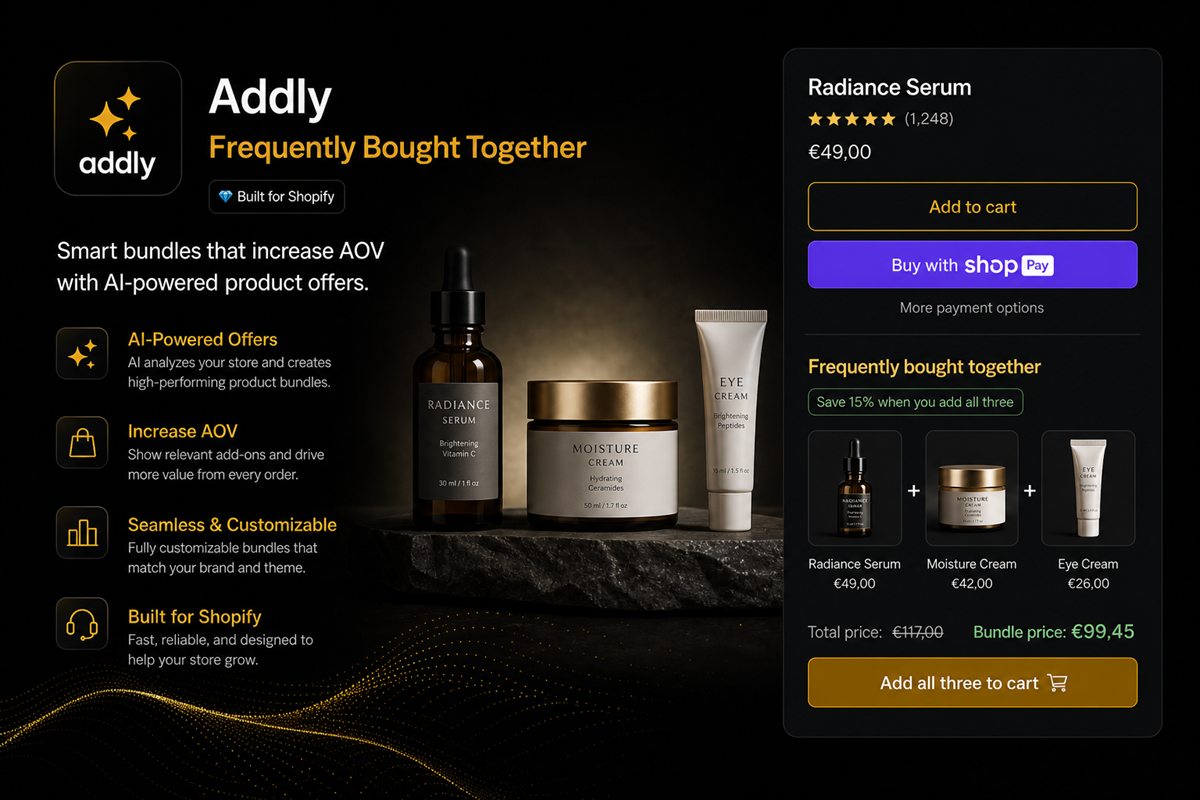
Above the fold, in the buy box, or below the description — the three placements for a bundle offer and the one that consistently gets the add.

How to put quantity breaks on specific variants so you move the colour that is not selling, without discounting the whole product line.

Why catalogue-based recommendations stall, how to build offers from real order history, and the guardrails that stop AI from suggesting a second pair of the same shoes.

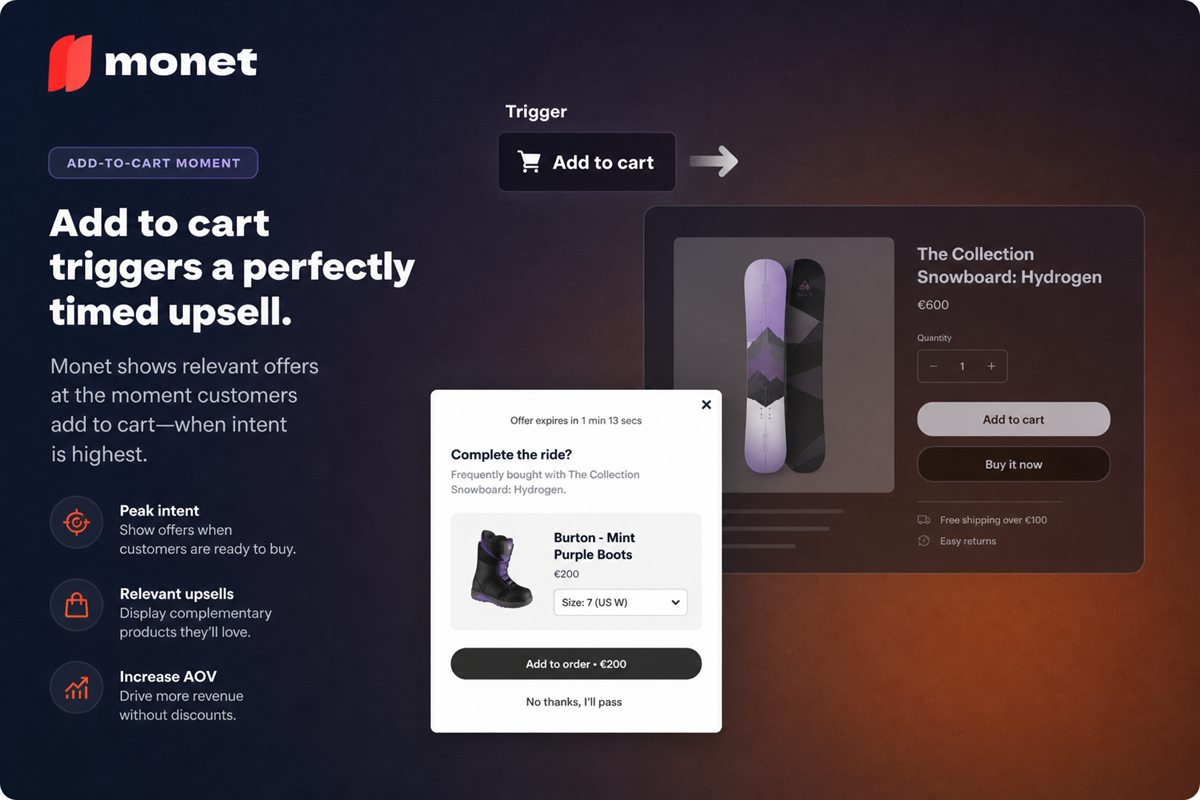
The instant after a shopper commits is the highest-intent moment in the session. Here is how to use it without breaking the flow you just earned.

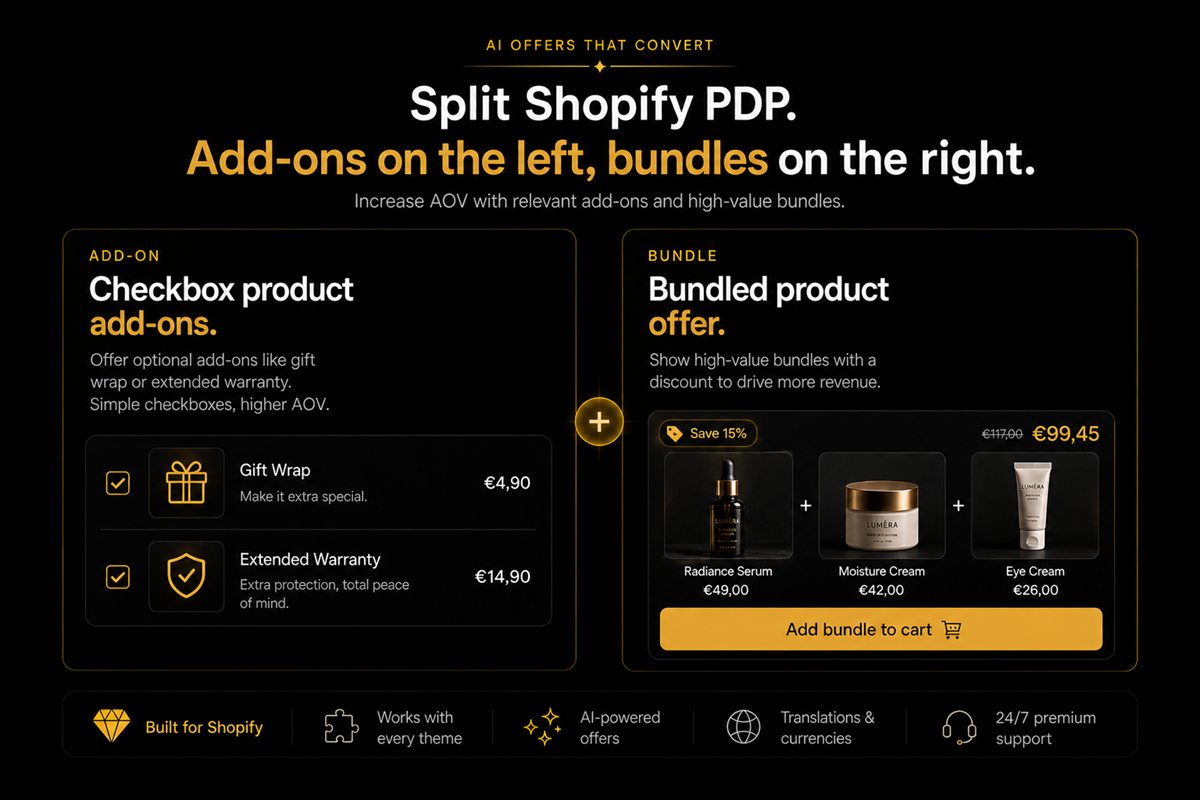
When a product add-on converts better than a bundle, when a bundle is the only honest structure, and how to avoid stacking both on the same product page.

Which scarcity and urgency blocks belong in a cart drawer, which ones train shoppers to ignore you, and how to write a bar that is actually true.

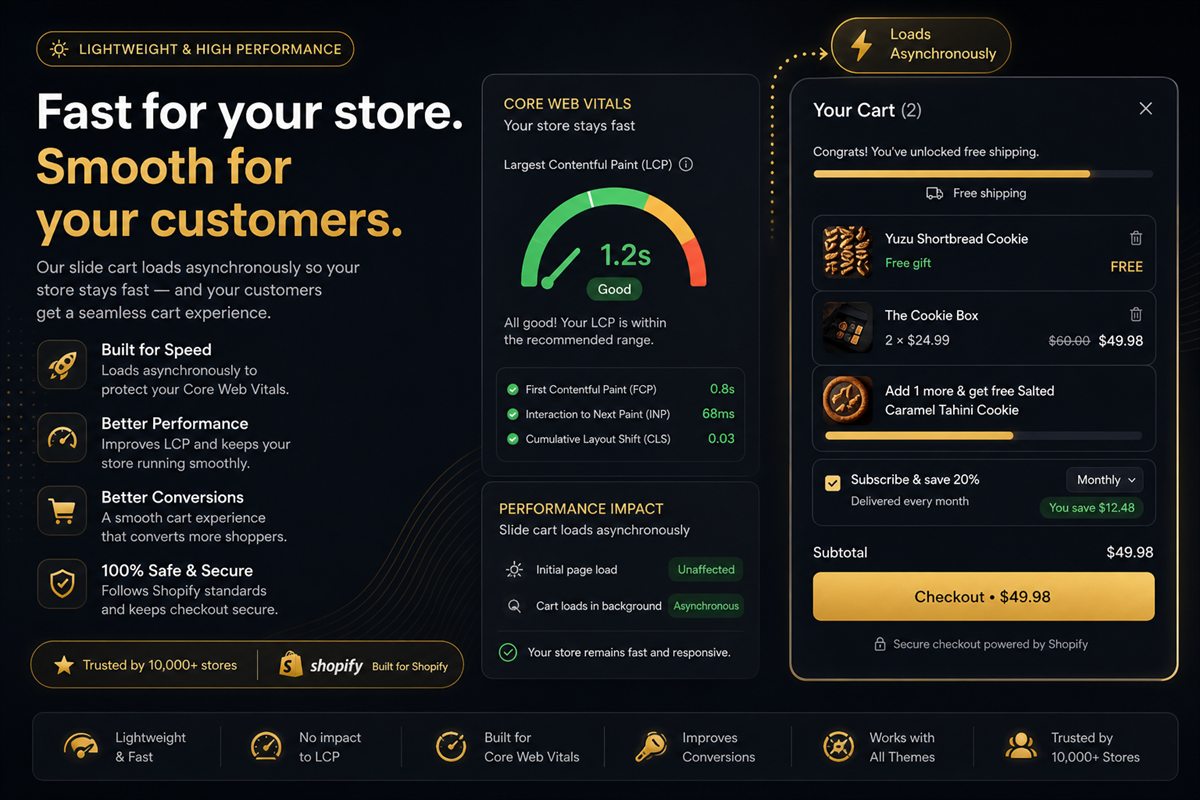
How a slide cart can wreck Largest Contentful Paint, the loading pattern that does not, and the checks to run before and after you install a cart app.

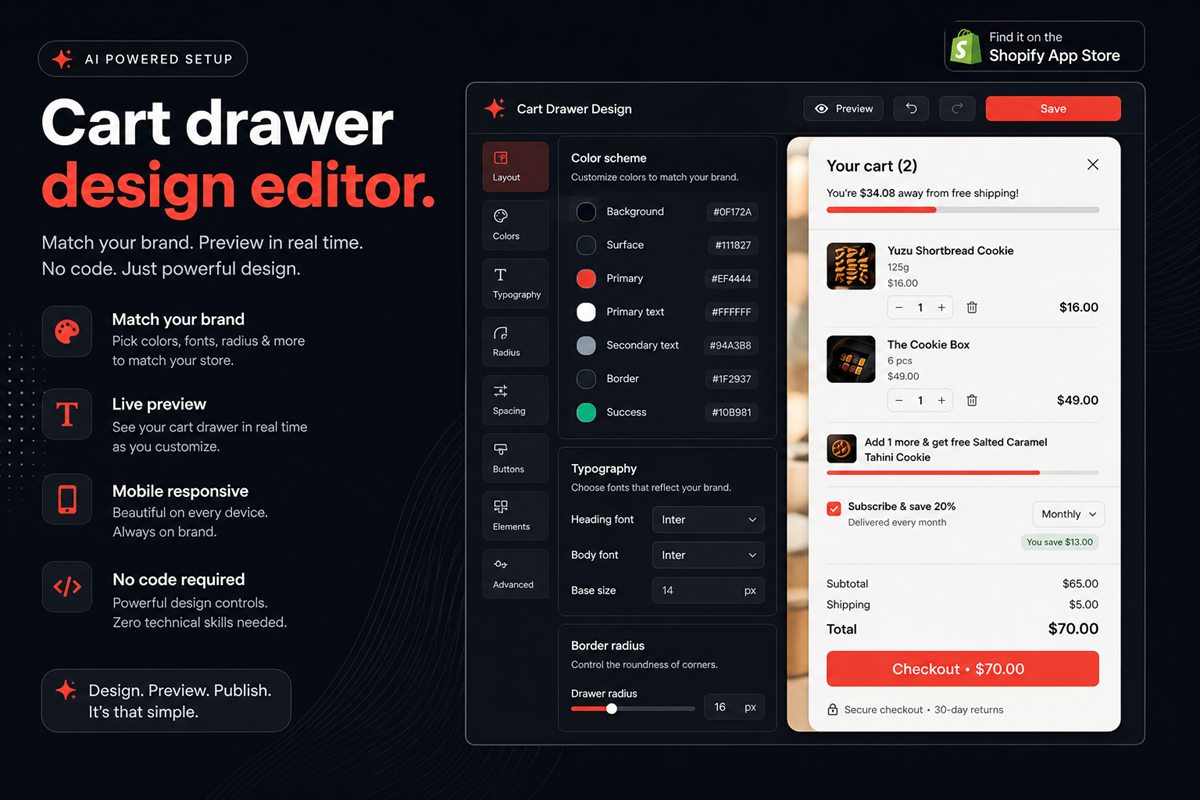
How to brand a slide cart so it feels like part of the theme — colour, type, radius, spacing — and the three mistakes that make drawers look like a third-party widget.

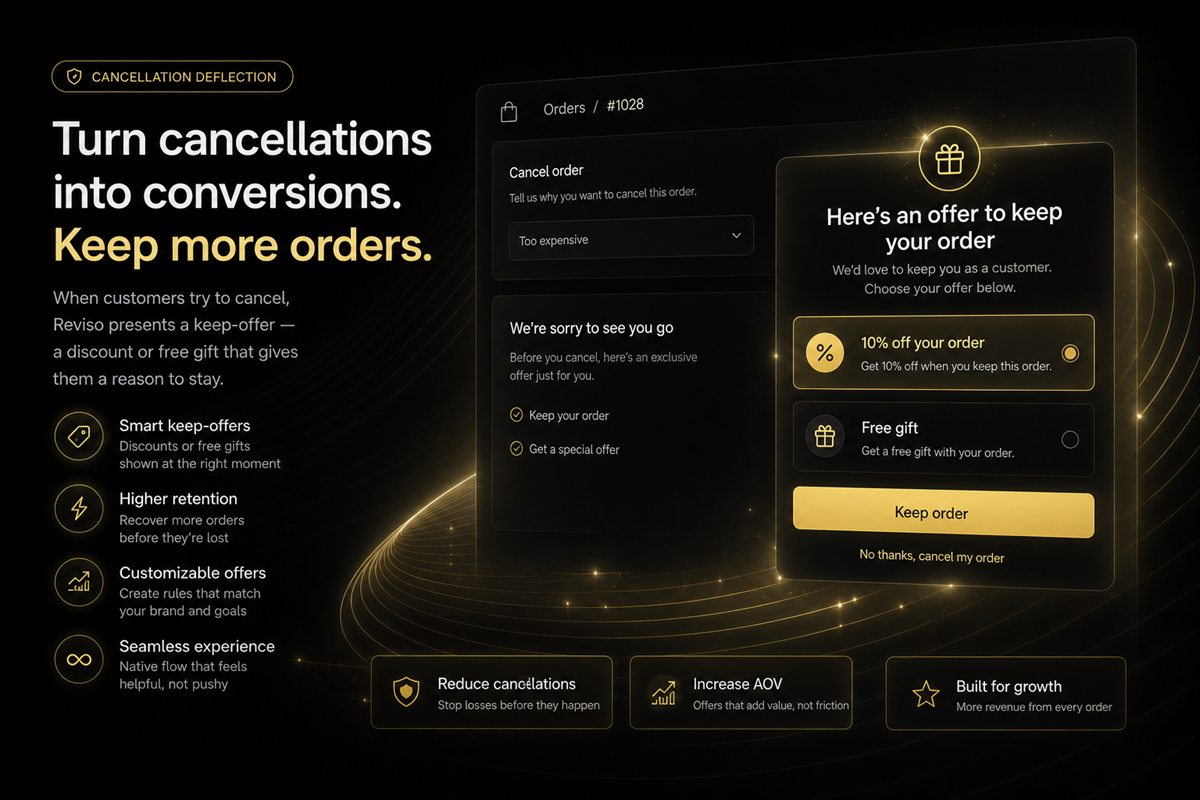
The five reasons customers cancel, which of them are actually solvable, and how to build a deflection flow that saves orders instead of trapping people.

How to offer shipping protection without looking like a dark pattern, where to place it in the cart, and the pricing that shoppers will actually accept.

When a slide-out cart drawer beats a dedicated cart page, when it does not, and the hybrid pattern that keeps high-intent shoppers from bouncing.

Free shipping thresholds, delivery promises and offers that make sense in one country are wrong in another. A practical guide to per-market cart personalisation on Shopify.

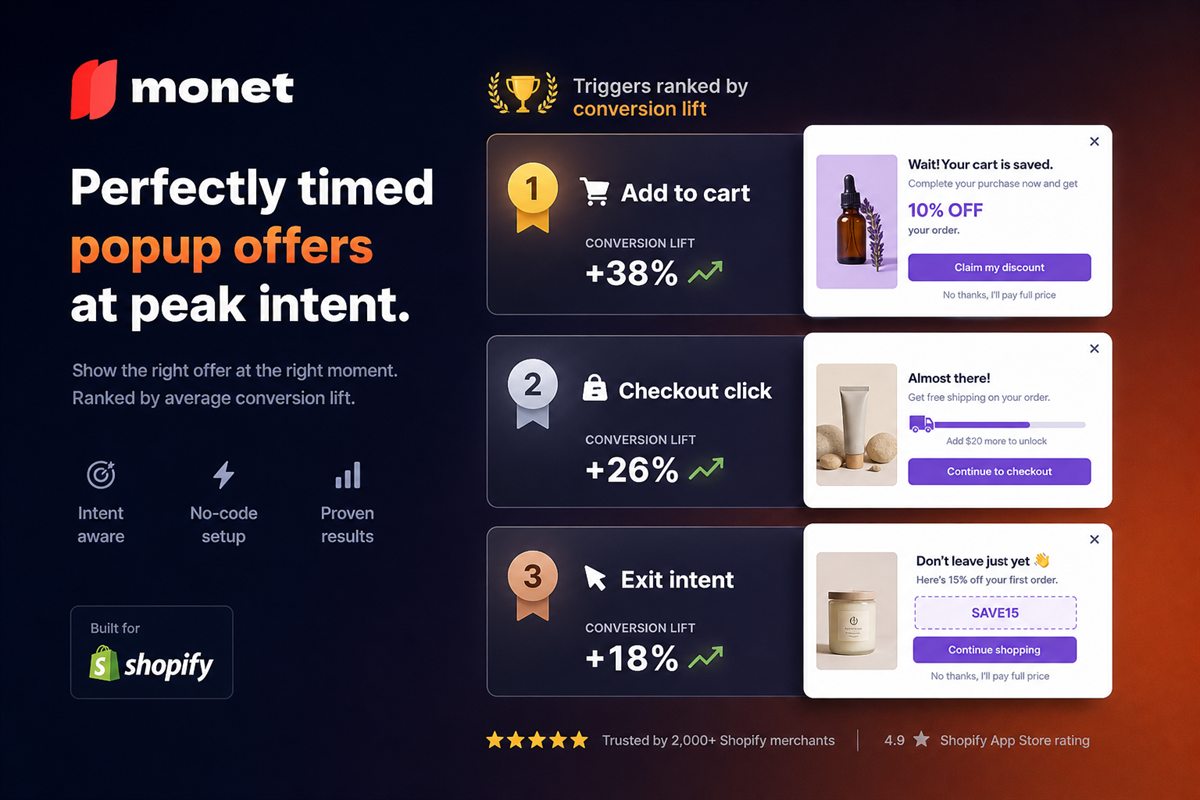
Not all popup triggers are equal. A ranked comparison of the six common triggers by intent quality, conversion risk and the offers that suit each one.

How to pick a gift with real perceived value and low landed cost, where to set the threshold, and the operational traps that turn a good GWP into a support queue.

Why showing an arrival date beats showing a shipping speed, how to calculate one you can actually honour, and where in the funnel it earns the most.

The most common post-purchase support request, why manual handling is expensive, and how to automate it safely including zone changes, fraud checks and the fulfilment cutoff.

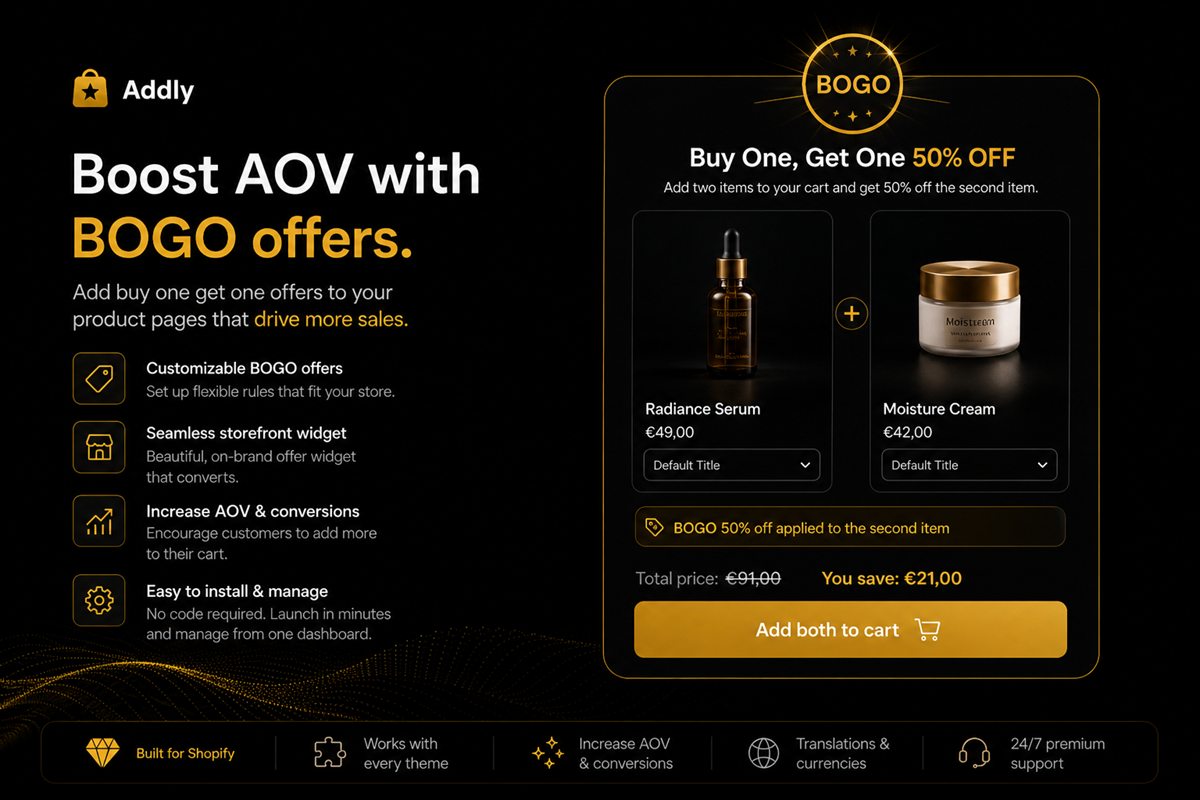
The four BOGO variants, the margin floor each one requires, why BOGO free is usually the wrong choice, and the categories where it genuinely outperforms a discount.

Every common cause of cart abandonment, what each one actually costs, and how long it takes to fix — ordered so you can start at the top and work down.

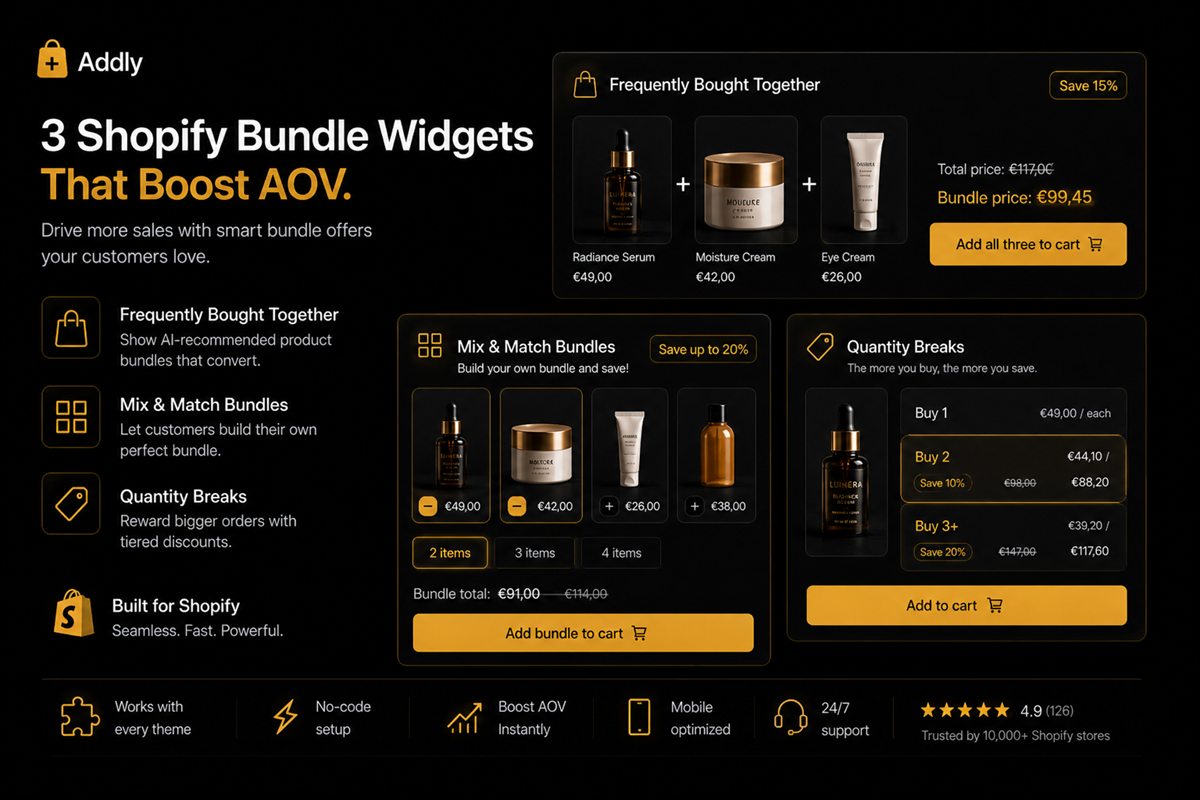
The eight bundle types that work on Shopify, how to price each one without eroding margin, and how to tell which of them fits your catalogue.

The thank-you page, the order edit screen and the pre-dispatch window are the least contested upsell surfaces in ecommerce. Here is how to use each without touching conversion rate.

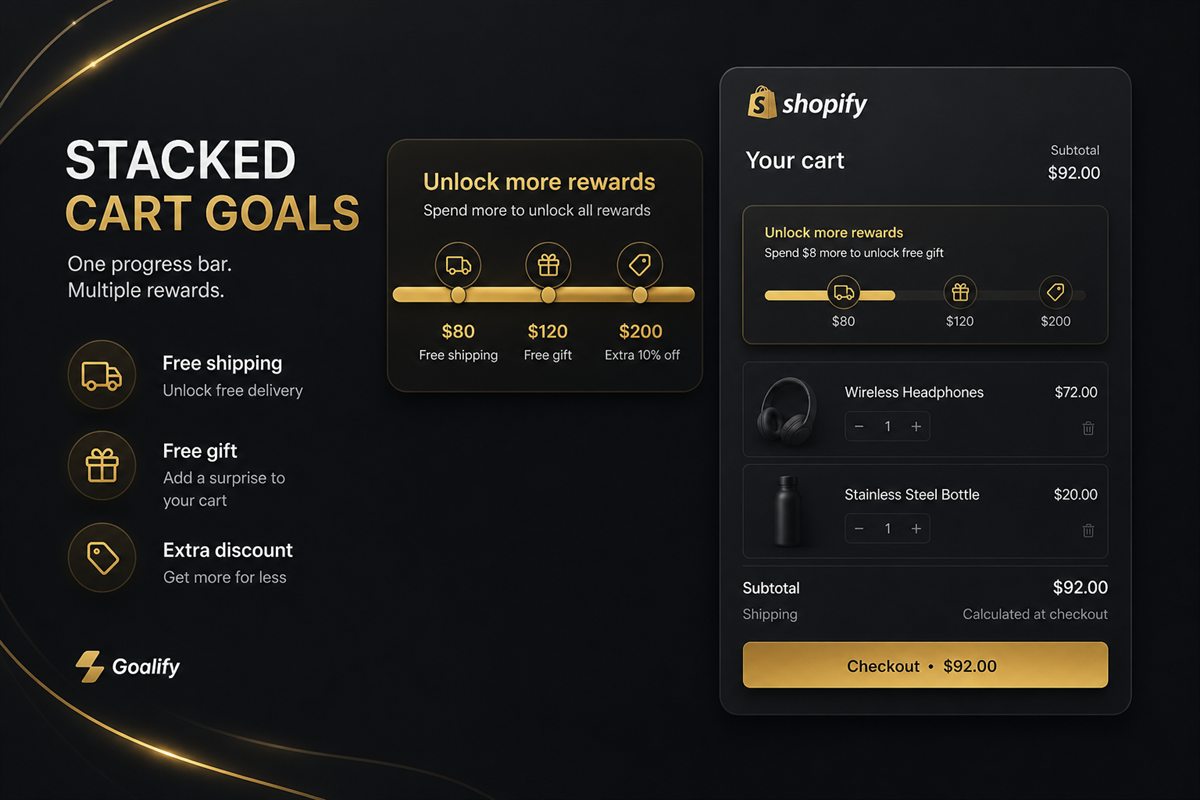
One free shipping threshold captures one behaviour change. Here is how to build a three-tier reward ladder that keeps working across your whole order distribution.

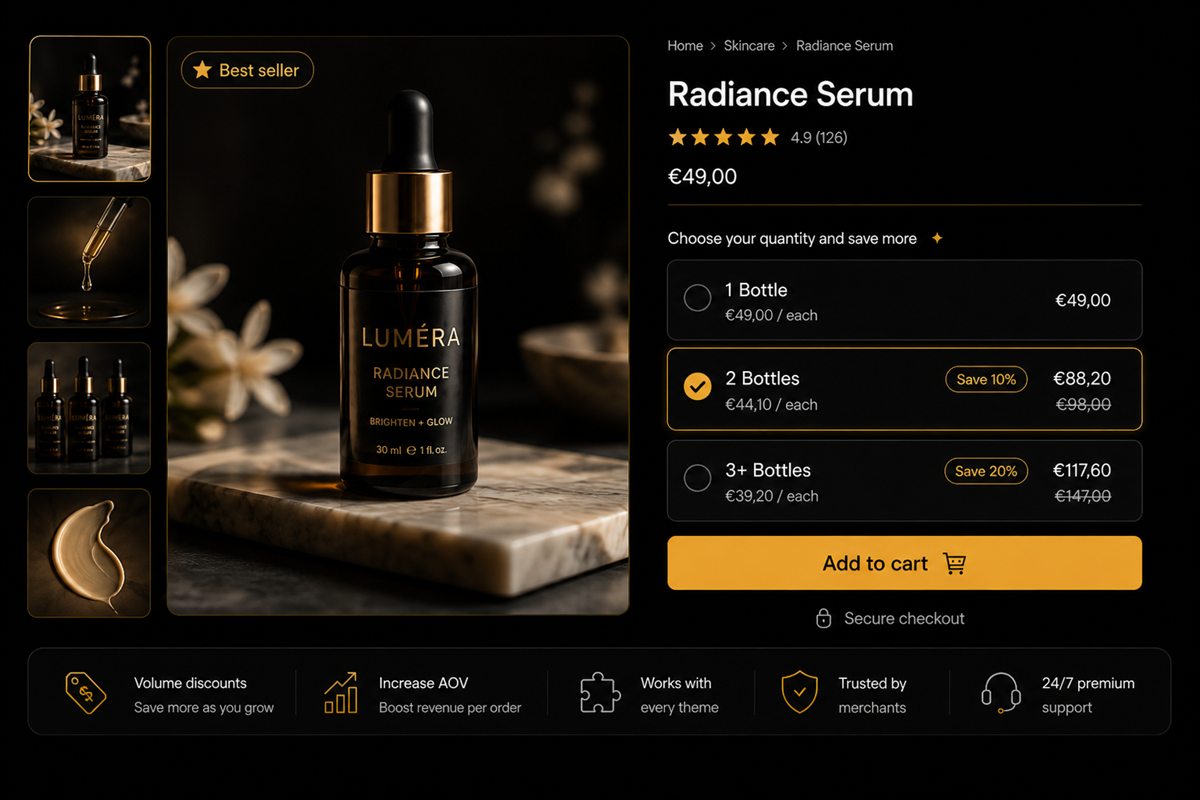
How to structure discount tiers that create incremental units instead of subsidising the customers who were already buying three, with worked numbers.

How to read popup analytics without fooling yourself: which denominator to use, what each metric actually measures, and the diagnostic patterns behind bad numbers.
Most returns are decided before the parcel ships. A breakdown of return causes, which are preventable at which stage, and why the pre-dispatch window is the cheapest place to intervene.

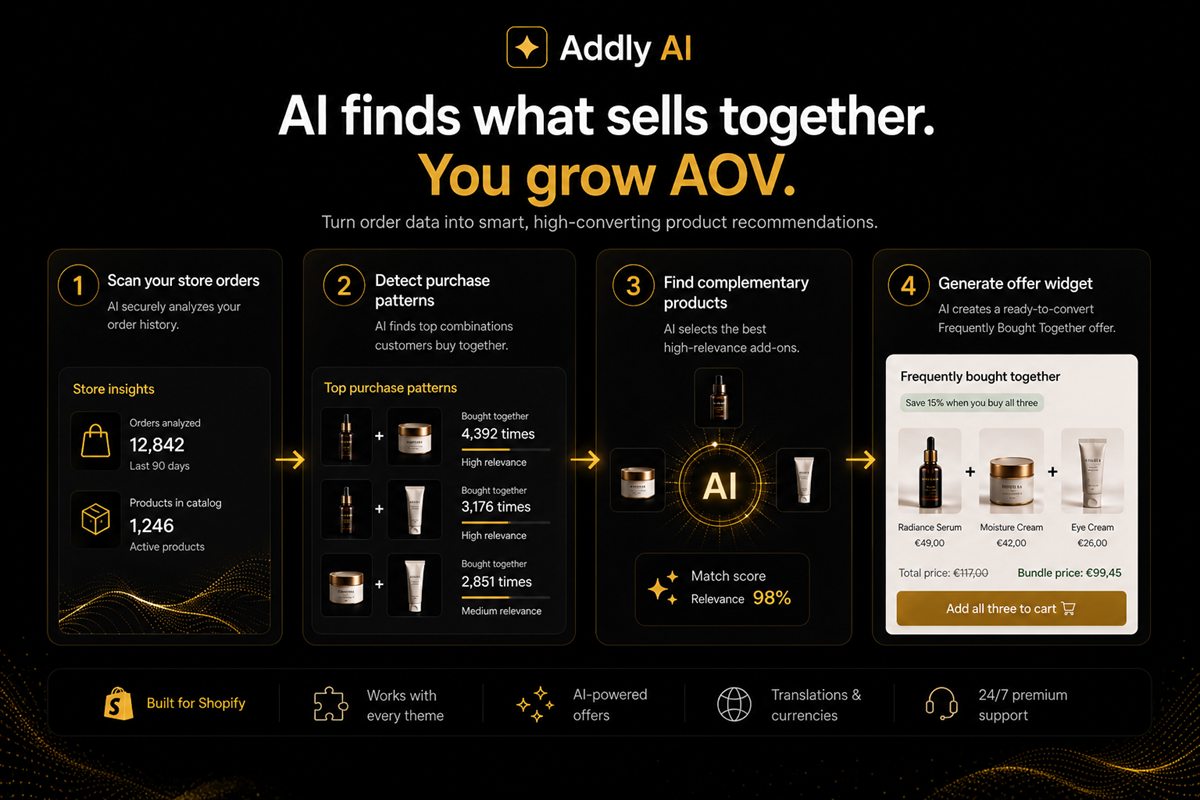
How to derive product pairings from your own order data instead of category tags, the price ratio that converts, and why three suggestions beat eight.
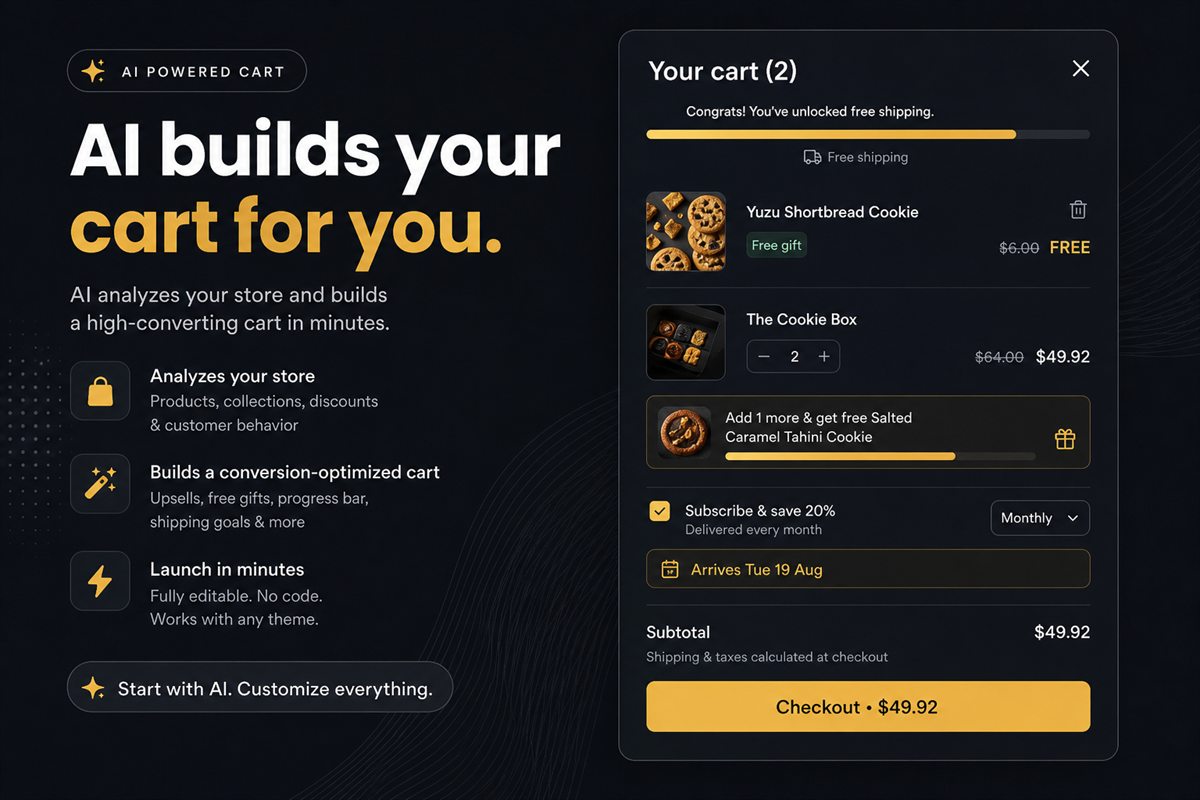
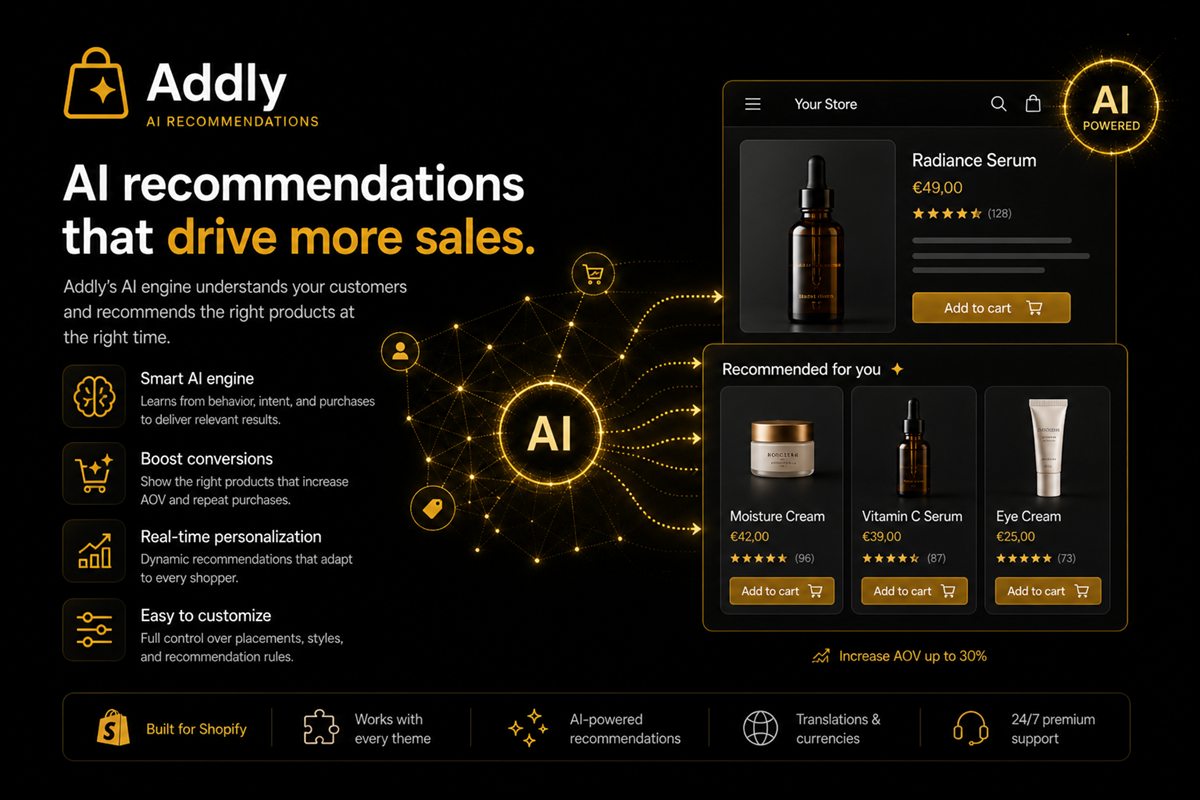
What sits behind "AI recommendations", the data volume you actually need, where learned models beat hand-built rules, and where they measurably do not.

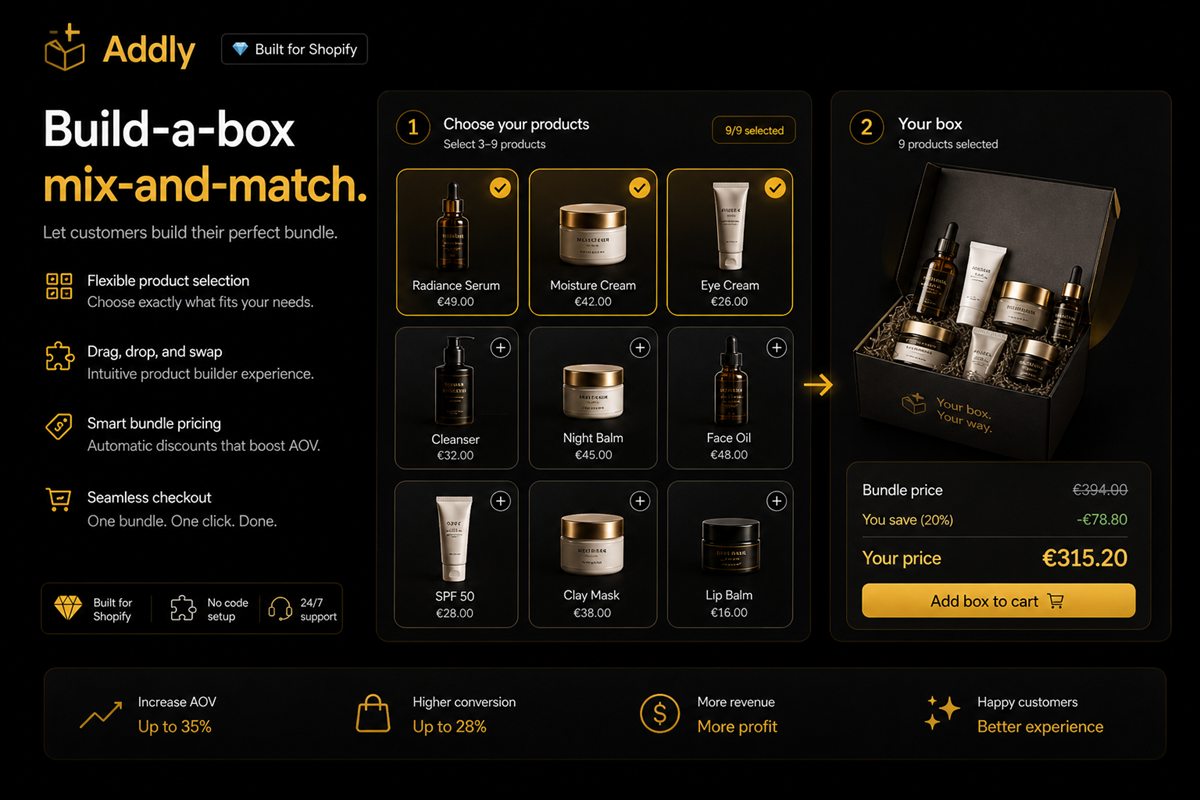
How to design a customisable bundle that converts: slot structure, how much choice is too much, pricing models, and the inventory traps nobody warns you about.

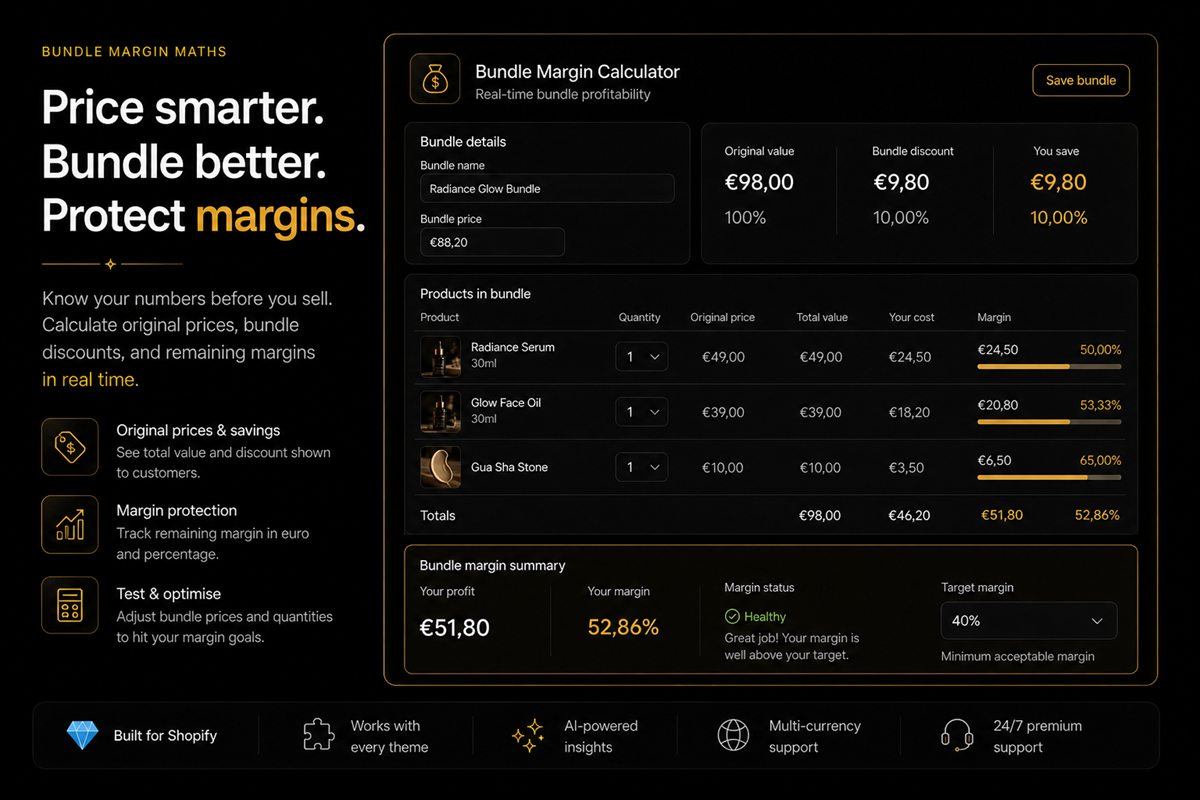
A worked model for bundle profitability including cannibalisation, discount stacking, shipping cost and returns — with the break-even formula most stores never run.
No articles match that search yet. Try a broader term.
Every tactic in these articles is something our apps do out of the box. Free plans, no theme edits, live in minutes.
Every app installs from the Shopify App Store. No theme code, no developer needed.