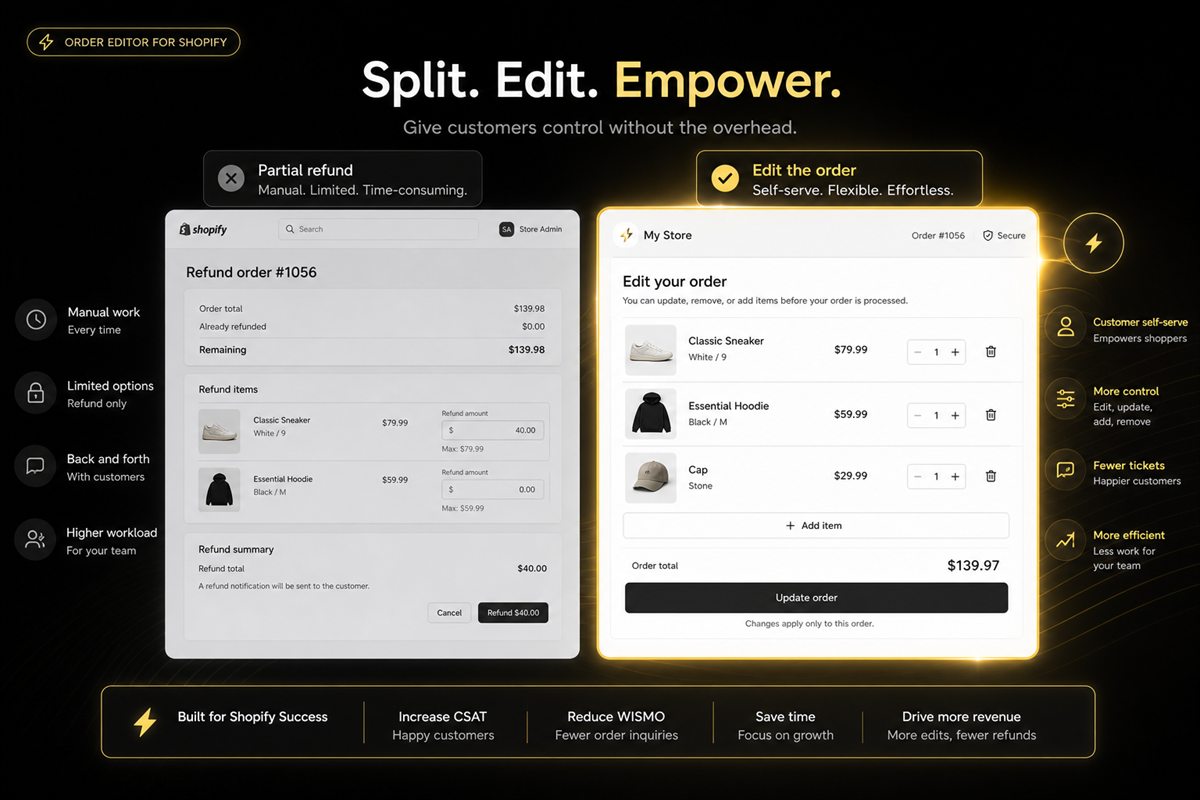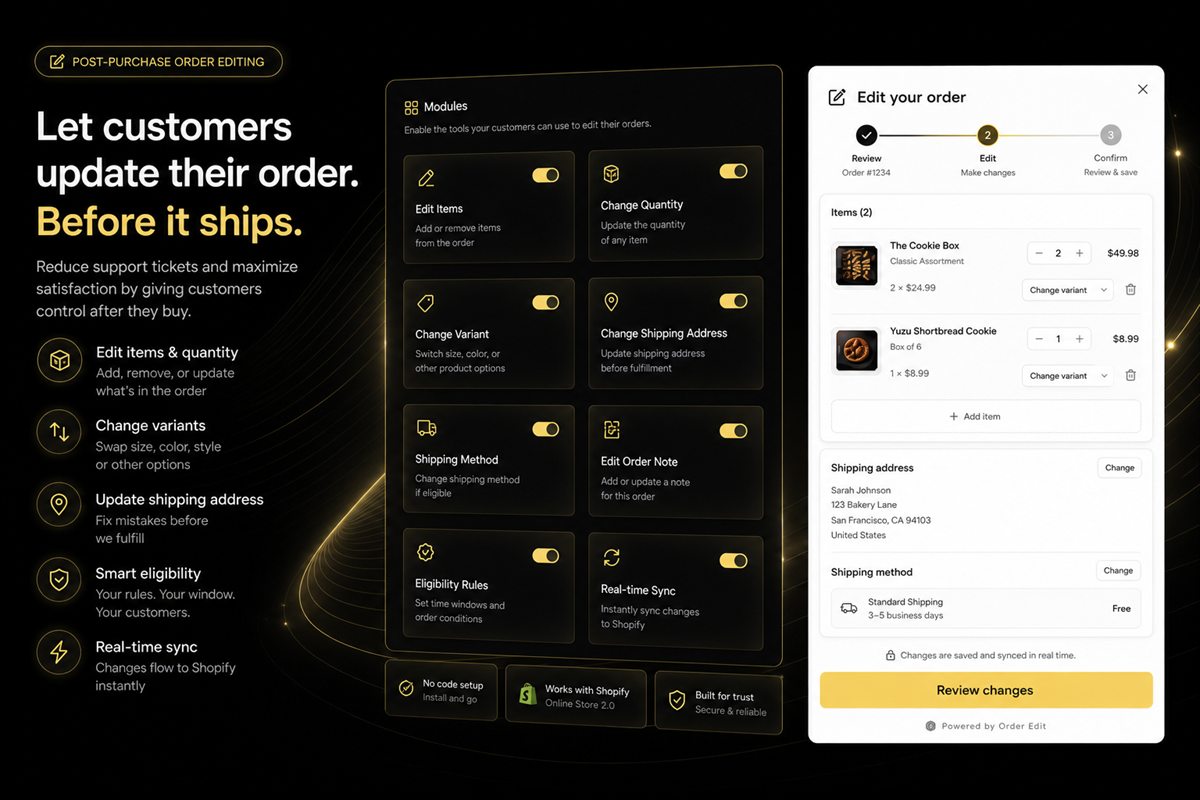
 Addy
Addy  Addly
Addly  Goalify
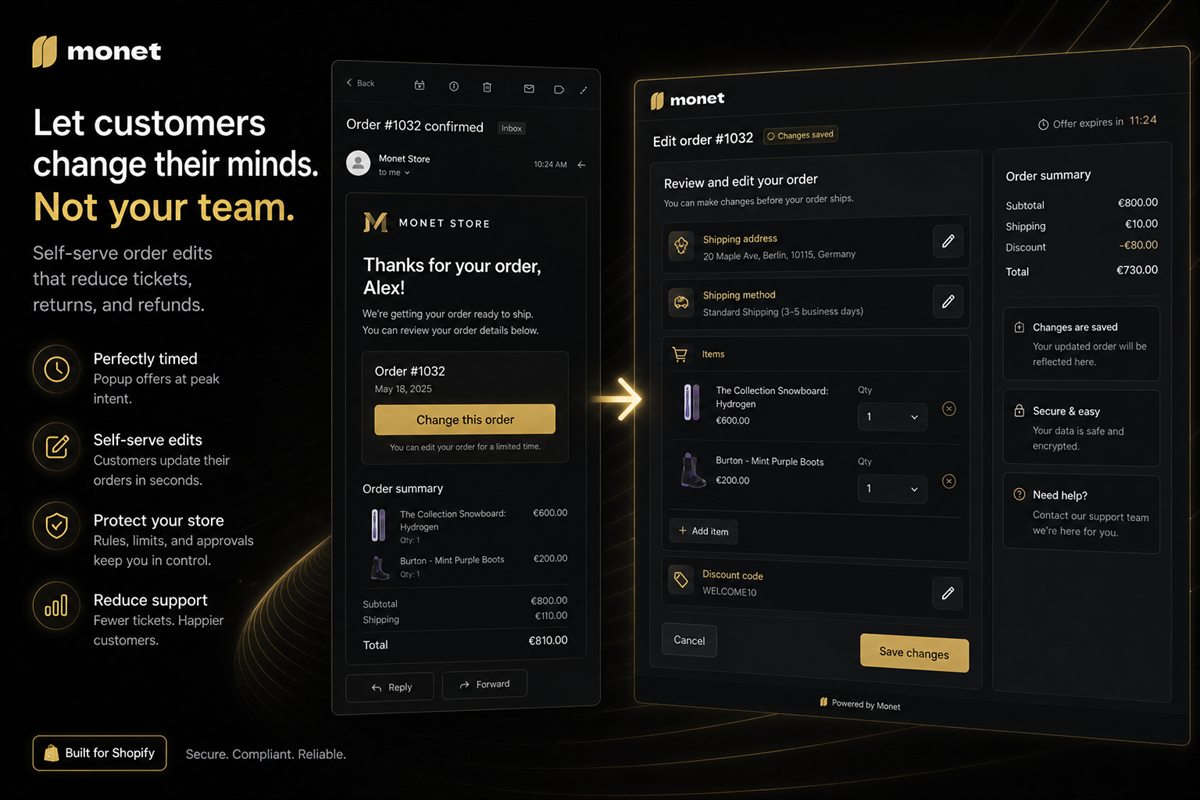
  Monet
Monet  Reviso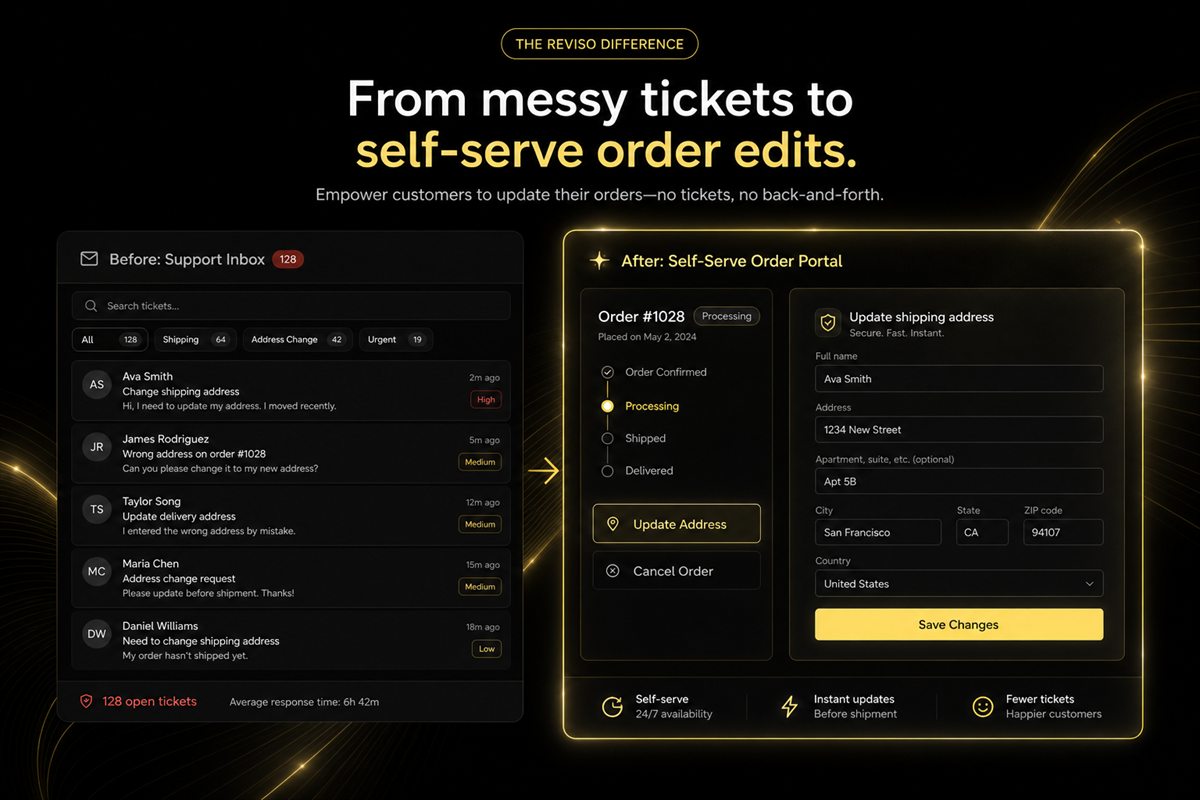
Key takeaways
- Address, delivery note and "add this SKU" edits are ticket factories. They should be self-serve until fulfilment starts.
- A human should still see high-risk changes: country switches, high-value orders, and anything that looks like freight forwarding fraud.
- Measure tickets deflected, not just AOV from post-purchase upsells. The quiet win is hours returned to support.
- The edit window must be obvious in the confirmation email. A portal nobody can find is not self-serve.
- Cap what can change. Rules are how self-serve stays available for everyone else.
Most Shopify "please change my address" tickets should never need a human. Until fulfilment starts, address, delivery note and add-a-SKU edits are work the customer already understands. Self-serve is how you stop paying someone to type what they already know.
Self-serve is not a feature for its own sake. It is a support product that happens to be able to sell. Lead with the support.
What self-serve order edits are
Self-serve order editing is a customer portal that changes a paid Shopify order inside rules: same country, before fulfilment, in-stock SKUs, published cut-off. It is the opposite of a helpdesk macro that copies a new postcode into admin.
It lives inside Shopify order editing. The portal does the repetitive work. Tickets keep the judgement calls.
What should never need a ticket
Until fulfilment has started:
- Shipping address inside the same country
- Delivery instructions
- Adding a SKU that is in stock
- Swapping a variant of the same product (size, colour) when inventory allows
Those four are the volume. If they are still landing in the inbox, you do not have an order-edit product. You have a form letter.
Worked example: 40 address tickets a week, each a few minutes of chat plus a carrier check. Move same-country changes to the portal with a cut-off before pick. The queue should drop by those 40. What remains is country switches, fraud, and people who missed the window — work a human can actually judge.
What should still hit a human
- Country or continent changes
- High-value orders above a threshold you set
- Accounts with fraud signals
- Requests after the cut-off you published
- Cancellations with refunds, wholesale orders, freight-forwarding patterns
Rules are not pessimism. They are how self-serve stays available for everyone else.
Some people will try to abuse the portal. Cap what can change and you keep the honest "I typed the postcode wrong" cases off the queue. Do not shut the whole door because of the edge case.
How to keep high-risk changes behind rules
- Same-country address edits: self-serve until fulfilment, plus buffer.
- Country change: ticket. Postage, duties and fraud risk change.
- Order value above your threshold: ticket or a two-step confirm you actually review.
- Fraud-tagged accounts: no portal, or portal in view-only.
- After cut-off: closed state, not a form that errors.
Write this as a table the team can see. If live chat lets a country change through while the portal blocks it, customers will game both.
Show the door
Confirmation email, order status page, account order history: the same link, the same window ("You can change this until we ship"). If the only path is "reply to this email", you will get replies.
The edit link in the confirmation email is not a nice-to-have. A portal nobody can find is not self-serve.
Guests need the order-status token, not a forced account. Address tickets from guests are often "I cannot log in," not "I cannot find my postcode."
Measure the queue, not only AOV
Track volume of address and add-item tickets before and after. If AOV from post-purchase offers is the only number on the dashboard, you will under-invest in the thing that actually changed the team's week.
Count:
- Address / note / add-SKU tickets per week
- Portal completions inside the window
- Edits reversed because fulfilment had already started (that number should be near zero if the cut-off is bound to status)
- Hours back on the support rota
Even a short chat is expensive at support wages, and address tickets often take more because of carrier constraints. Deflecting a few hundred a month is a real line item.
When not to go fully self-serve
Keep humans in the loop for made-to-order SKUs that cannot change, for wholesale accounts, and for stores whose 3PL cannot accept a late line-item add. Self-serve is for the repetitive, low-risk majority. It does not replace the helpdesk. It replaces the copy-paste macros so the rest of the work becomes visible.
This is a support product that happens to be able to sell. Lead with the support.
Common mistakes
Hiding the portal because a few people abused it. Cap the rules instead: same country, before fulfilment, valid token. Shutting the door sends the honest majority back to chat.
Letting agents override the cut-off “just this once” without a tag. That becomes the real policy. Customers learn to phone.
Measuring only add-on AOV from the portal. Address tickets disappearing is the win. If you do not count the queue, you will underfund the feature and it will rot.
Shipping SMS that says “your order is on its way” while the portal still accepts an address change. Bind both to fulfilment status so the customer is not told two truths.
Self-serve does not make support optional. It makes support available for the tickets that actually need a person.
Frequently asked questions
Won't people abuse self-serve edits?
Some will try. Cap what can change (same country, before fulfilment, logged-in customer or a valid order-status token) and you keep the honest "I typed the postcode wrong" cases off the queue.
Should every edit type be self-serve?
No. Cancellations with refunds, wholesale orders, and fraud-flagged accounts can stay on tickets. Self-serve is for the repetitive, low-risk majority.
Does this replace your helpdesk?
It replaces the copy-paste macros. You still need humans for the rest. The point is that the rest becomes visible once the noise is gone.
What is a typical ticket cost?
Even a short chat is expensive at support wages, and address tickets often take more because of carrier constraints. Deflecting a few hundred a month is a real line item. Count hours, not only AOV from add-on items.
Which edits should never need a ticket?
Until fulfilment has started — shipping address inside the same country, delivery instructions, adding a SKU that is in stock, and swapping a variant of the same product when inventory allows. Those four are the volume.
Where should customers find the self-serve door?
Confirmation email, order status page, and account order history, with the same link and the same window. If the only path is "reply to this email", you will get replies.