

CRO & Analytics
How We Score the CRO Audit for Shopify Stores
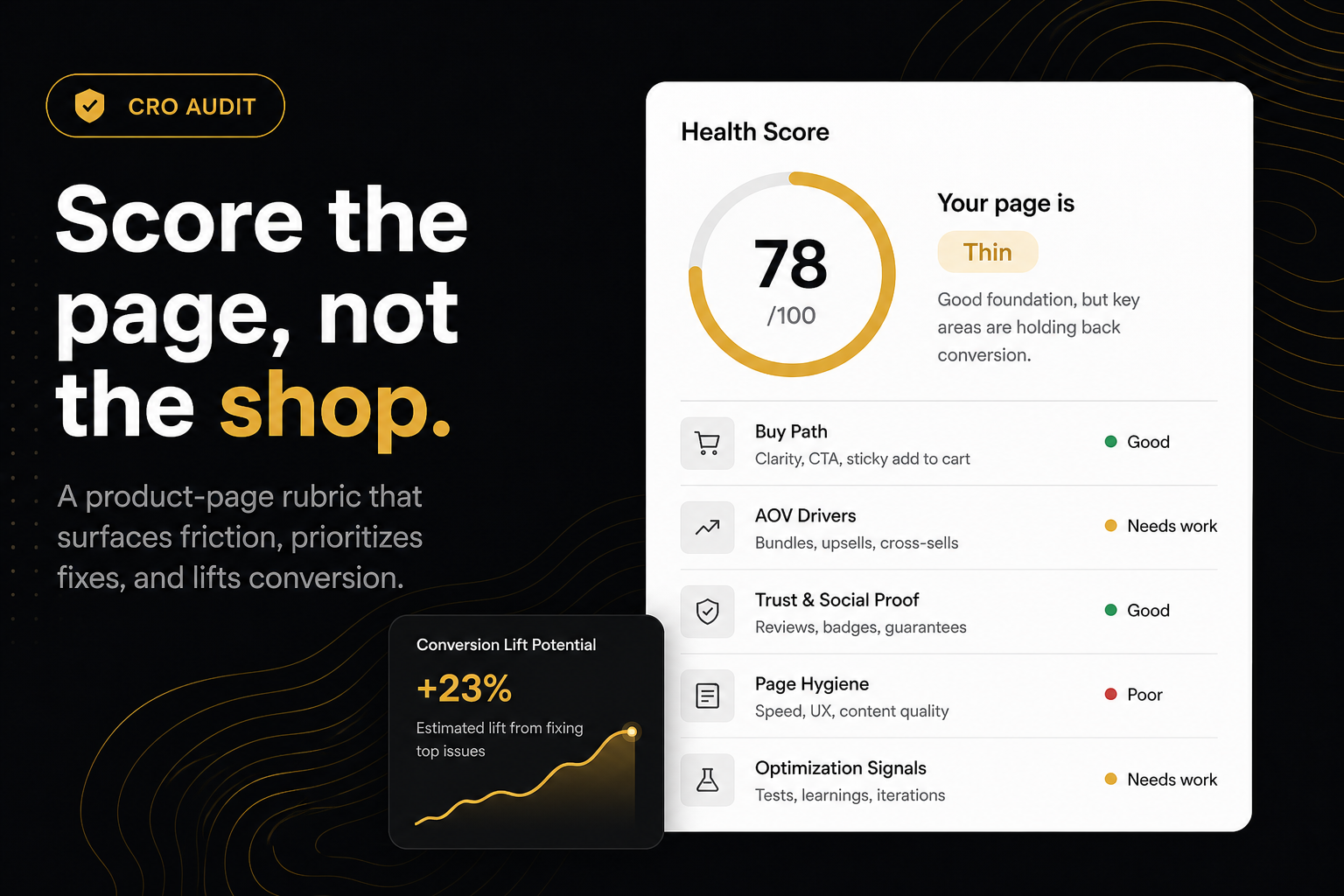
How Ninety9 scores the CRO Audit: a public product-page rubric applied the same way every time — not a conversion forecast or a law.
4 min read
Apps
 Addy — The AI slide cart drawer built for AOV
 Addly — Bundles, quantity breaks and AI offers
 Goalify — Free shipping bars, gifts and cart goals
 Monet — AI upsell popups at the right moment
 Reviso — Self-serve order edits that raise AOV
Shopify conversion rate optimisation: product page audits, health scores, A/B testing and the numbers behind every store decision.
Conversion rate optimisation on Shopify starts with the product page, because that is where the sale is stopped or made. These guides explain how to audit a product page like a shopper, read a CRO health score, prioritise fixes and measure the result — including how to use the free CRO Audit for Shopify stores.
How Ninety9 scores the CRO Audit: a public product-page rubric applied the same way every time — not a conversion forecast or a law.
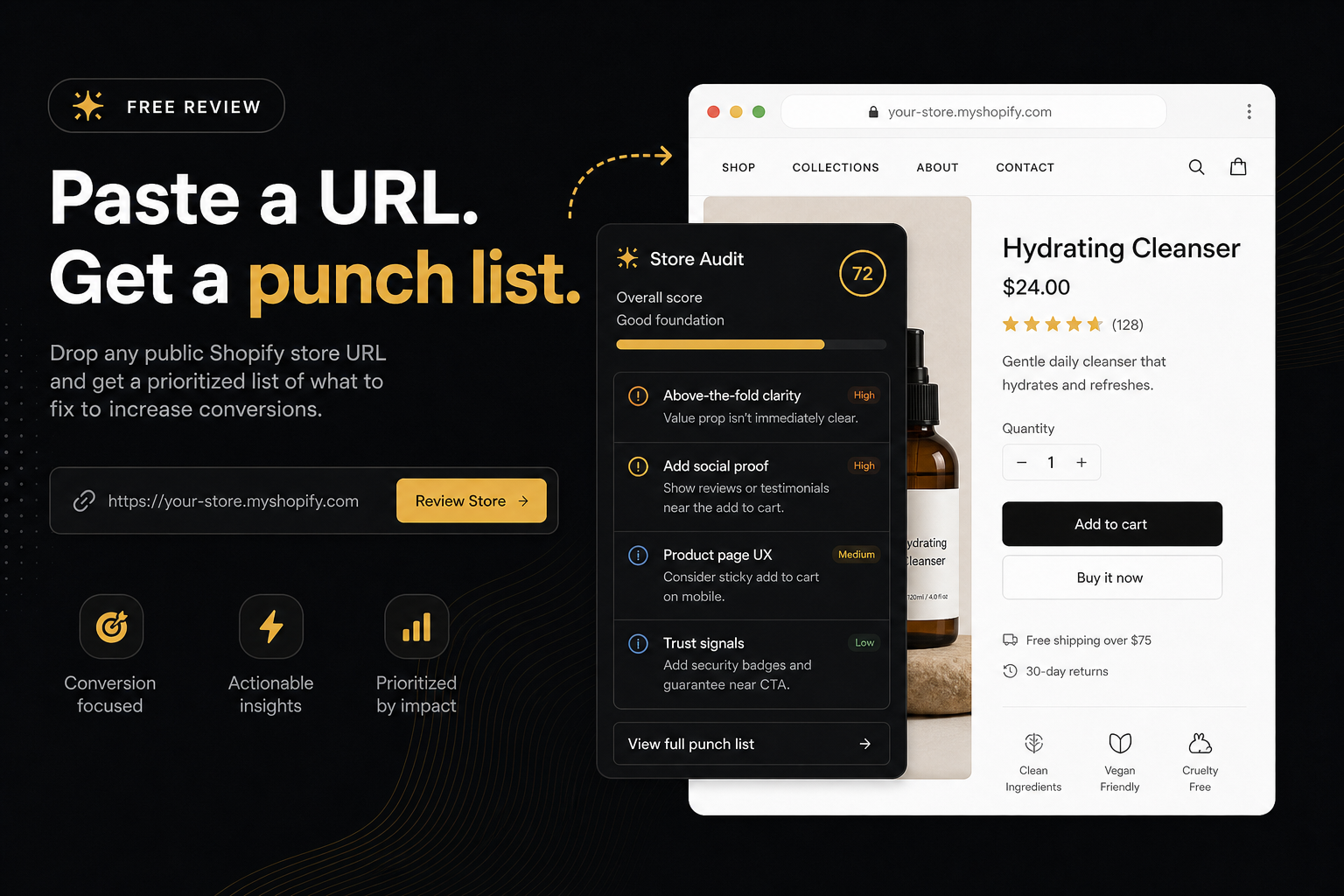
A free Shopify store review should read the public product page, not ask for collaborator access. Paste the domain and get a punch list.
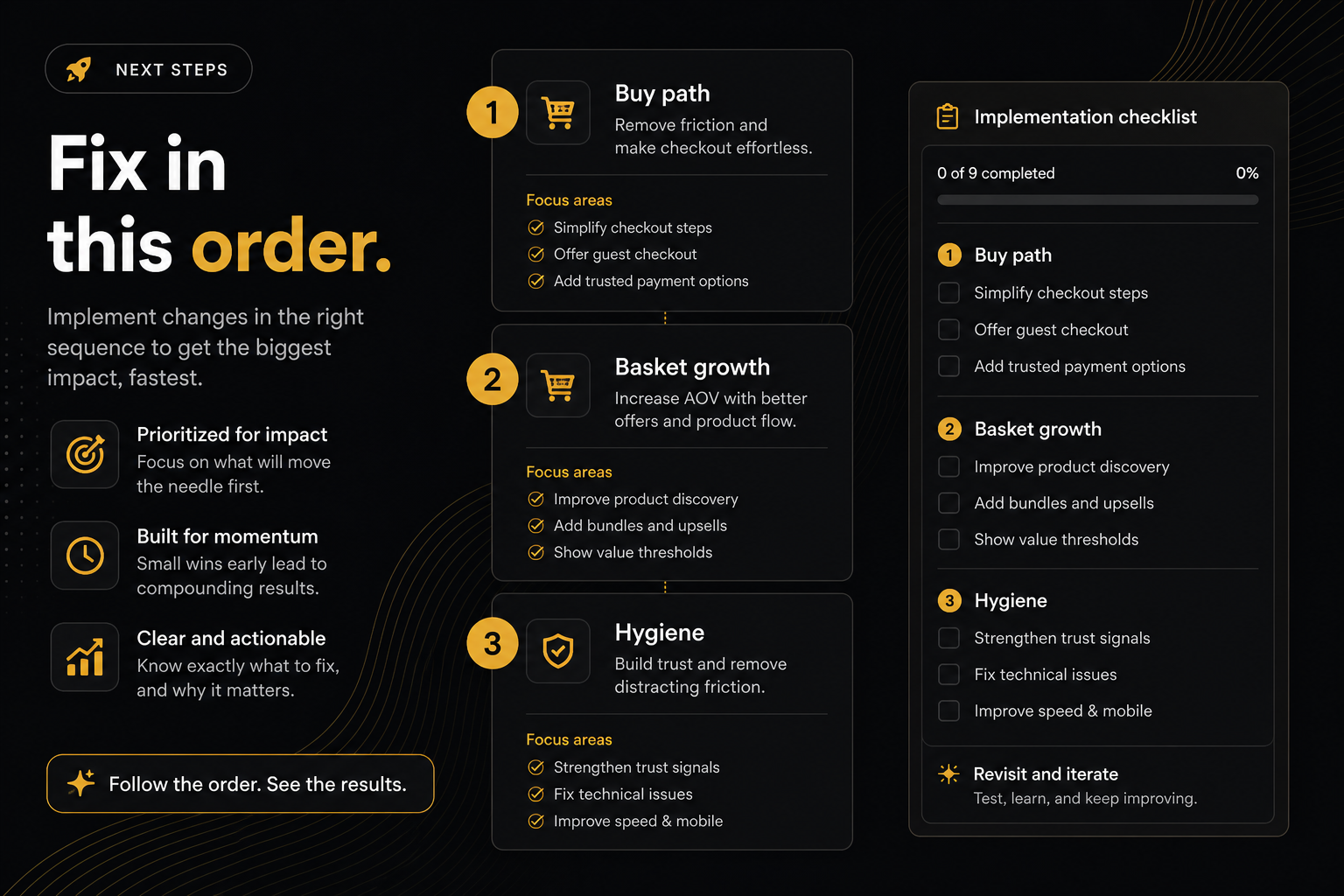
After a Shopify store review, fix buy-path constraints, recrawl, then one AOV install. Do not stack apps on a page that cannot add to cart.
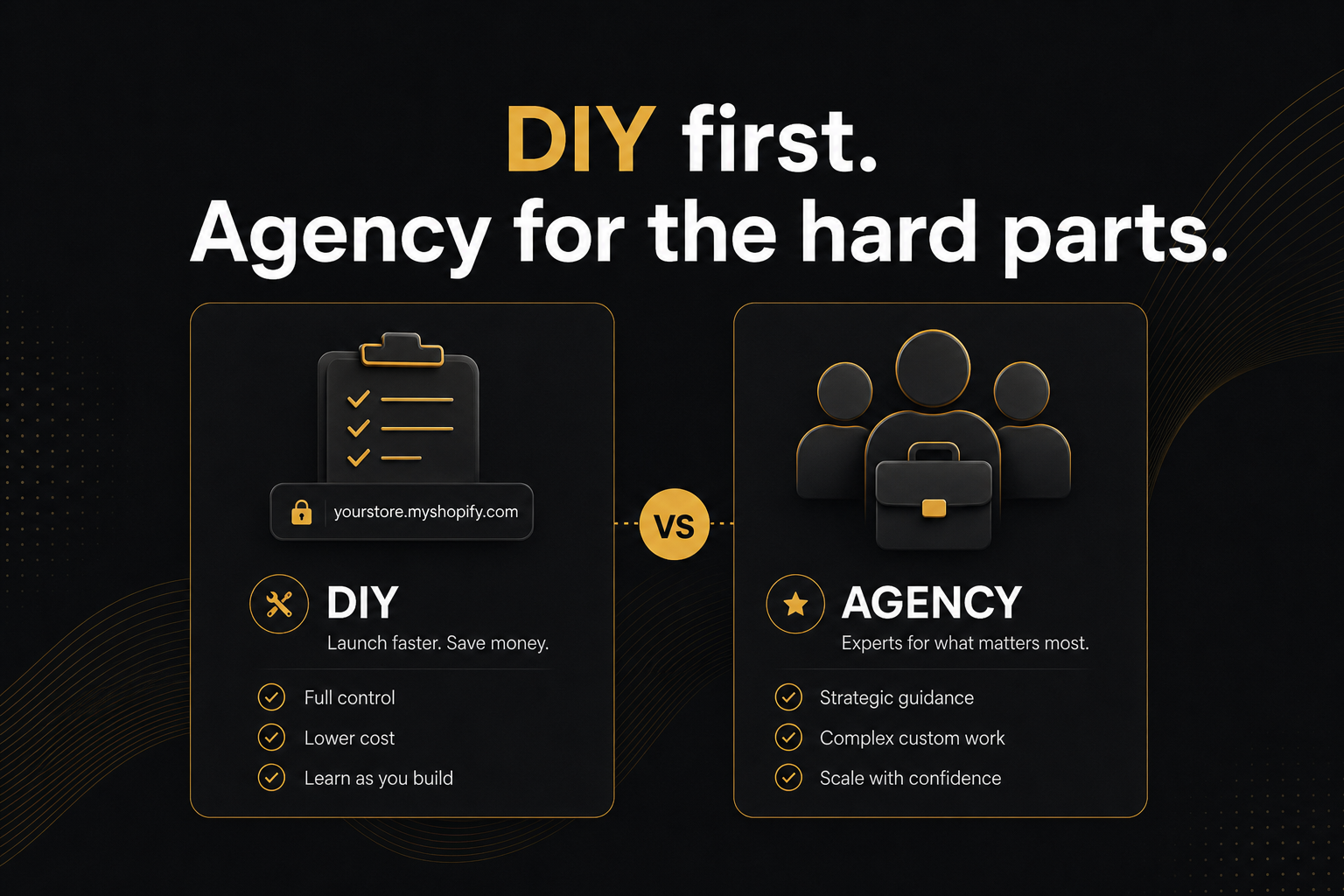
Do the public product-page review yourself. Hire an agency for positioning, research, and build — not to discover that add-to-cart is missing.
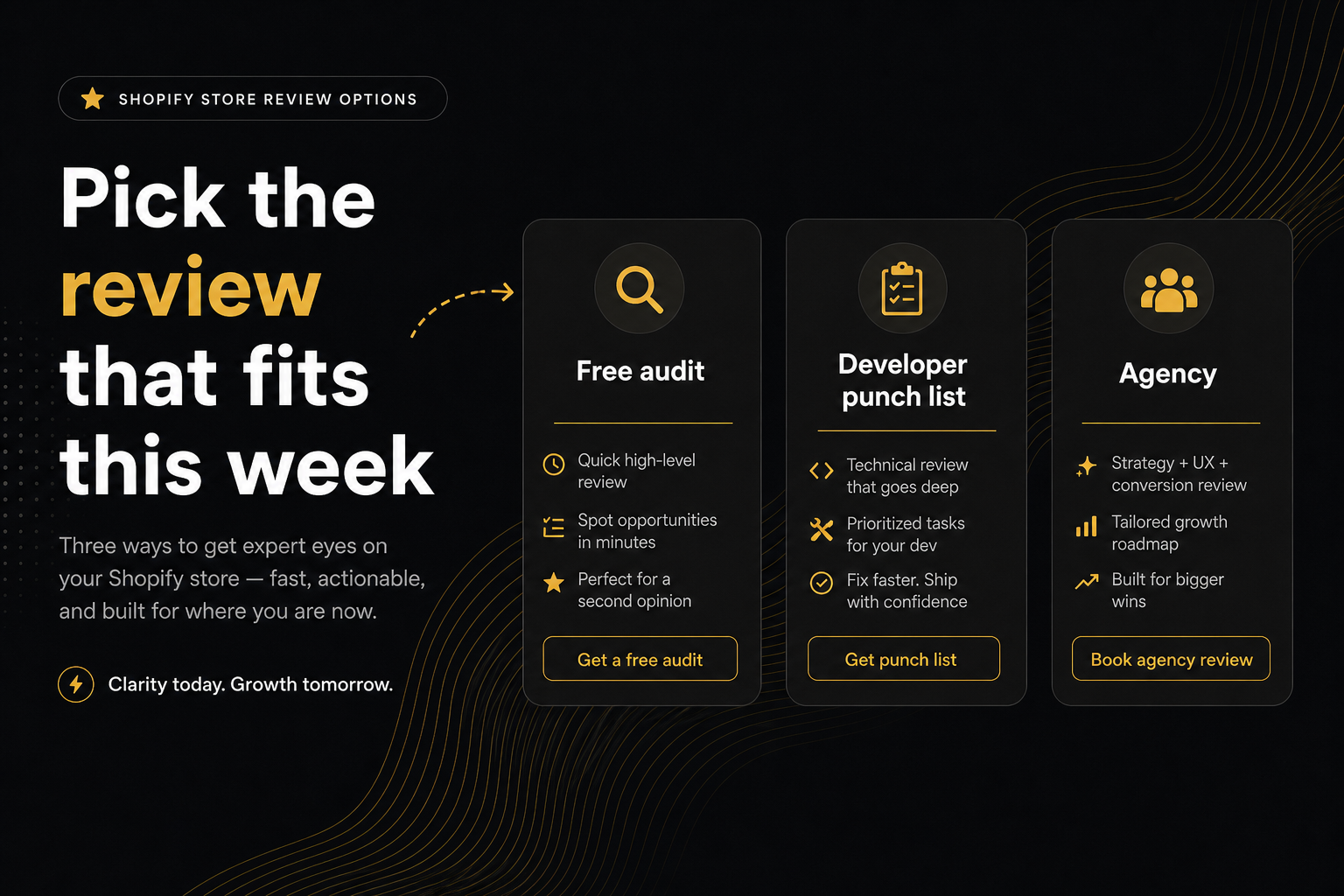
Ways to get your Shopify store reviewed: a free public audit, a developer with a punch list, or an agency — pick for this week, not forever.
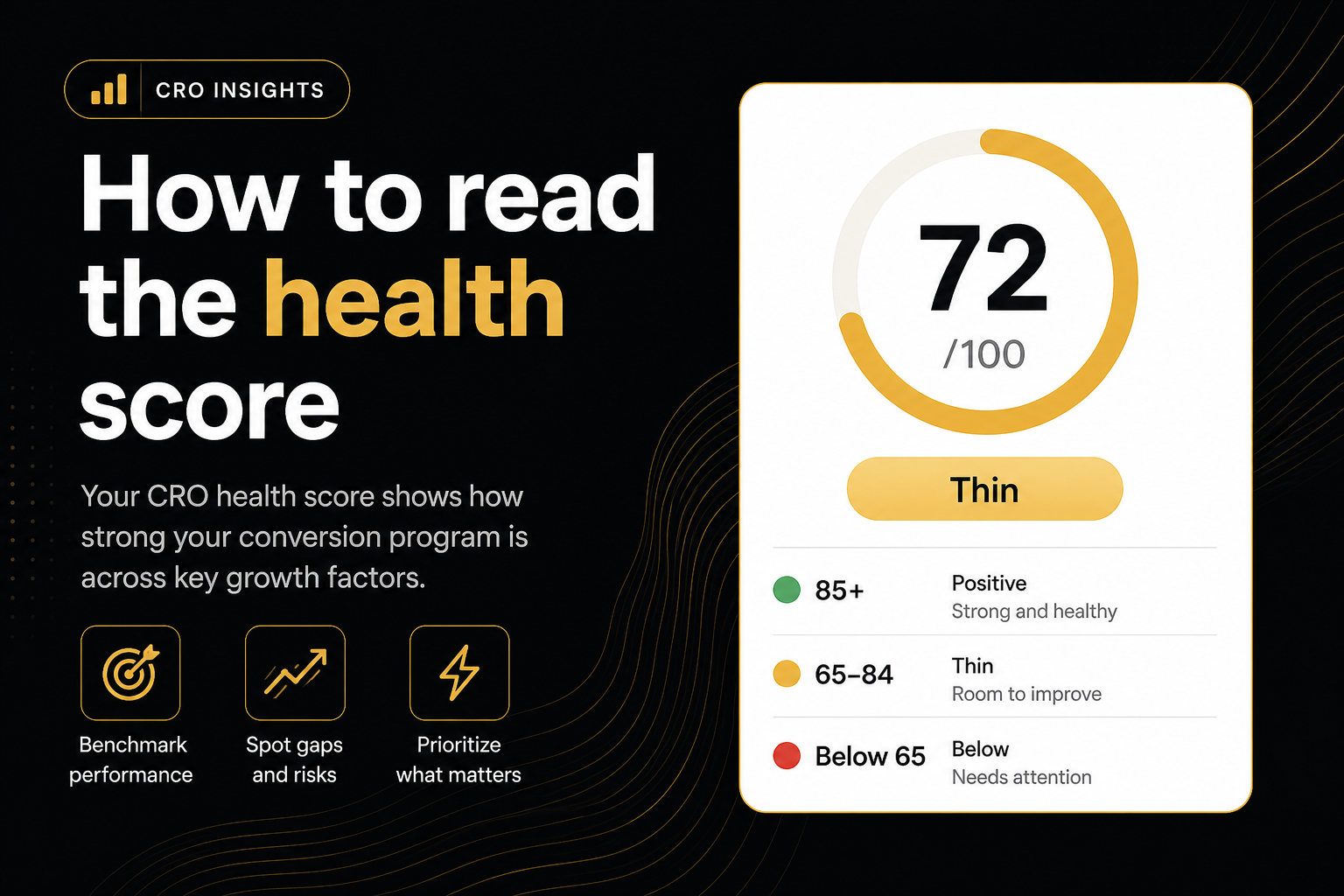
The Shopify CRO audit health score starts at 100 and drops with each miss. What the status word means, and how to act on every band.
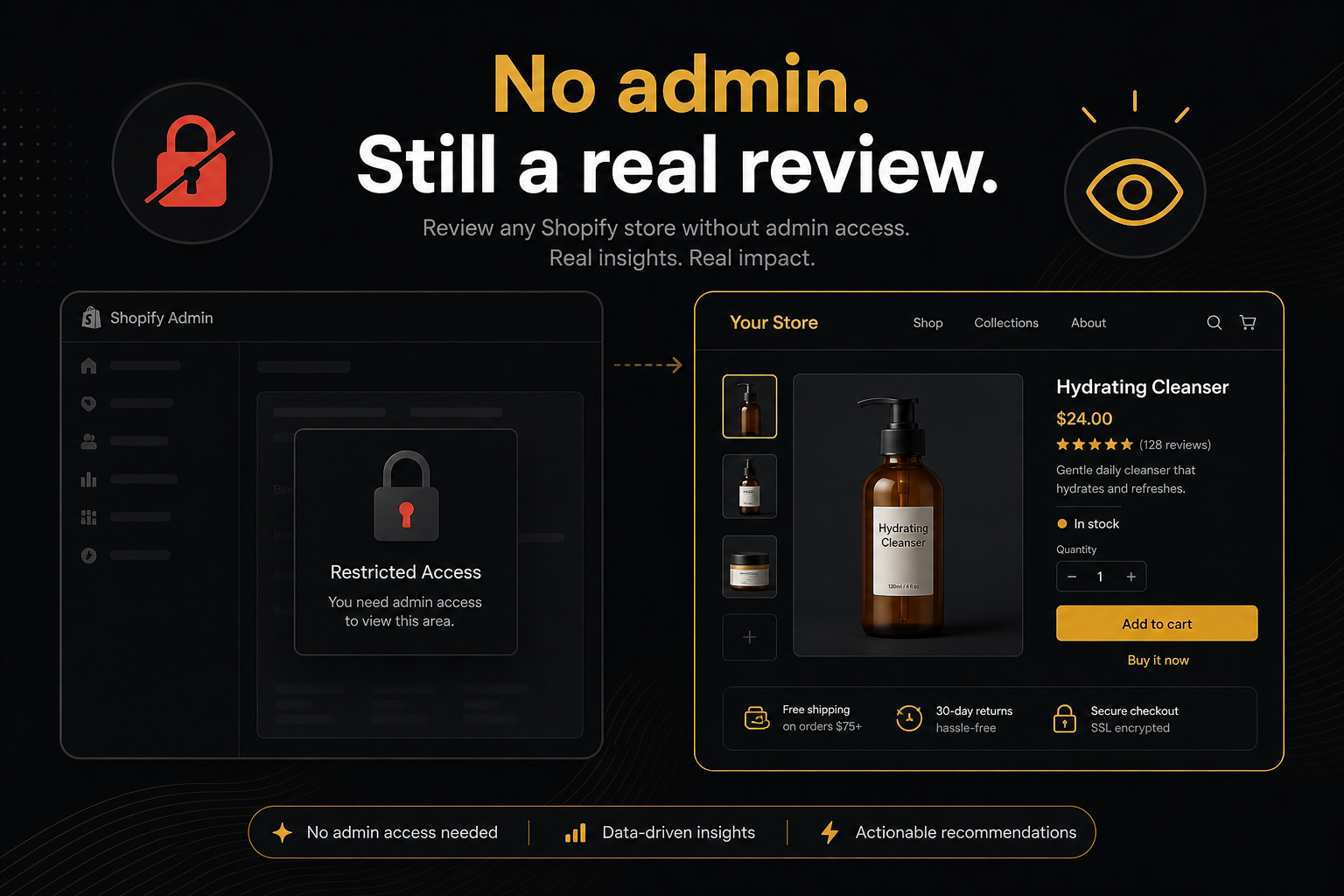
Review a Shopify store like a shopper — public HTML, catalogue JSON, cart, and a real add-to-cart. No collaborator code. No checkout login.
When you type “review my Shopify store,” you usually want a product-page diagnosis, not a 40-row SEO deck. Start with add-to-cart, then AOV, then apps.
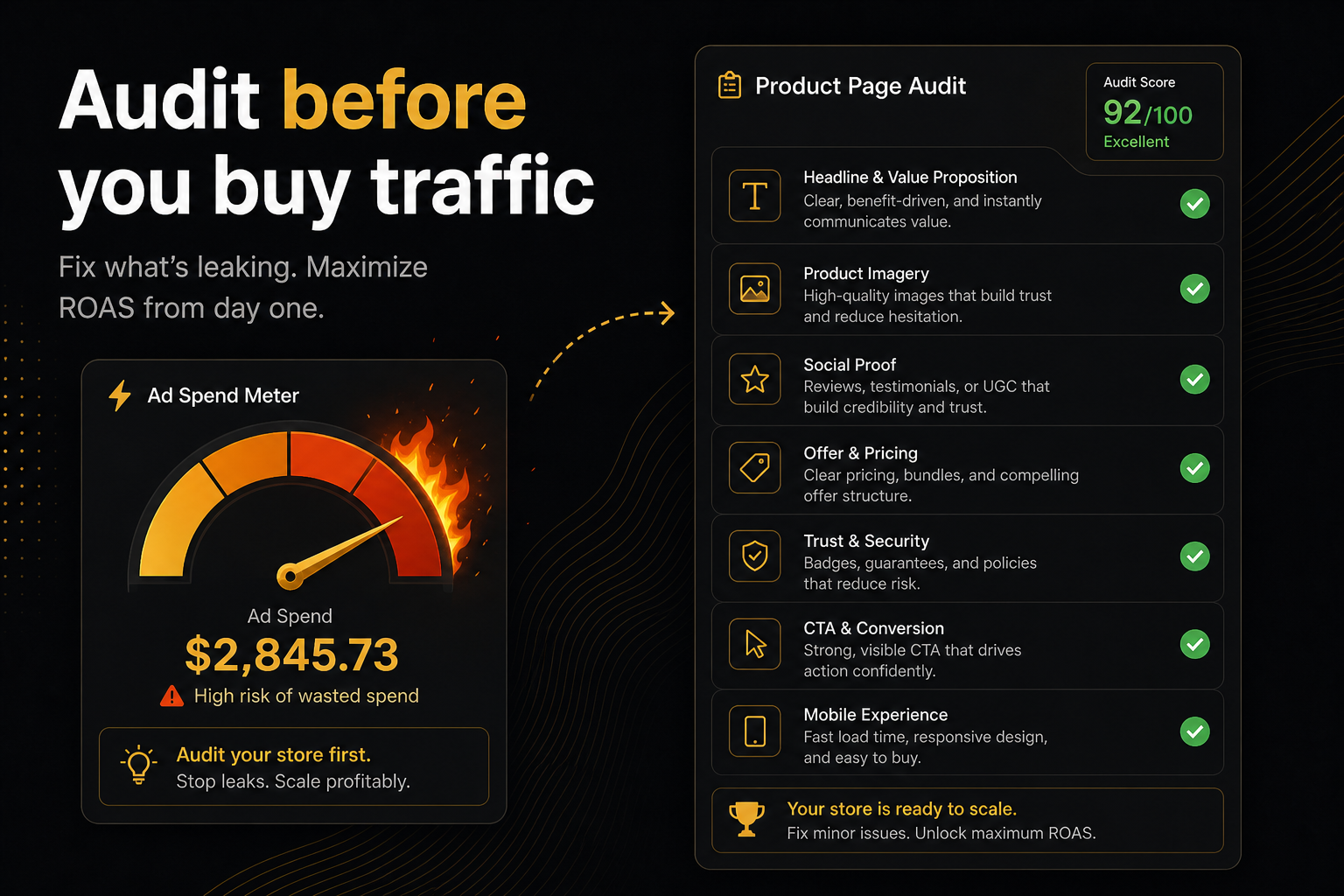
Review your Shopify store before paid traffic. A dead add-to-cart or a thin basket will burn the budget. Run a product-page audit on the SKU in the ad.
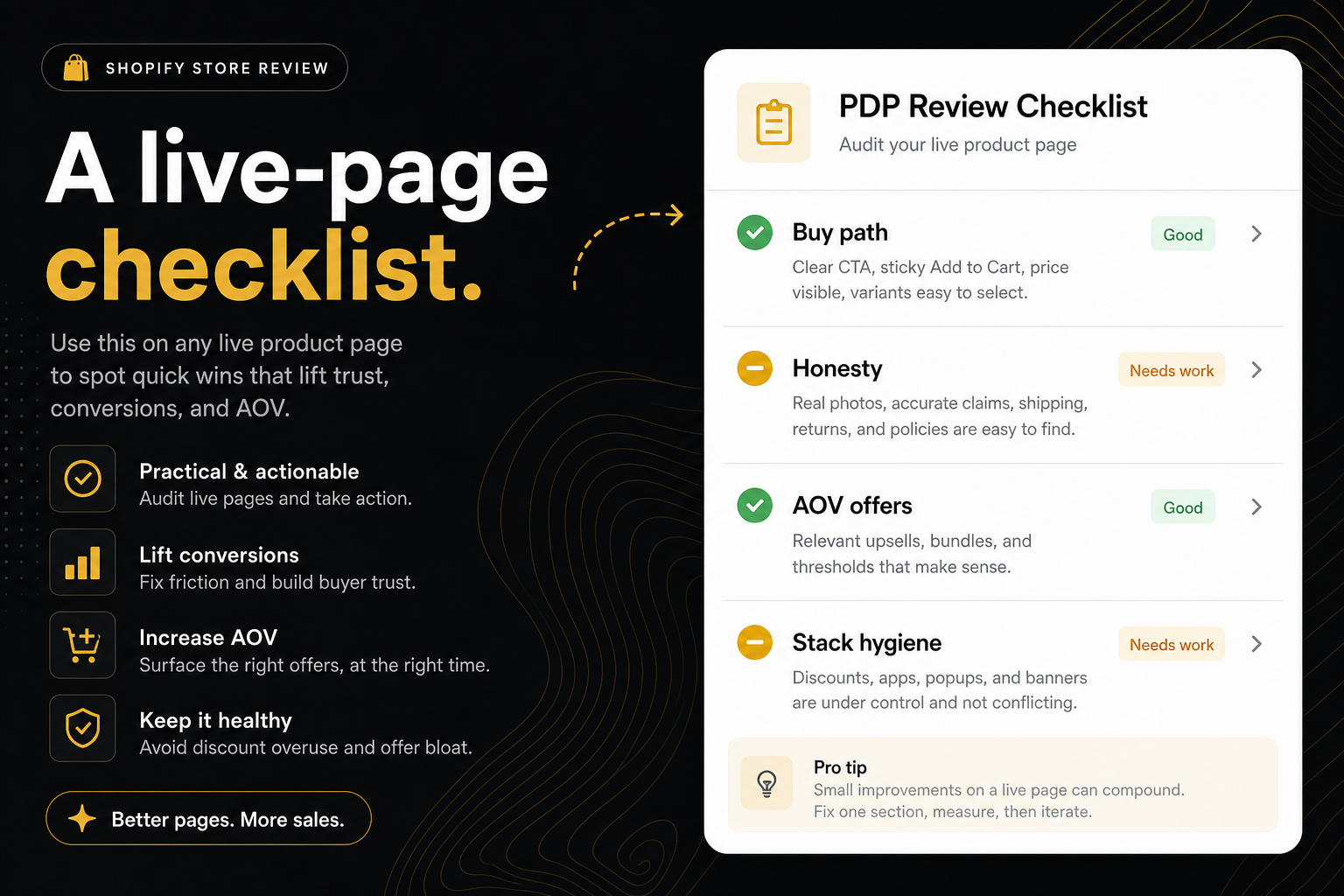
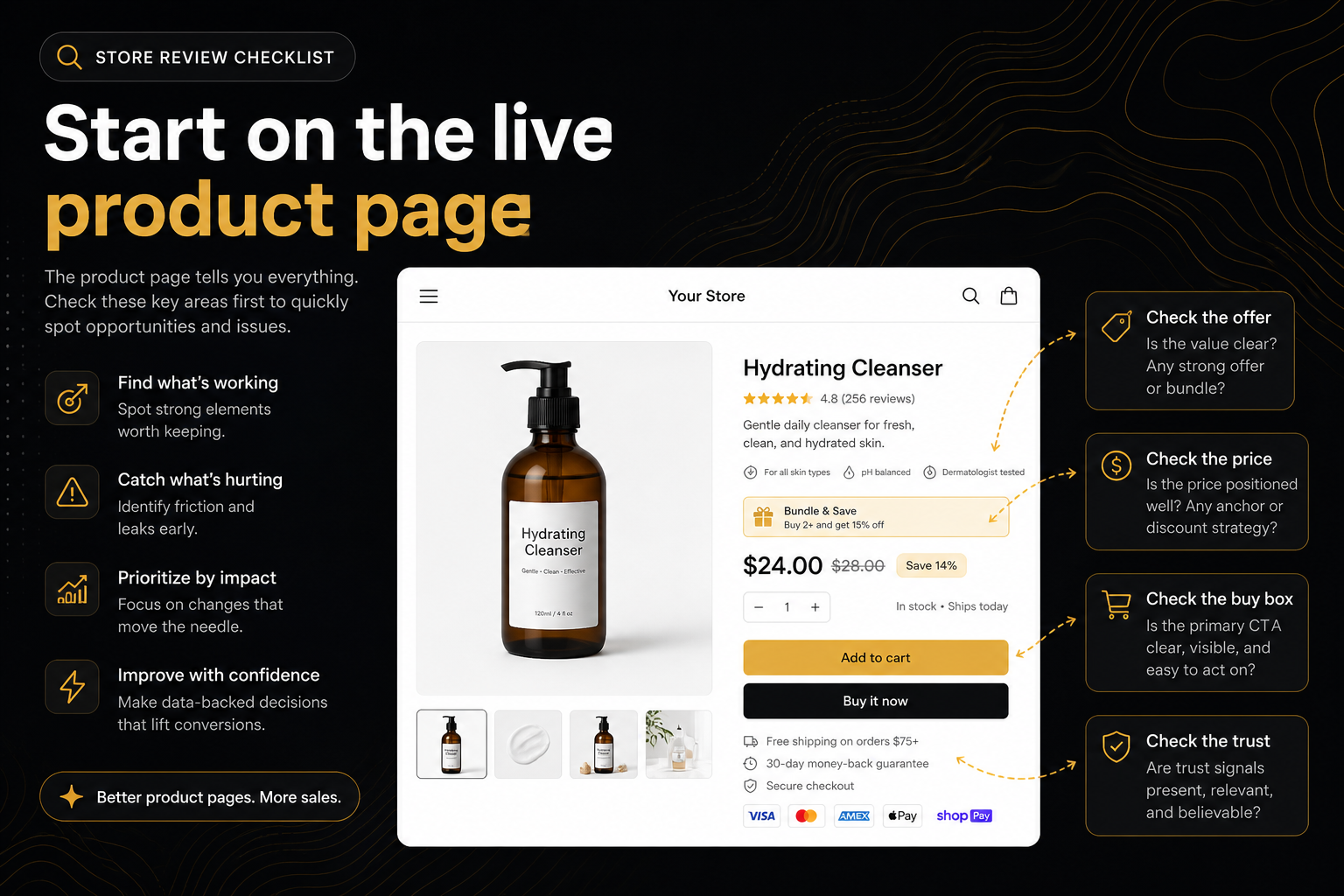
A Shopify store review checklist that starts on the PDP — buy controls, honesty, AOV, and page fighting itself — so you are not grading the homepage first.
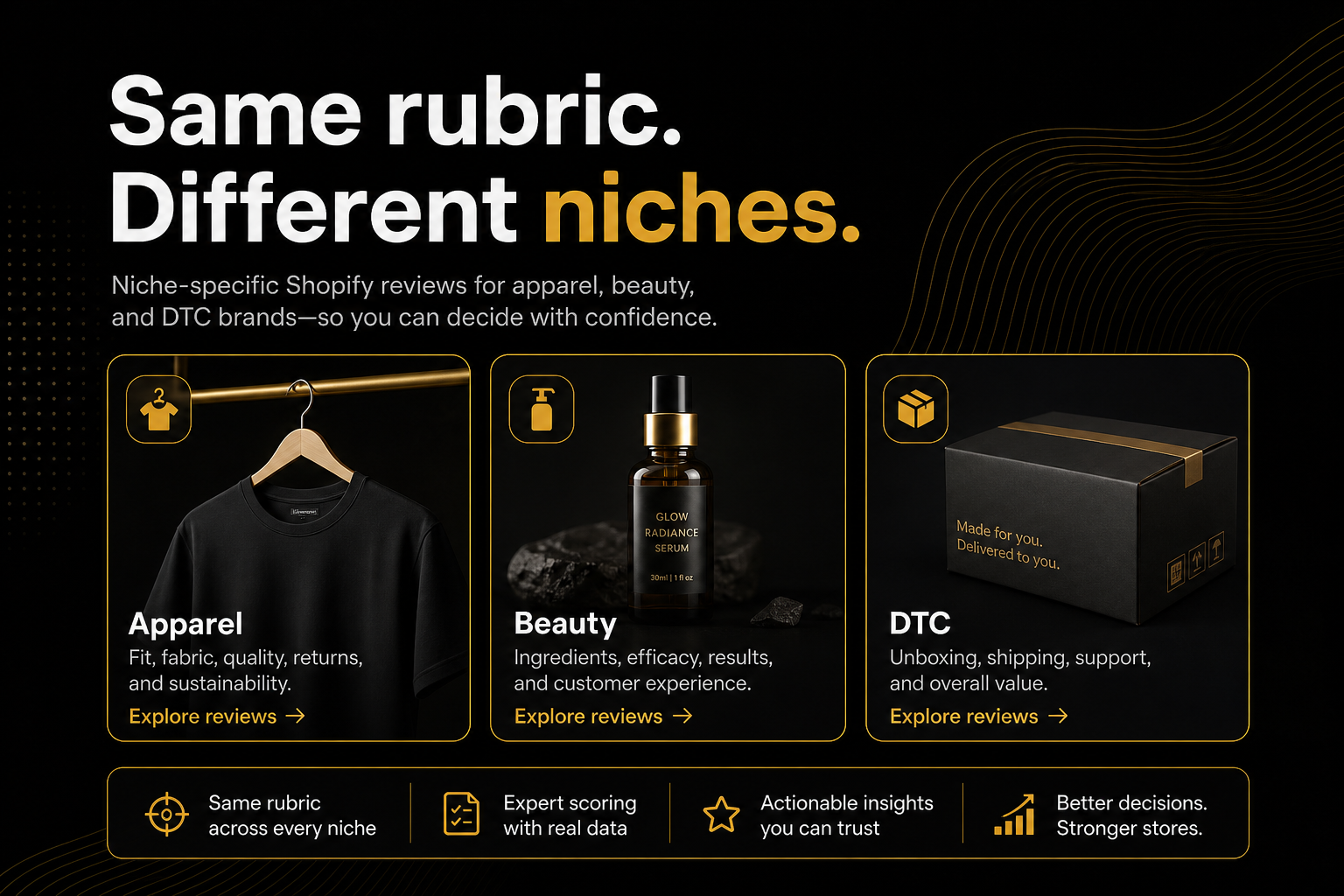
How a Shopify store review changes by niche — size charts for apparel, routine stacks for beauty, landing SKUs for DTC ads — without a fake 40-row rubric.
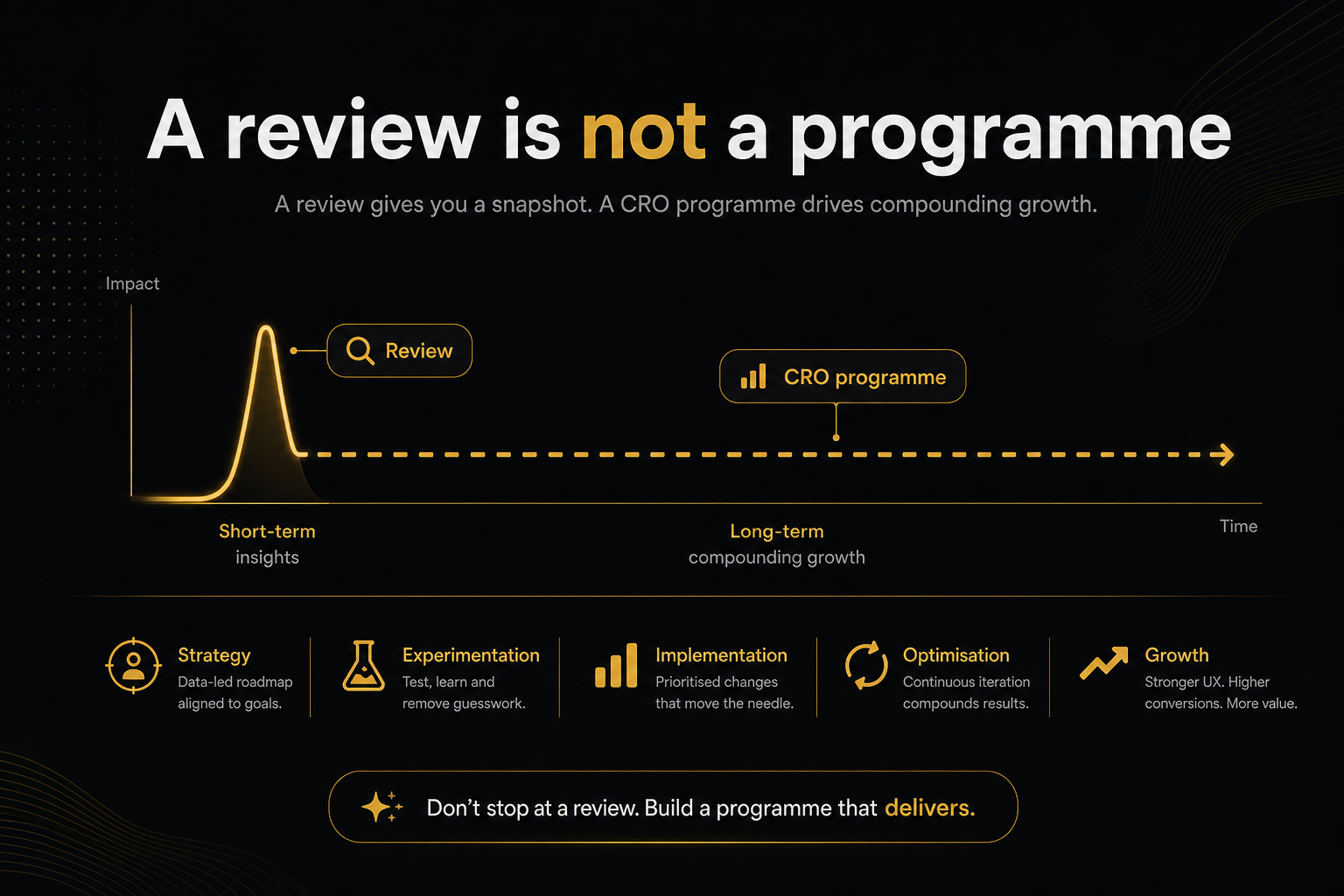
A Shopify store review is a ranked punch list on a live PDP. A CRO programme is tests, analytics, and weeks. Do not buy the programme to get the list.
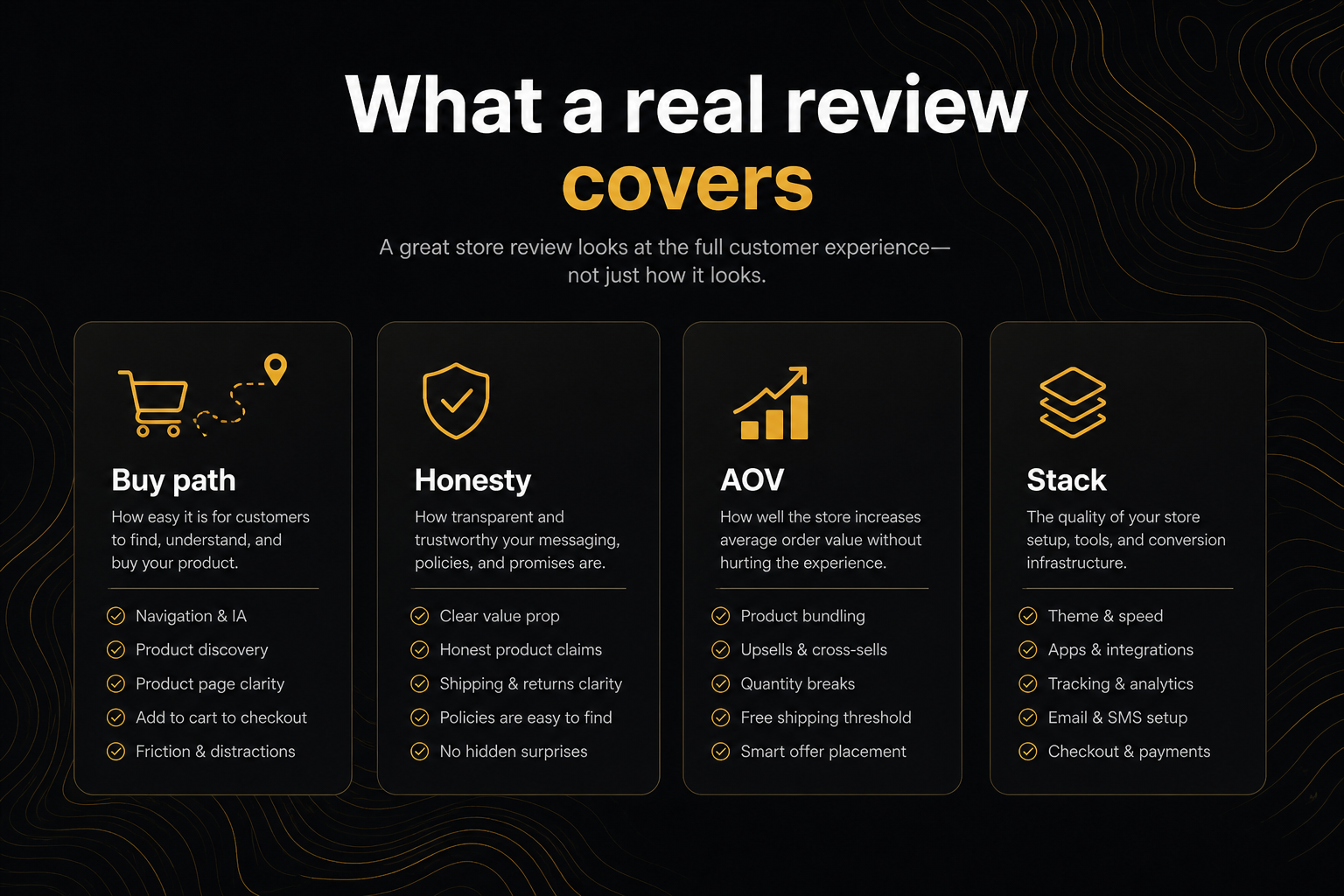
A real Shopify store review covers buy-path, honesty, AOV, and stack hygiene on a live PDP — and names what it cannot see, including checkout and admin.
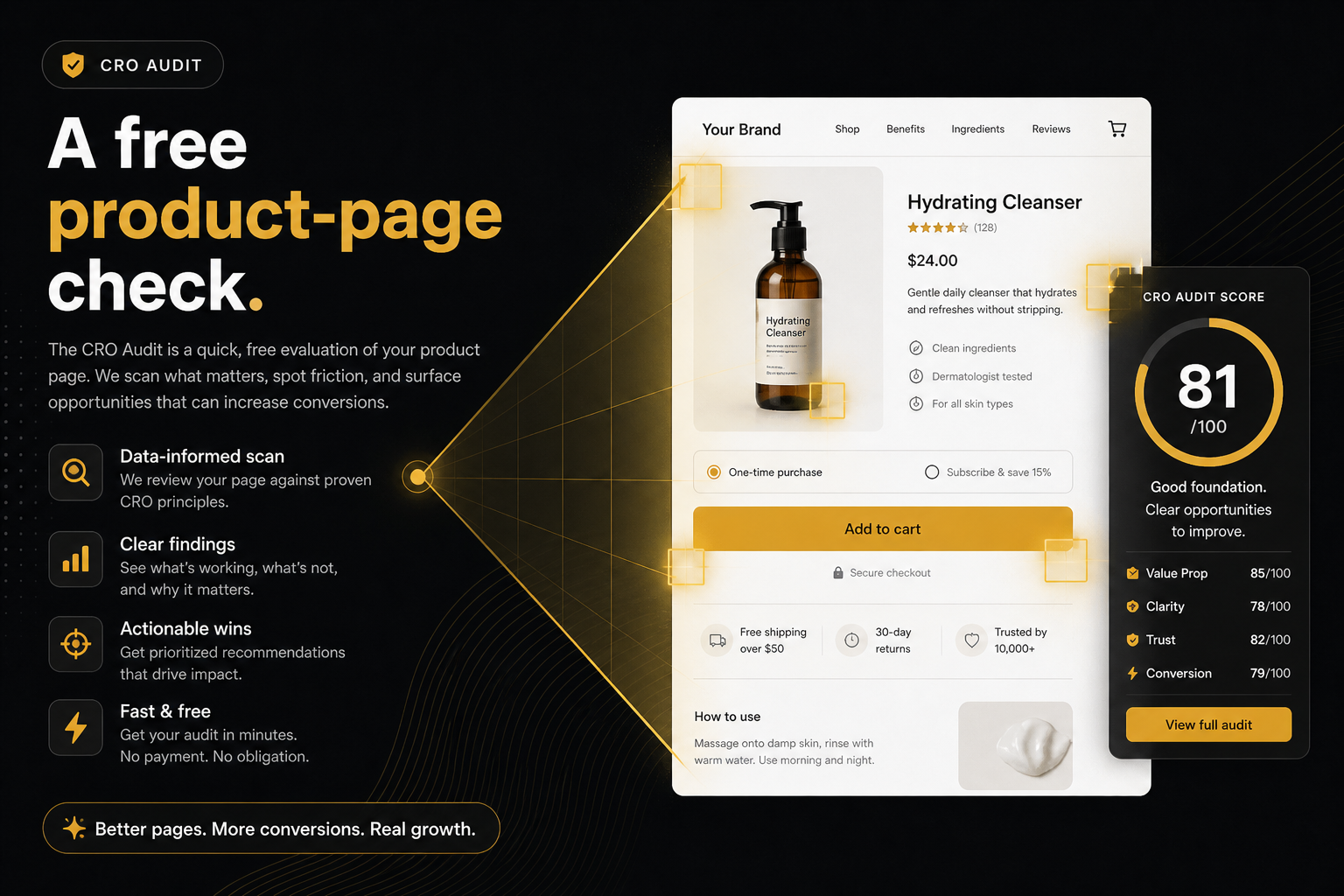
The CRO Audit for Shopify stores is a public product-page check: buy path first, then missed AOV, with no admin login. Paste a domain or product URL.
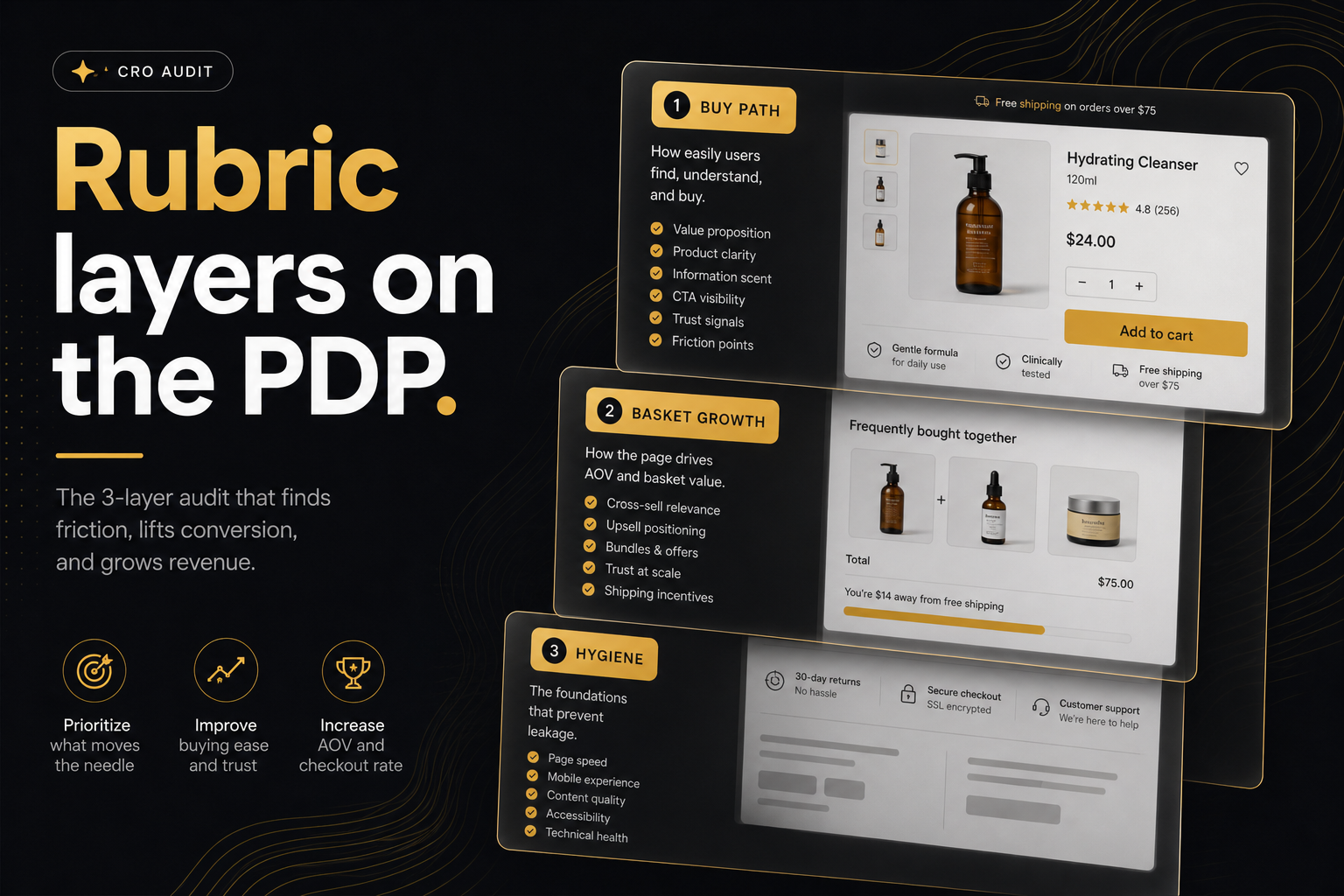
The Shopify CRO audit checks buy path first, then missed AOV, then buy-box hygiene, plus a post-purchase note. Seven ranked findings, not a newspaper.
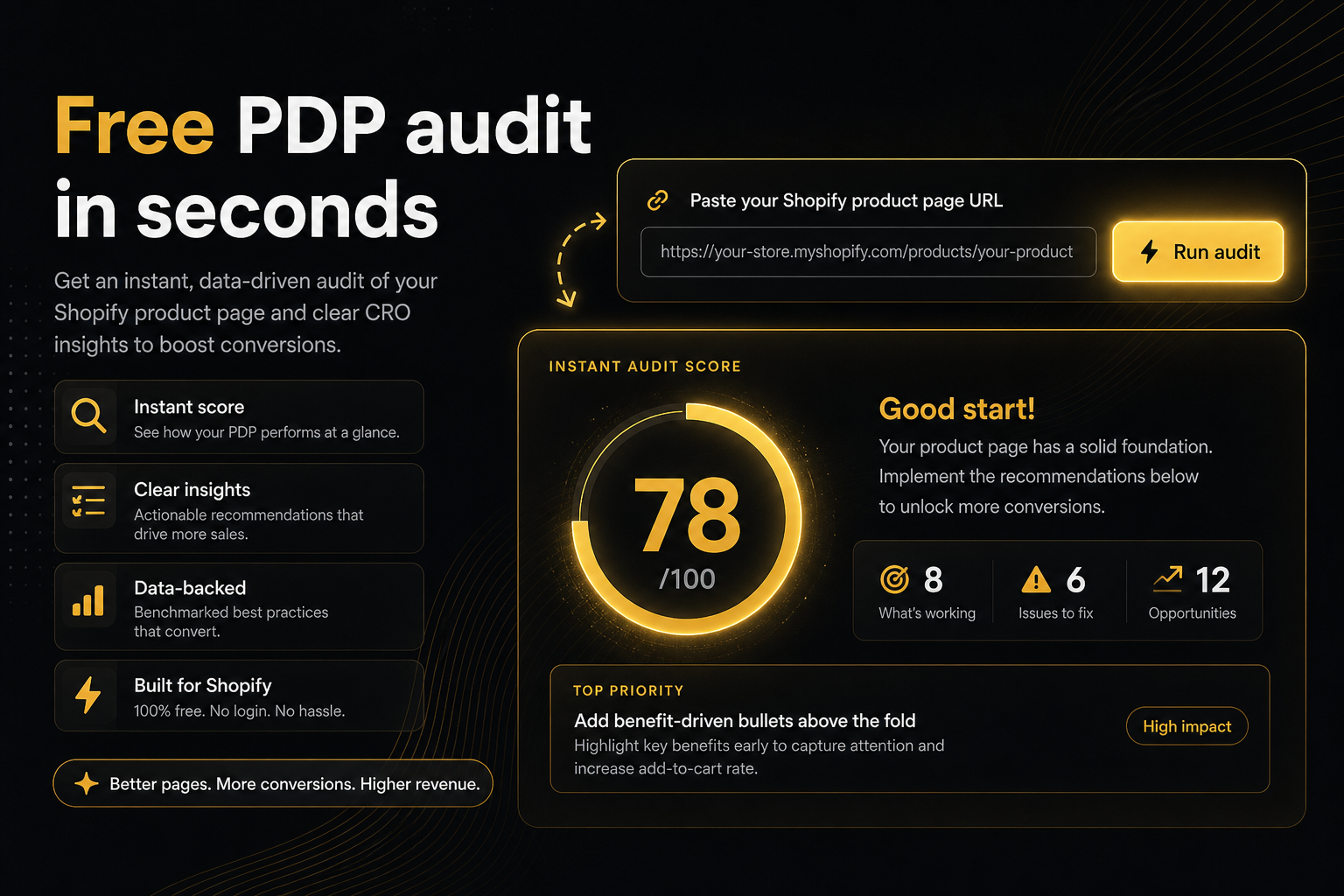
Run a free CRO audit on any Shopify product page. Paste a URL and get a health score, ranked fixes, a badge and a PDF — no admin.
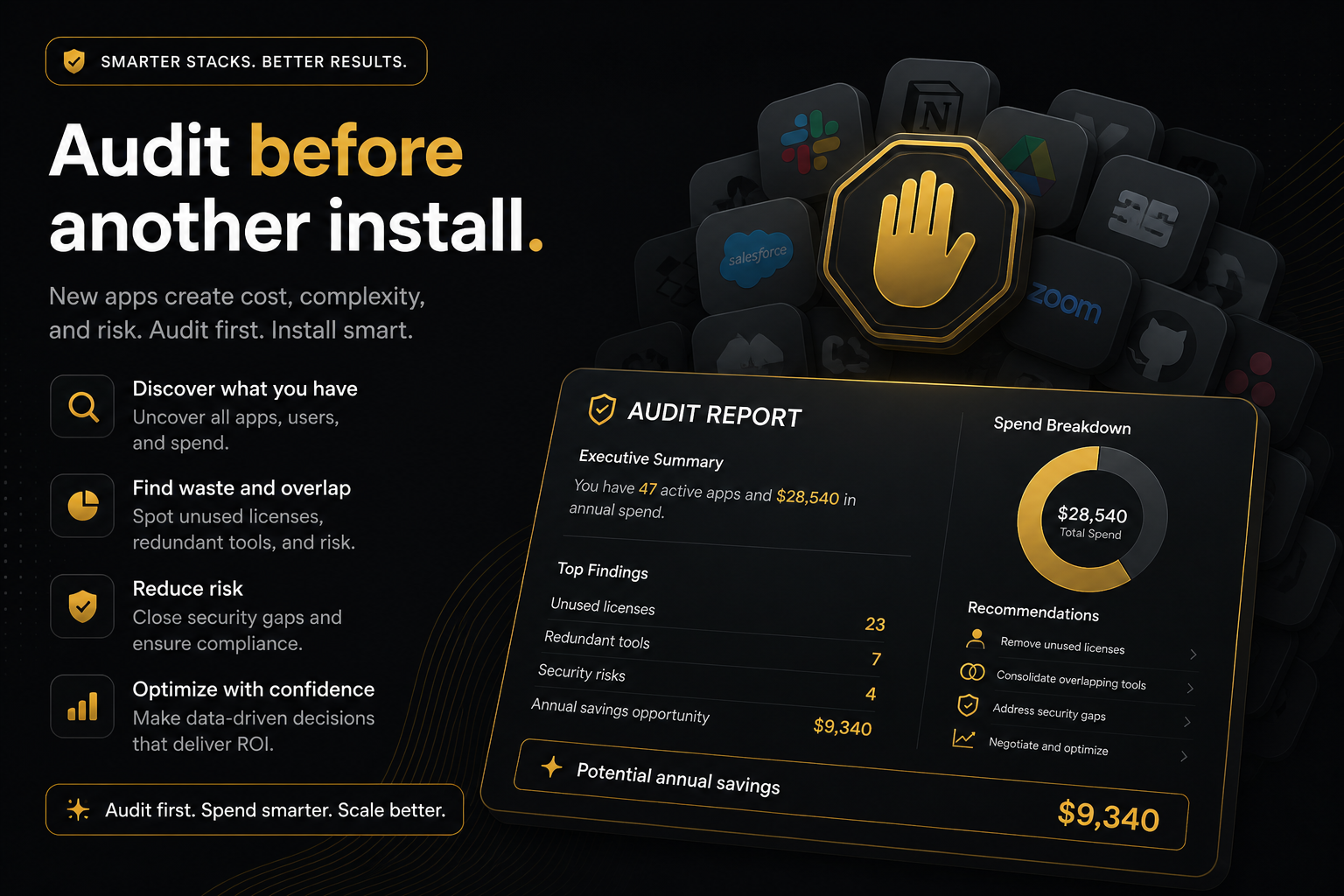
Audit the live Shopify product page before you install another AOV app. Fix what stops the sale, then add the one owner of the miss.
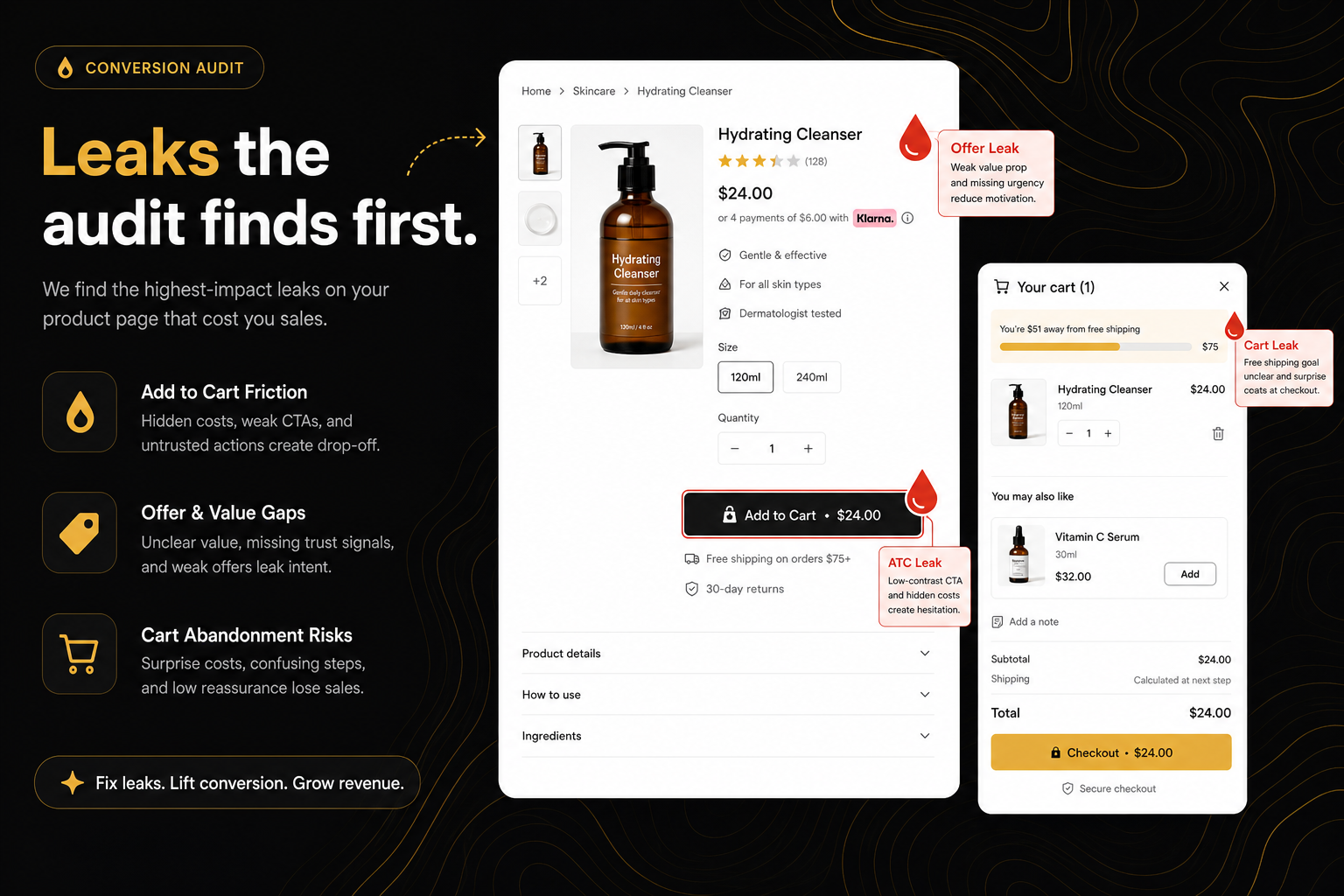
Five Shopify product page leaks a CRO audit flags most: lost add-to-cart, no PDP offer, no cart goal, nothing after add, fake urgency.
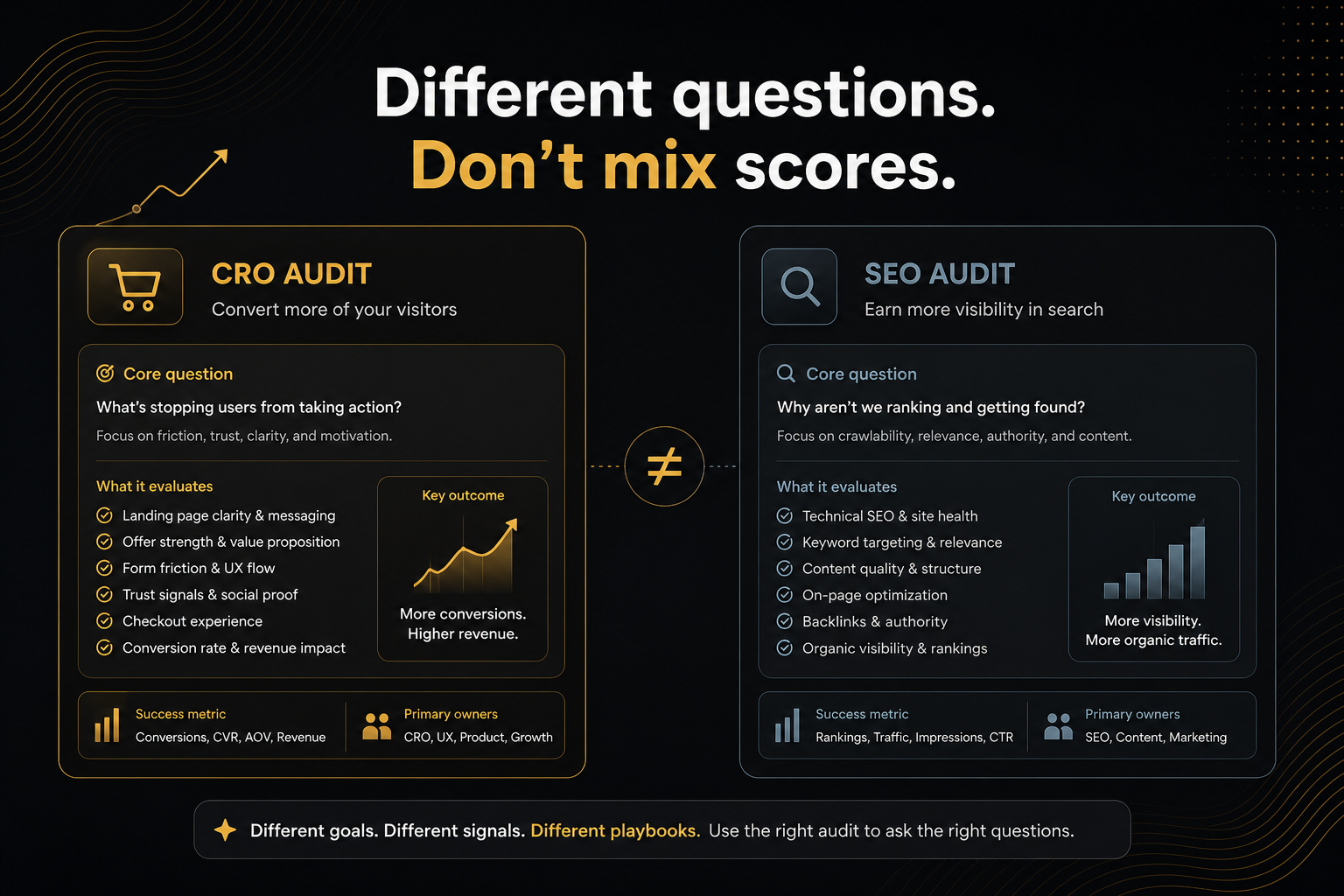
Run a Shopify CRO audit and an SEO audit as separate scores. Mixing title tags with add-to-cart into one grade hides the next action you should staff.
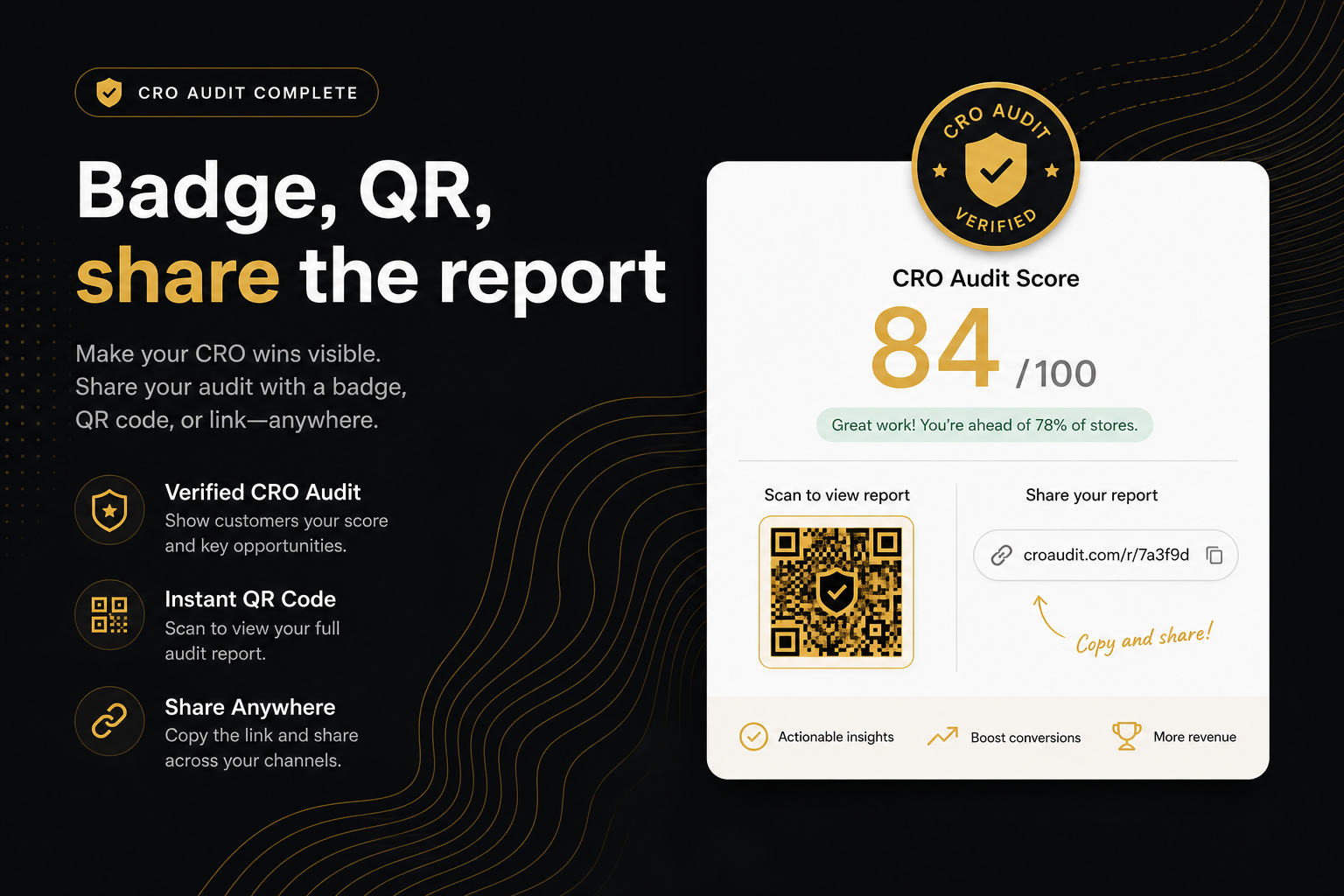
How the CRO Audit for Shopify stores badge works: a PNG with your score and a QR code that opens the saved report without recrawling.
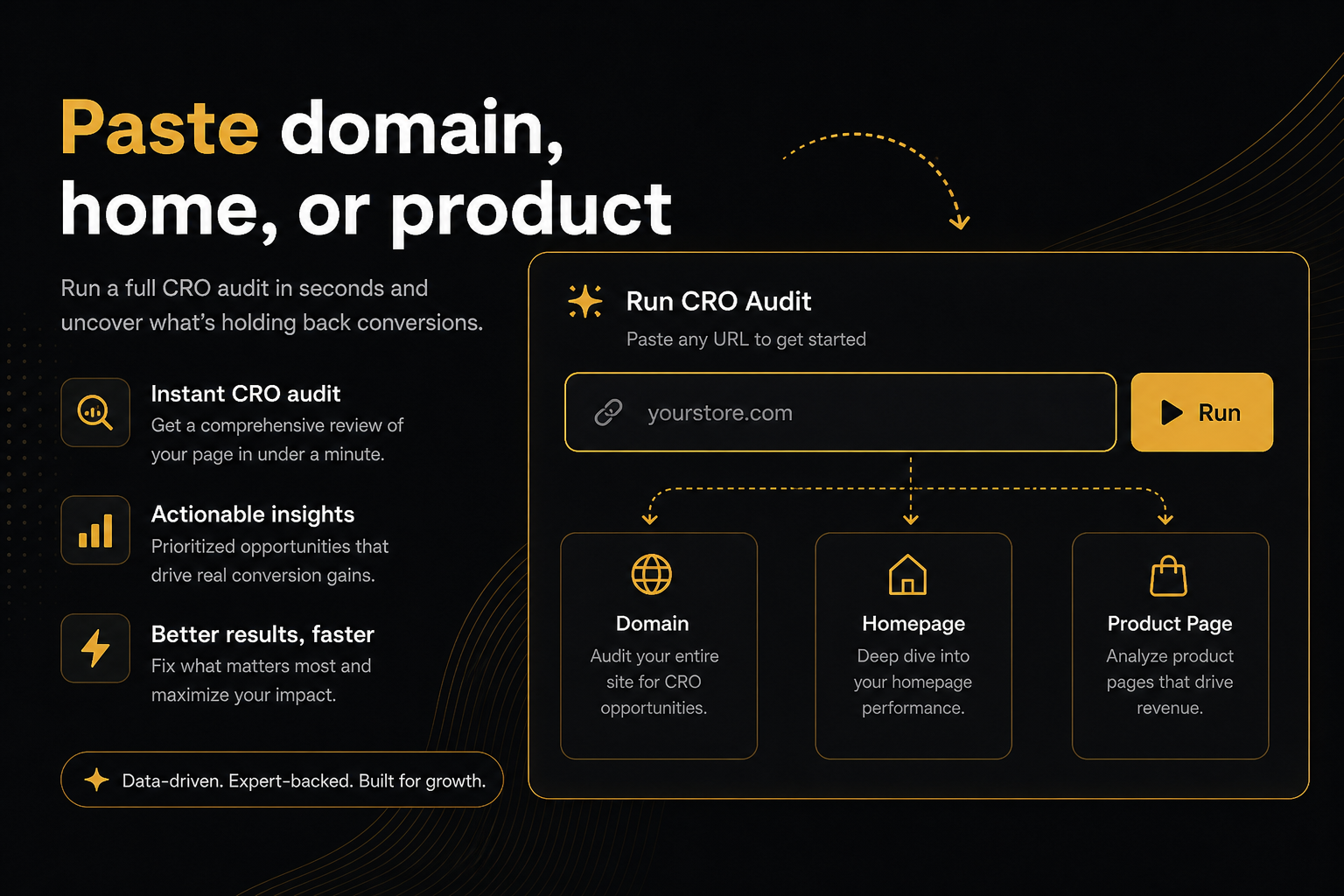
How to run the free CRO Audit for Shopify stores: paste a domain or product URL, then read ranked findings and recrawl after the first fix.
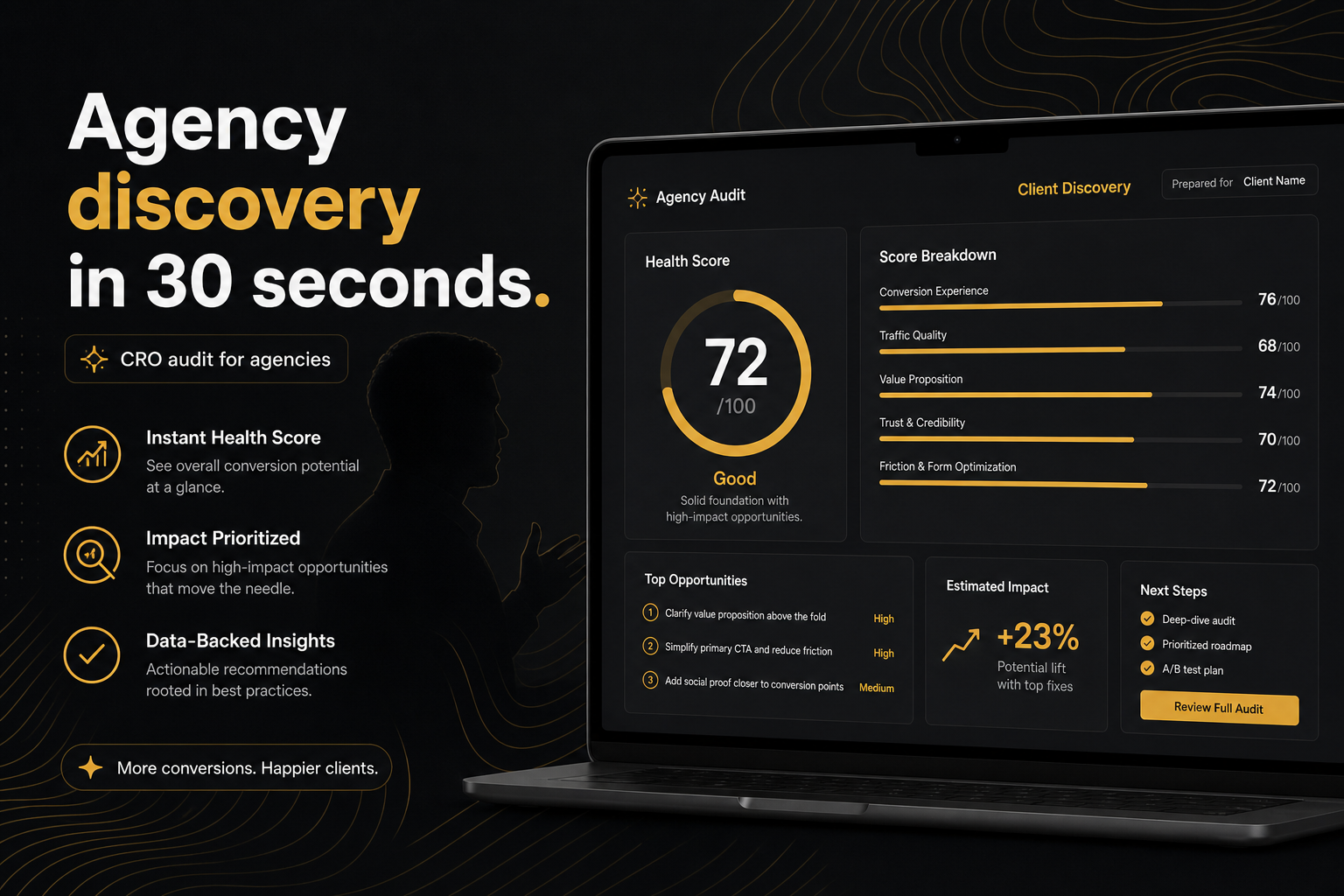
Use the CRO Audit for Shopify stores as a 90-second discovery artefact. Paste the client domain, score a bestseller, share the snapshot. Do not overclaim.
 Monet
Monet
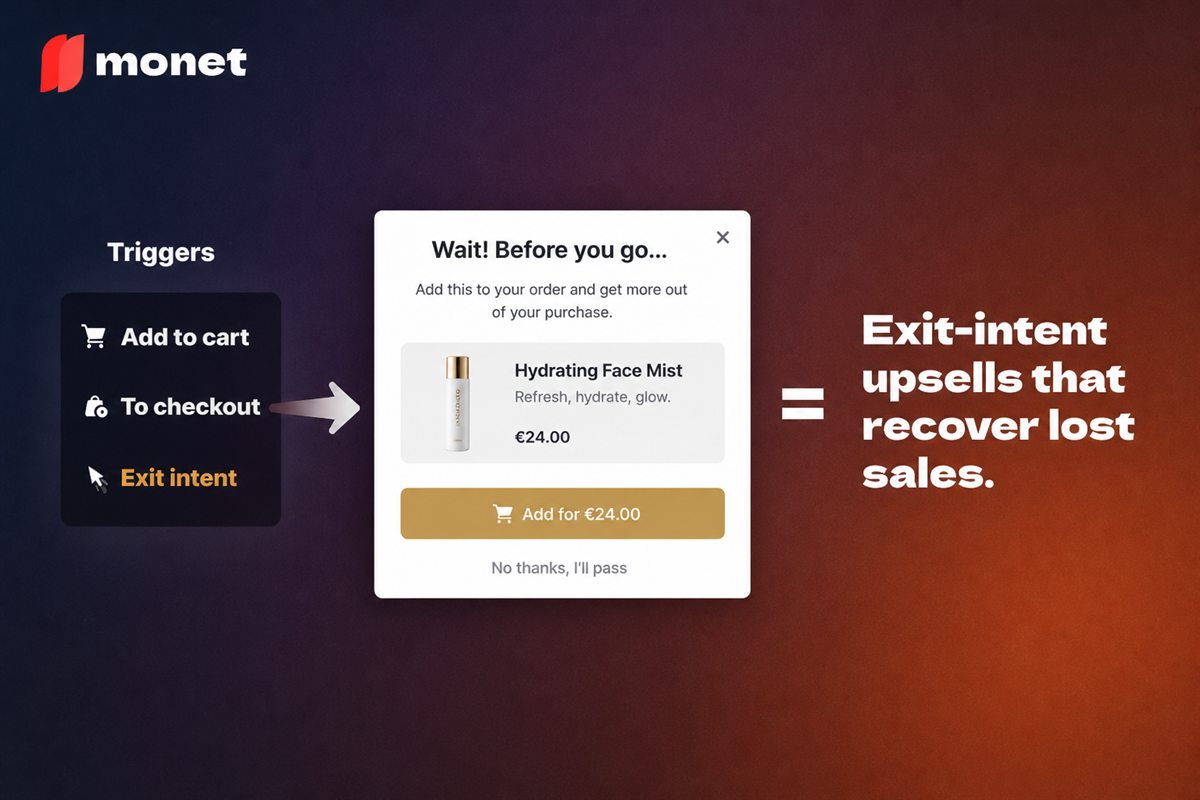
How Shopify exit-intent popups work on desktop and mobile, which offers convert on the way out, and when they cannot cost a sale.
 Monet
Monet
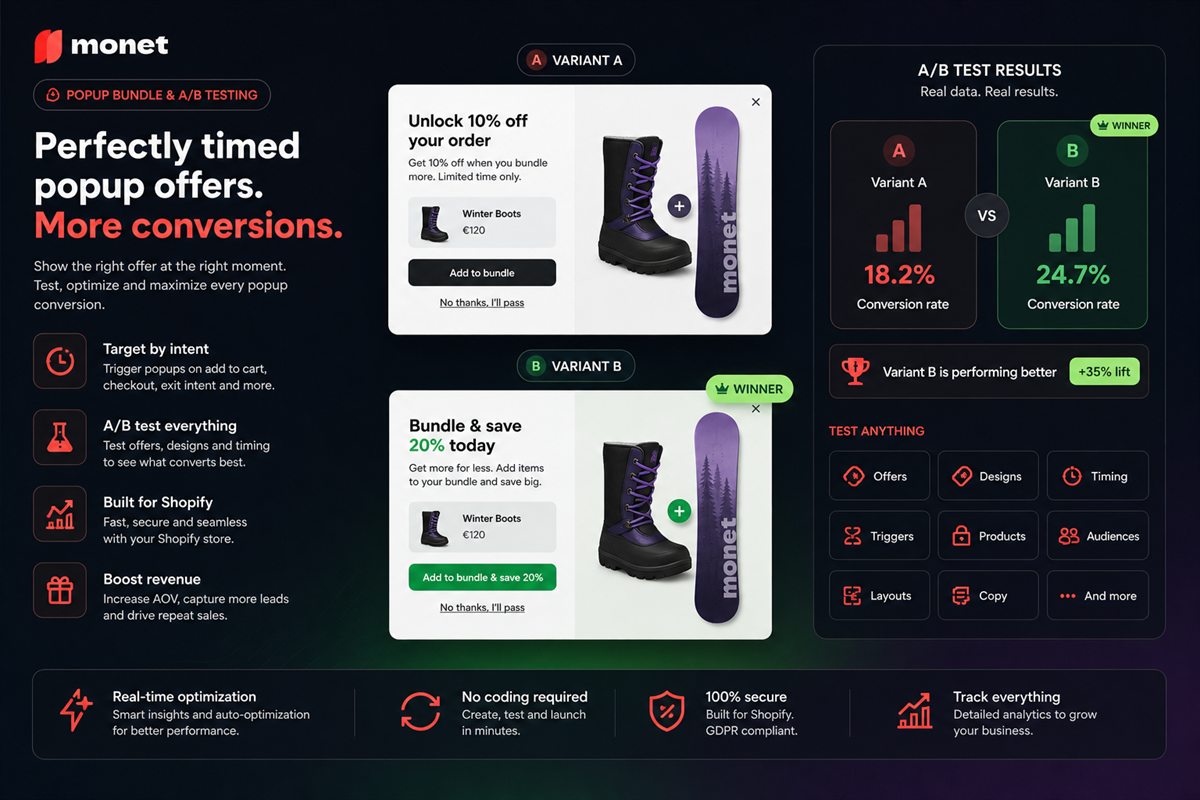
How to A/B test Shopify upsell popups honestly. What to test, which metrics catch a false winner, and the sample size trap that fools most teams.
 Monet
Monet
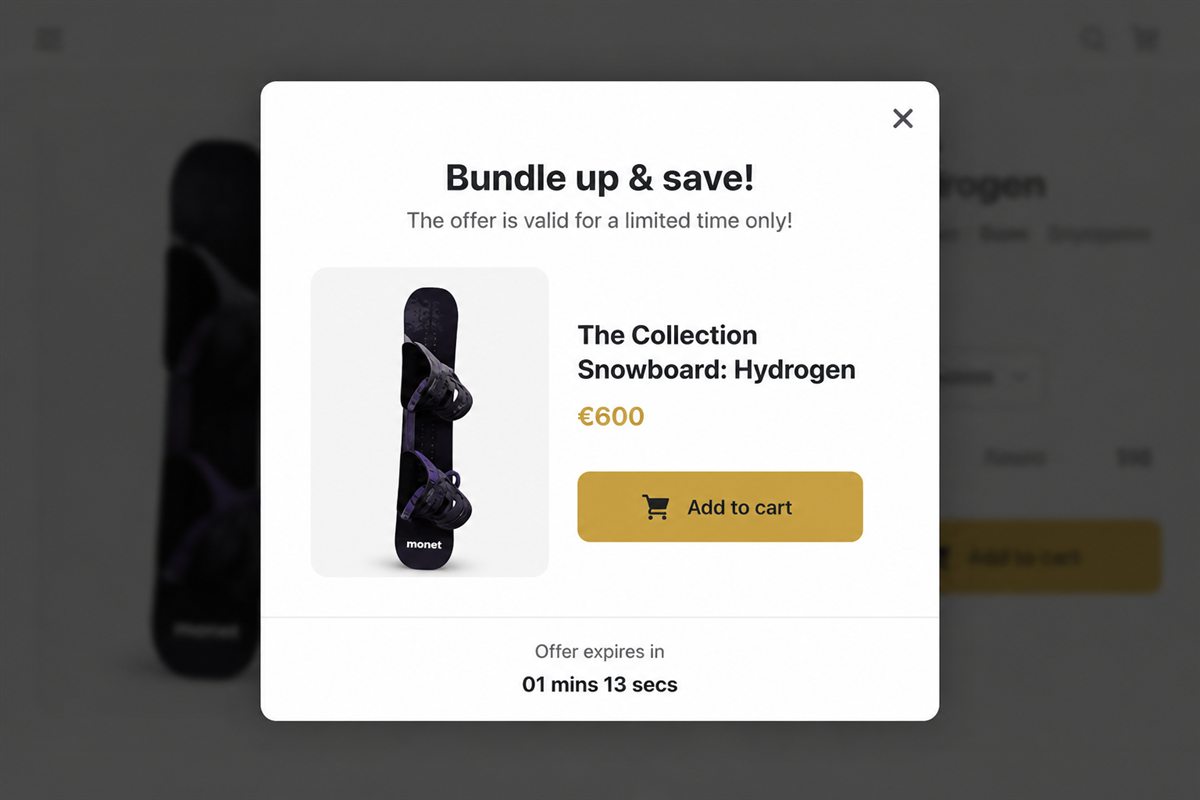
Shopify upsell popup design: match the theme, one image, one add button, a mobile bottom sheet, and an overlay that does not look spammy.
 Monet
Monet
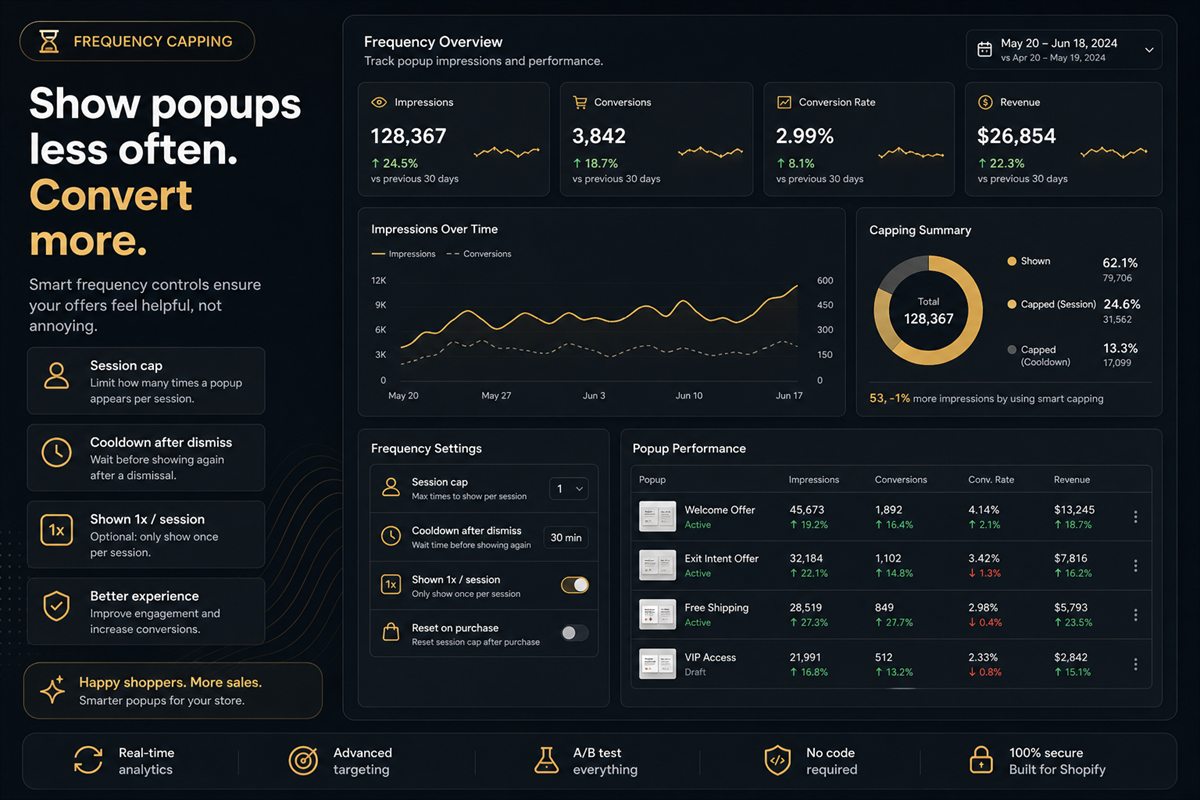
Popup frequency capping for Shopify upsells. Session caps, dismiss cooldowns and cross-trigger rules that stop the same offer nagging shoppers twice.
 Monet
Monet
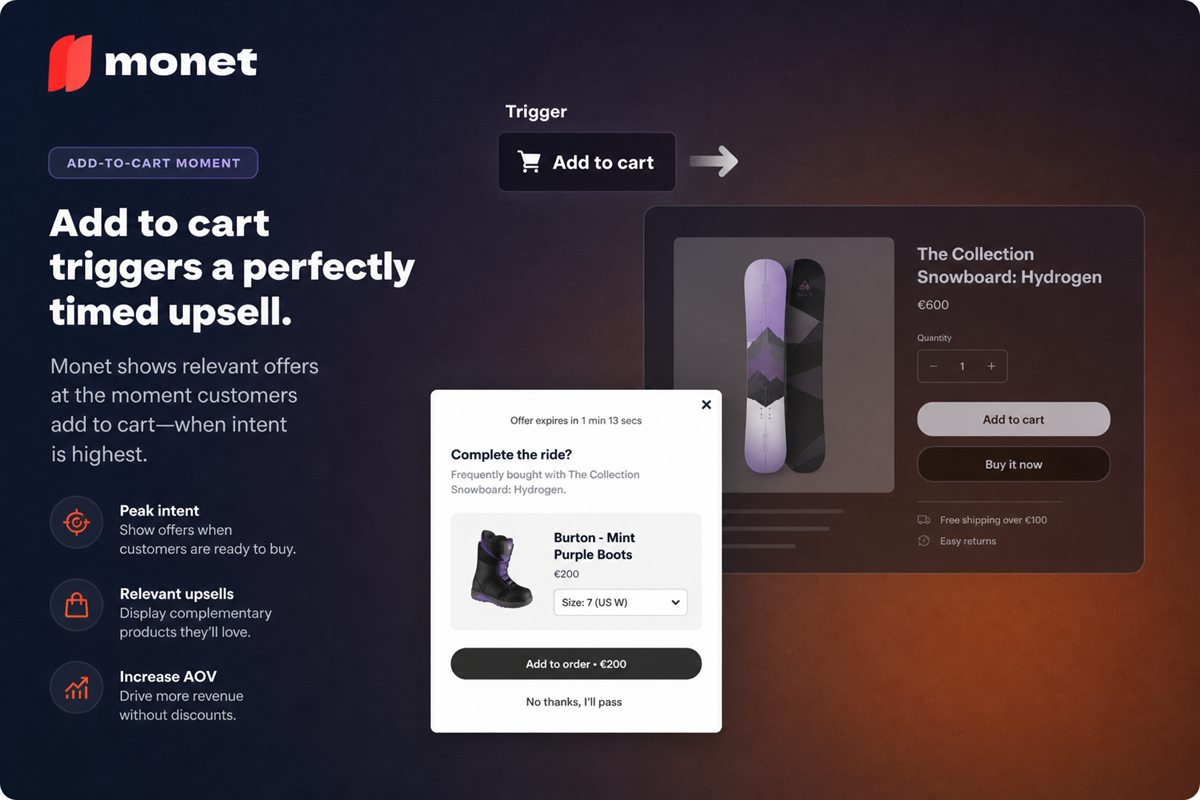
The instant after a shopper commits is the highest-intent moment in the session. Here is how to use it without breaking the flow you just earned.
 Addy
Addy
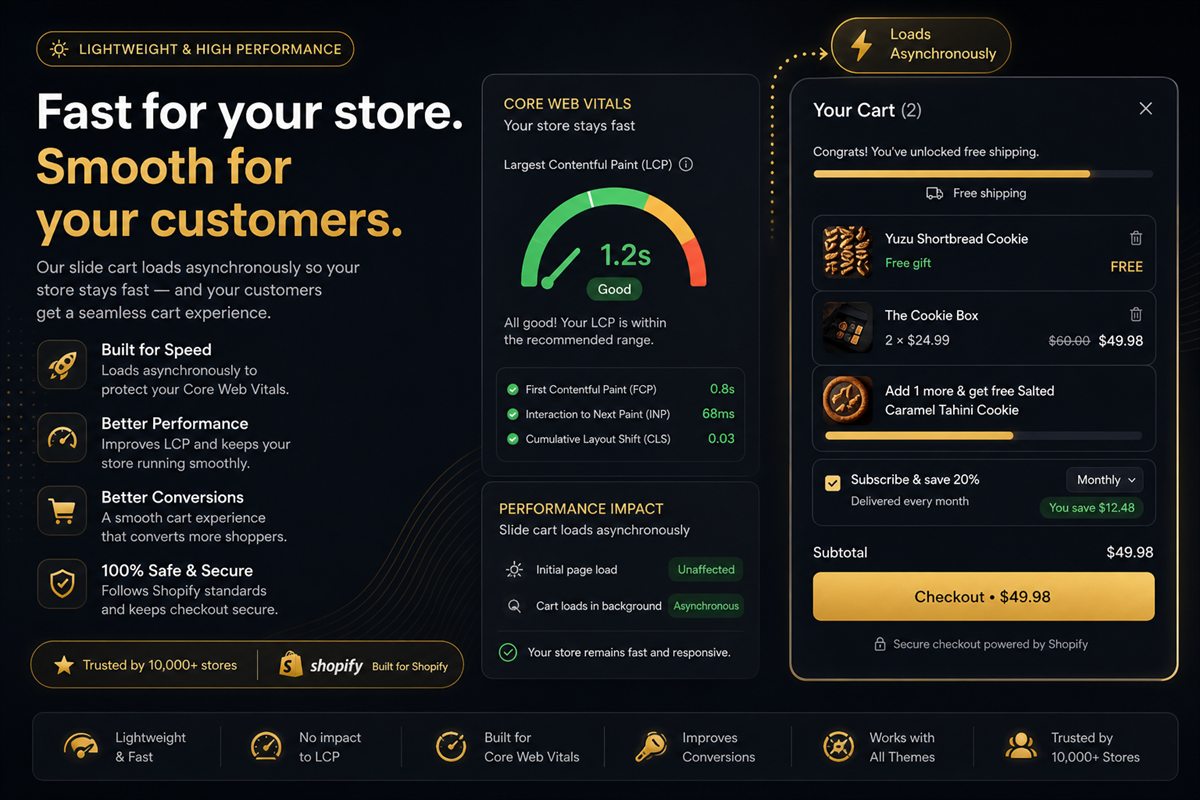
Keep Shopify Largest Contentful Paint intact when you add a cart drawer. Load it on first open, lazy-load images, and measure LCP on a product page.
 Monet
Monet
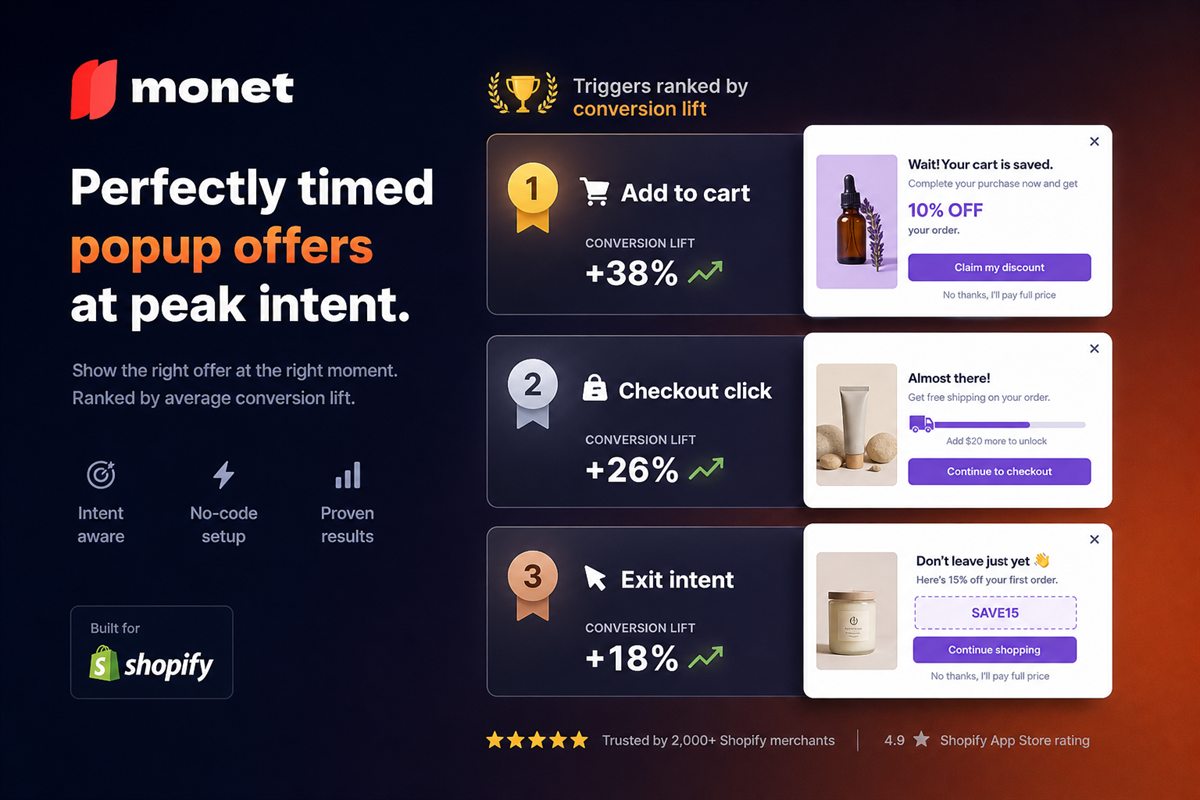
Not all popup triggers are equal. A ranked comparison of the six common triggers by intent quality, conversion risk and the offers that suit each one.
 Monet
Monet
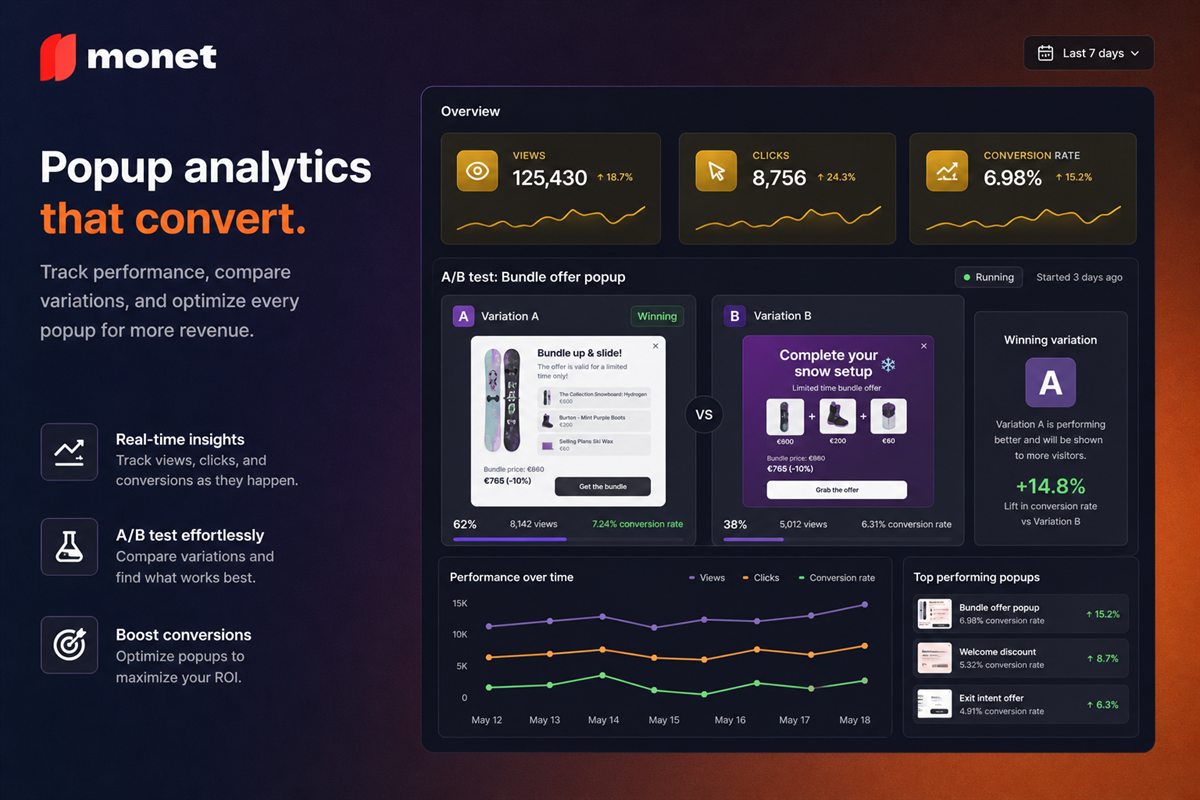
How to read Shopify upsell popup analytics without fooling yourself: the right denominator, each metric, and patterns behind bad tests.
 Monet
Monet
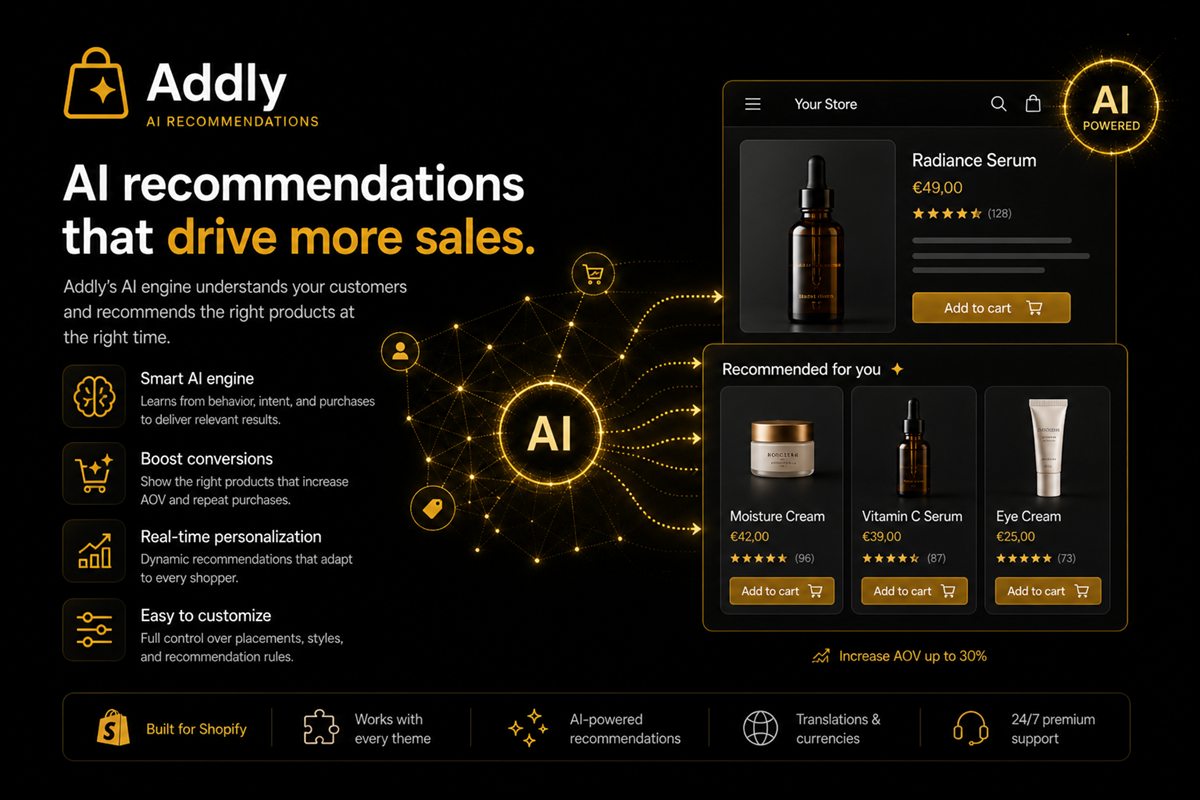
What sits behind "AI recommendations", the data volume you actually need, where learned models beat hand-built rules, and where they measurably do not.
No articles match that search yet. Try a broader term.
It varies widely by price point, traffic source and category, so compare against your own baseline rather than a global average. Segment by device and channel; a mobile paid-social rate is not comparable to returning desktop search traffic.
Whether a shopper can actually buy: a visible add-to-cart, a clear price, selectable variants and accurate stock. Only after those pass does it make sense to look at basket-growing offers, reviews and delivery expectations.
After every theme change, app install or major campaign, and at least quarterly. A free public audit takes about a minute, so run it whenever something on the page moves.
Every tactic in these articles is something our apps do out of the box. Free plans, no theme edits, live in minutes.
Every app installs from the Shopify App Store. No theme code, no developer needed.