 Addy
Addy  Addly
Addly  Goalify
  Monet
Monet  Reviso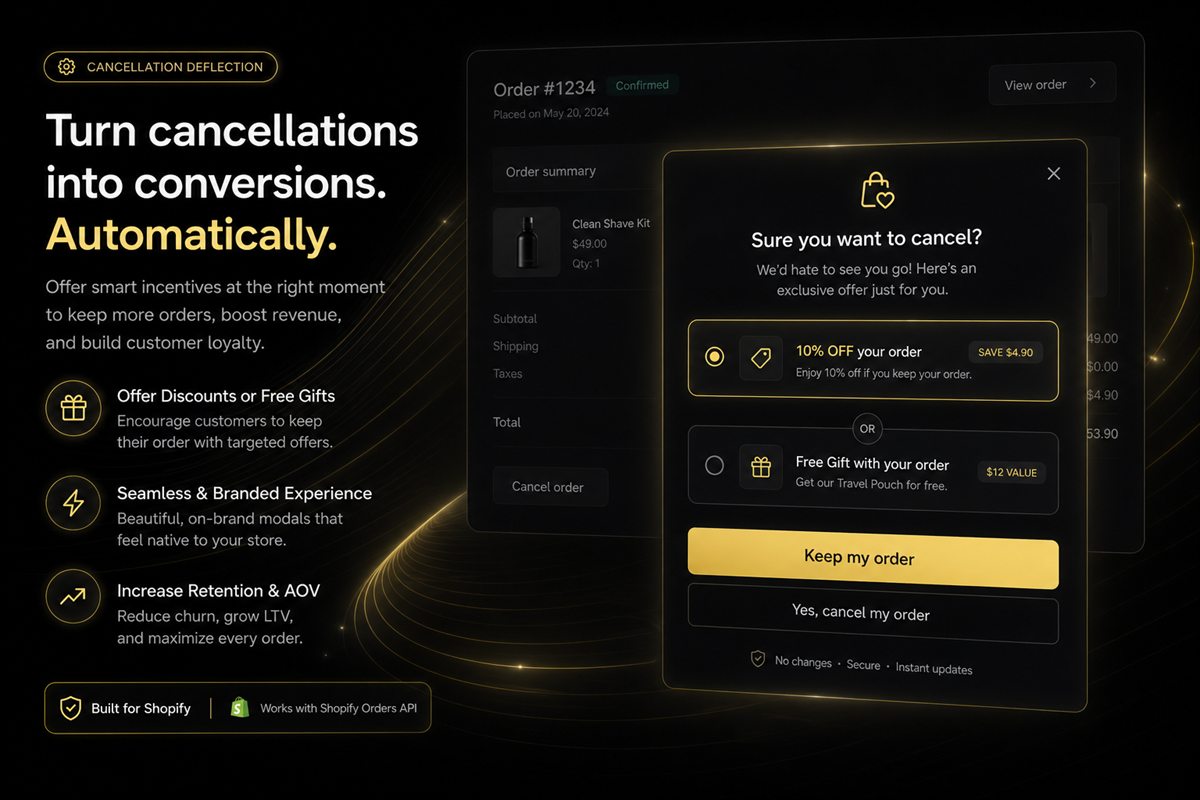
Key takeaways
- A cancellation policy has to match operations. "Cancel anytime" on a made-to-order SKU is a chargeback waiting for a lawyer.
- Put the policy in the order confirmation and in the cancel flow, not only in a footer page nobody reads.
- Self-serve cancel before fulfilment, with an optional keep-offer (discount, gift, delay) — never a maze of "are you sure" screens.
- After fulfilment, the honest path is return or partial refund, not a pretend cancel.
- A stricter policy that you hide will increase chargebacks. A clear policy that matches what you can do usually reduces them.
Write a Shopify cancellation policy that matches what the warehouse can actually do: instant self-serve cancel until packing starts, then returns or a partial refund once it has shipped. People cancel for boring reasons — ordered two by accident, found it cheaper, the gift is no longer needed. A policy that cannot handle boring reasons pushes those people into the card issuer. Chargebacks cost more than a cancelled order.
Write the policy for the warehouse you have, then put it where the click happens.
What a cancellation policy has to do
A useful policy names three things: when they can cancel, what happens to the payment, and what happens after the box is moving. It is an operations document, not a brand manifesto.
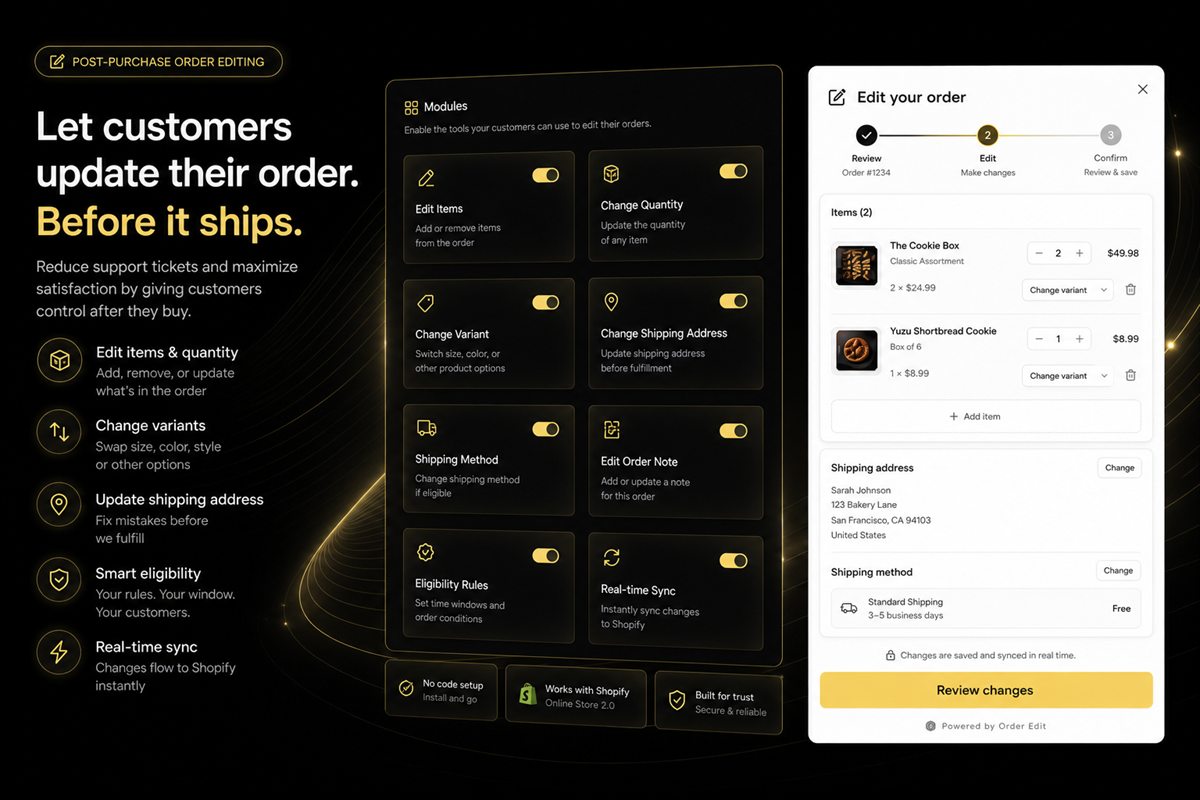
It should agree with order editing and with your cut-off window. If they can still change the address, they can usually still cancel. If packing has started, neither is a portal click.
Match the words to the box
If you can stop the order before it is picked, say "You can cancel until we start packing." If you cannot, say "Once we ship, use returns." Do not say "cancel anytime" unless you mean it for every SKU, including custom print.
"Cancel anytime" on a made-to-order SKU is a chargeback waiting for a lawyer. Split the policy by product type if you have to: stocked goods versus personalised versus preorder.
Worked example: a stocked tee can cancel until pick. A printed name on a bottle cannot cancel once production has started, even if the carrier has not scanned a bag. Say so on the product page and in the confirmation, not only in the footer.
What to include
Keep it short enough to sit on a button screen:
- Cut-off. Until we start packing / until production starts / until the preorder ships.
- Payment. Instant refund to the original method, or the number of days it actually takes.
- After ship. Return or partial refund — not "cancel."
- Exceptions. Custom, perishable, digital, wholesale.
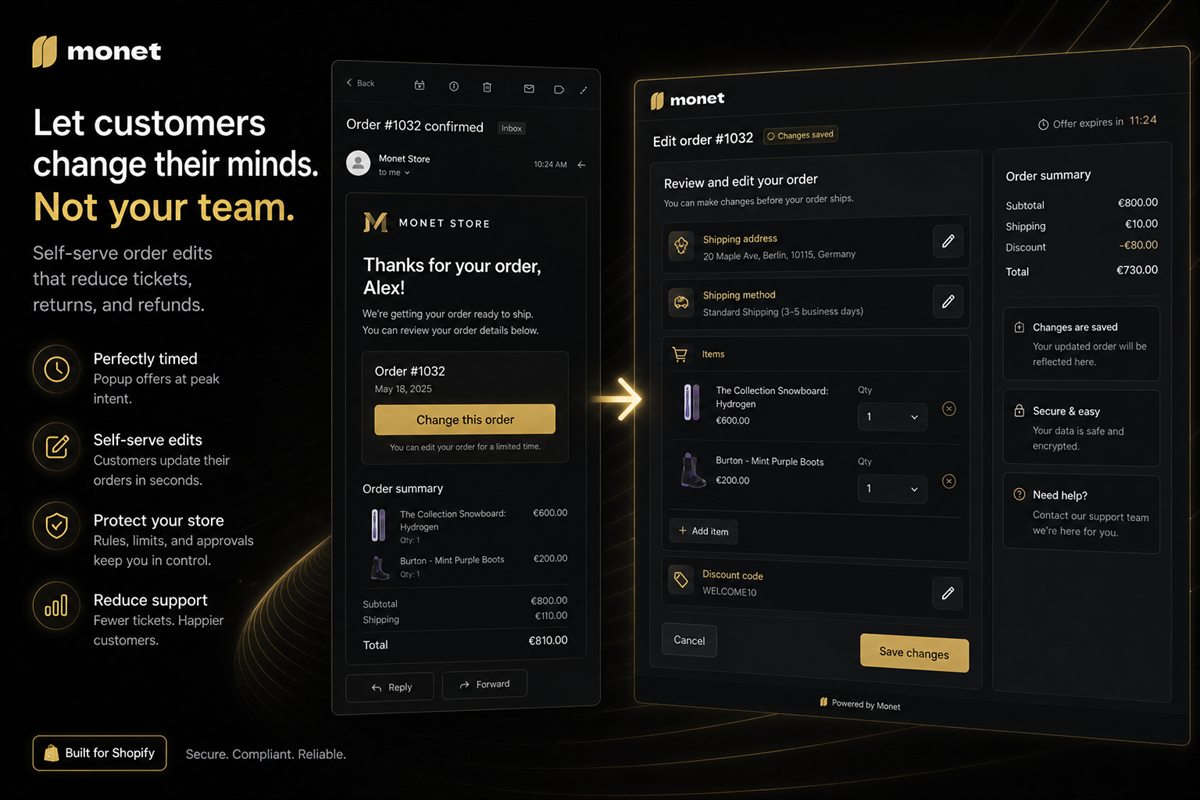
- How. Self-serve link in the confirmation email; support only after cut-off.
If the portal and the policy page disagree, the portal wins in their memory and you lose the dispute. Write once. Reuse everywhere.
Put it in the flow
Footer legal pages are for lawyers. The customer needs one paragraph in the confirmation email and the same paragraph at the top of the cancel screen.
Put a line on the product page for SKUs with a harder rule ("Personalised items cannot be cancelled once production starts"). Surprise at cancel time is how you get the chargeback.
This is also how you reduce order cancellations that are really "I did not know the rule." Clarity before pay is cheaper than a keep-offer after.
The keep offer
When they start a cancel, you may offer a reason to keep the order: a small discount, a free add-on, a delayed delivery date. One offer, easy decline, then cancel completes.
Two extra screens, a survey, and a buried confirm are how you get the 1-star review that says you would not let them leave.
A keep-offer is not a dark pattern if skip is easy and the offer is real. It is a dark pattern if the cancel button is hidden, delayed, or labelled "continue." Self-serve cancel before fulfilment should still be instant after they decline.
After it has shipped
The button should not say Cancel. It should say Start a return, or Contact us, depending on your setup. Language that promises a cancel on a moving parcel is how you get a refund and a delivery.
Pretending otherwise creates double inventory and carrier chaos. After fulfilment, a cancel is a return.
Subscriptions are a different product
Say when the next charge stops, whether the current shipment still goes out, and how to skip instead of cancel. Do not reuse the one-time order paragraph on a subscription. Skip is often what they wanted. If you only offer cancel, you will lose the customer and still ship this week's box.
A good cancellation policy is short, operationally true, and sitting on the button. Everything else is decoration.
Common mistakes
Copying a competitor's "cancel anytime" when your warehouse cannot honour it. The card issuer will take the customer's side if your storefront promised more than packing can do.
Putting the policy only in Settings → Policies and nowhere in the confirmation. Nobody reads the footer until they are already angry.
A keep-offer that requires three "are you sure" screens. One real offer, one obvious skip, then cancel. Anything slower is how you trade a cancelled order for a chargeback plus a review.
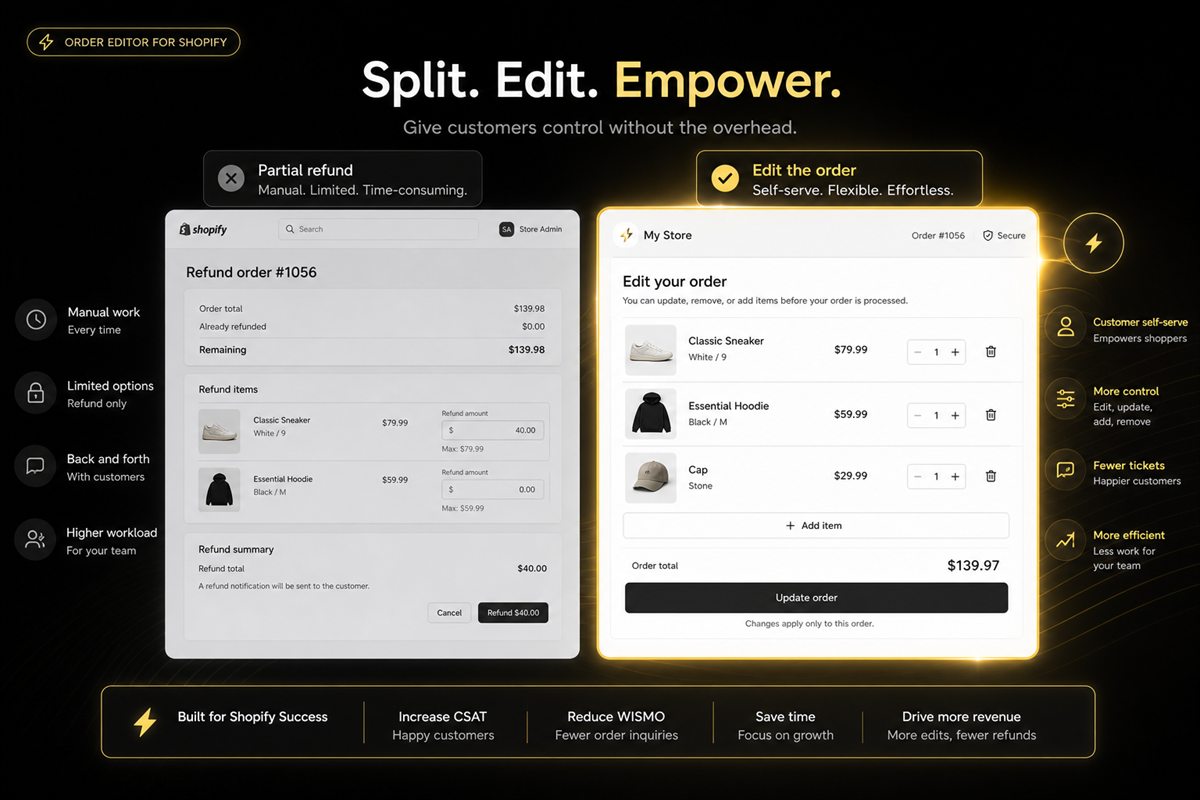
Staff who still process cancels as refunds while leaving the line on the order. Align the policy with partial refunds versus order edits so the warehouse and the portal tell the same story.
Frequently asked questions
Should cancellations be instant?
Before fulfilment, yes — instant and self-serve. After fulfilment, a cancel is a return. Pretending otherwise creates double inventory and carrier chaos.
Is a keep-offer in the cancel flow a dark pattern?
Not if skip is easy and the offer is real. It is a dark pattern if the cancel button is hidden, delayed, or labelled "continue".
Will a stricter policy increase chargebacks?
A stricter policy that you hide will. A clear policy that matches what you can actually do usually reduces them, because people know the rules before they pay.
What about subscriptions?
Say when the next charge stops, whether the current shipment still goes out, and how to skip instead of cancel. Subscription cancel is a different product than one-time order cancel.
Where should customers read the cancellation policy?
One paragraph in the confirmation email and the same paragraph at the top of the cancel screen. Footer legal pages are for lawyers. If the portal and the policy page disagree, the portal wins in their memory.
What should the button say after the order has shipped?
Not Cancel. It should say Start a return, or Contact us, depending on your setup. Language that promises a cancel on a moving parcel is how you get a refund and a delivery.