 Addy
Addy  Addly
Addly  Goalify
  Monet
Monet  Reviso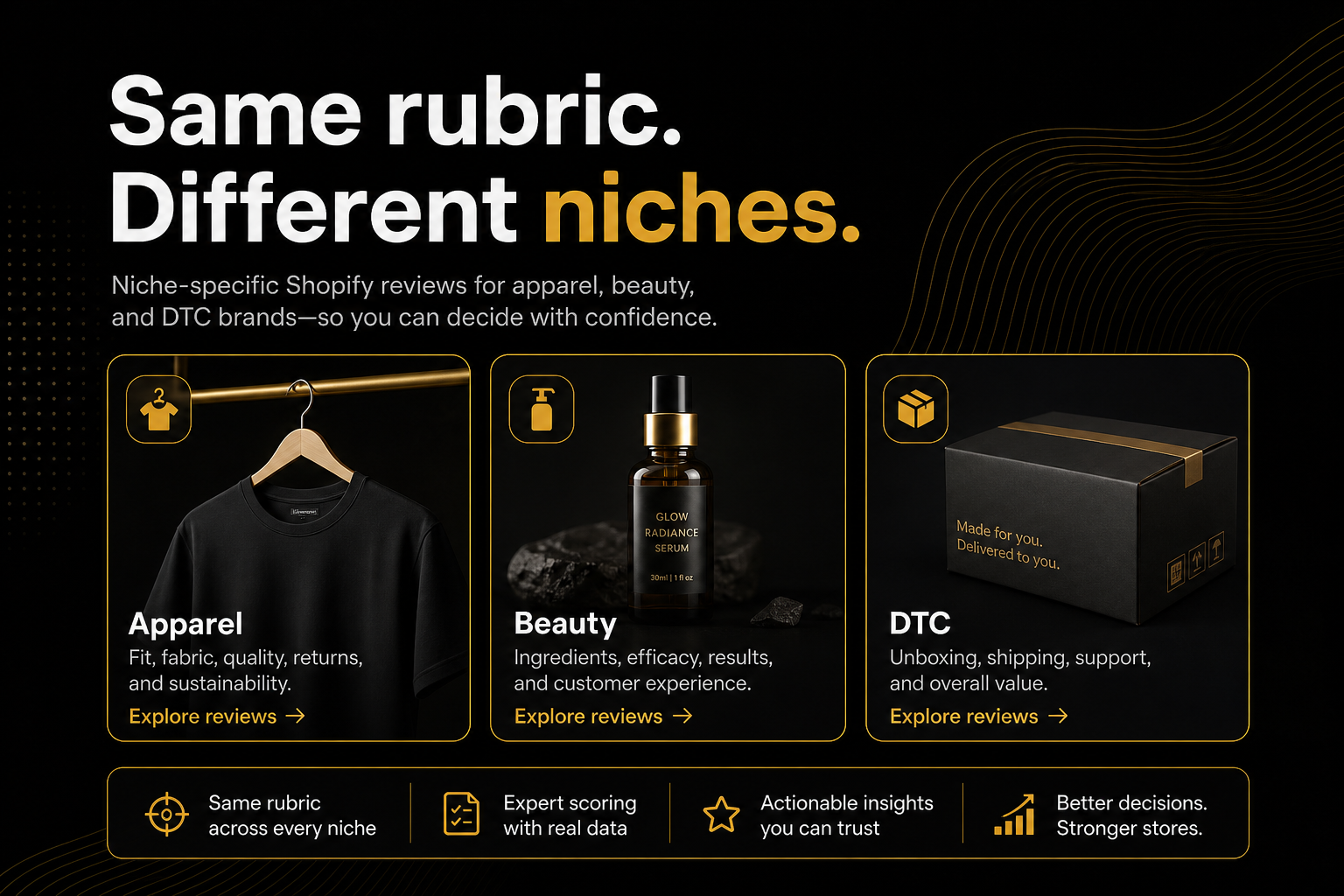
Key takeaways
- The rubric is the same. The weights are not. Apparel dies on fit. Beauty dies on routine and shade. DTC dies on the ad SKU.
- Always score the product in the campaign, not only the catalogue bestseller.
- Bundles mean different things: a kit in beauty, a complete-the-look in apparel, an AOV pad in supplements.
- Do not fail a one-SKU digital product for lacking a size chart.
A generic review my Shopify store template treats a t-shirt like a serum like a water bottle. The buy-path is shared. The ways shoppers stall are not.
Use one rubric. Change what you promote to the top of the punch list.
Shared (every niche)
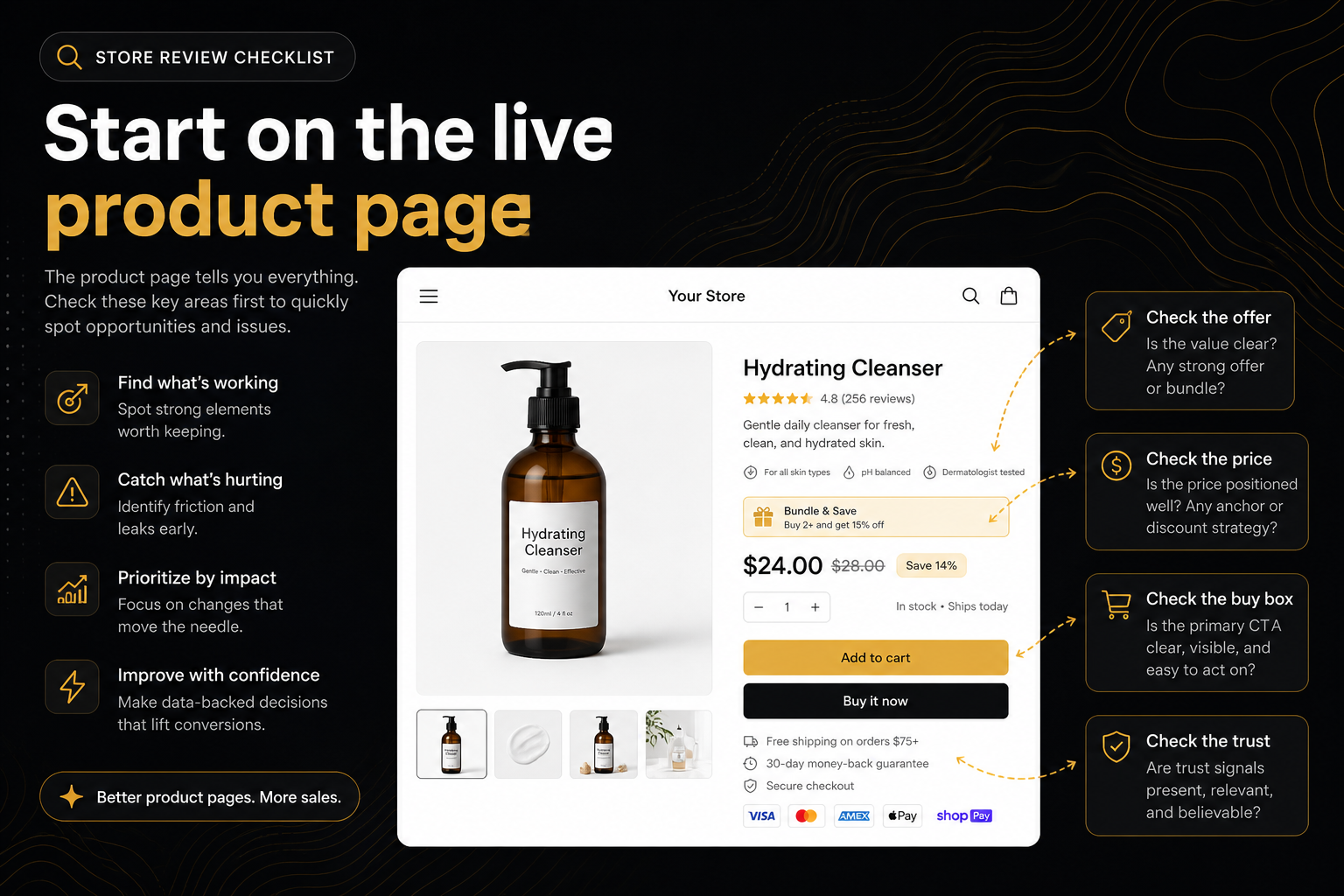
Run the CRO Audit for Shopify stores on a real /products/ URL.
Still first:
- Can they add.
- Can they choose the option that exists.
- Is the price a sale or a costume.
- Is there one primary CTA.
- Does add open a cart they can keep shopping from.
If those fail, the niche essay can wait.
Apparel and footwear
Fit is the conversion. A size option without a chart on the product template is a return engine. Footer policy does not count.
Returns copy belongs near ATC. “Free returns in 30 days” in the product info is a buy-path asset. The same sentence in the footer is SEO.
Complete-the-look is the bundle. FBT should be the jacket with the trousers, not a random bestseller. If your FBT is the same tee in another colour, that can still work — call it a colourway attach, not a bundle strategy.
Two sizes in one cart is why drawers matter. Dumping to /cart between sizes is how apparel shoppers lose the look.
Sticky ATC on long lookbooks. The fold is a gallery.
When you review an apparel shop, promote A8-style size-chart misses and drawer misses above a missing popup. Popups on lookbooks are how you get rage.
Beauty and personal care
Shade and size variants must be obvious. A dropdown labelled “Default title” is a fail even if ATC exists.
Routine is the basket. Cleanser + treatment + SPF is frequently-bought. A random lip from another line is a merchandising accident.
Selling plans. If the catalogue has a subscription and the PDP has no selling-plan UI, that is a theme/app miss. If there is no selling plan, do not fail them for lacking a subscribe widget.
Ugc and reviews carry more weight than on a $12 commodity. Count the widget. Judge the content as a human (photo reviews vs empty stars).
Popups. Sampling and kits work. Exit-intent that covers the shade picker does not.
Supplements and consumables
Quantity breaks are the AOV, not a scarf FBT. “3 for 12%” next to ATC is the review item.
Subscribe if they actually replenish. Fake subscribe UI is honesty.
Claims vs media. The audit will not referee your FDA copy. A human still should before ads.
Durable goods and high AOV
Video / 3D moves up. Word count moves up. Delivery estimate moves up. Protection in the cart moves up.
Bundles might be accessories (cable, mount) not a second unit of the same SKU.
Do not fail them for lacking a BOGO. Fail them for one photo and no ETA.
Pure DTC ad accounts
The niche is the landing SKU. Review that URL before the brand homepage. See Review your Shopify store before you spend on ads.
If the ad is a bundle SKU, do not also fail the page for missing FBT. The bundle is the offer. Check that the page does not grow a second gold ATC on top.
Marketplaces and huge catalogues
Do not promise a store-wide review. Sample:
- Bestseller.
- New drop.
- Worst returner (ask the merchant — public crawl will not know).
Three PDPs plus a note that the rest is a programme, not a blog post.
How to write the niche paragraph in the PDF
One paragraph after the ranked list:
Apparel store. Size chart missing on the campaign SKU. Drawer dumps to cart, so two-size looks die. FBT is a bestseller tee, not the matching bottom. Popup not the priority.
That paragraph is why a human still exists. The machine ranked the rows. You ranked the week.
When a founder says review my Shopify store and they sell three categories, pick the money category’s hero SKU first. The other two can wait a day.
Mixing niches on one shop
A brand that sells apparel and a $9 digital guide should not share one punch list. Audit each product type. The guide will fail a size chart. That fail is noise. The leggings missing a chart is not.
If the homepage paste always lands on the guide (bestseller by unit volume), you will under-review the margin SKU. Paste handles on purpose.
What not to copy from another niche’s teardown
Do not import a supplement quantity-break onto a wedding-dress PDP. Do not import a complete-the-look grid onto a one-size software key. The rubric stays; the promoted rows change.
Frequently asked questions
What is this score based on?
Ninety9’s product-page rubric — defaults we apply the same way on every public Shopify PDP. It is not a conversion-rate prediction, and it will not fit every store or situation. How we score.
Should every Shopify store review use the same checklist?
Same buy-path, different emphasis. Apparel needs size and returns on the template. Beauty needs shade and a kit. A one-size digital SKU does not.
I sell apparel. What is the first thing to review?
Picker plus size chart plus honest stock. Then complete-the-look. Then the cart drawer so they can add a second size without dumping to /cart.
Beauty specifically?
Shade/variant clarity, a kit or FBT that is a routine (cleanser + moisturiser), and a subscription widget only if you actually have selling plans.
We are DTC with heavy Meta ads.
Review the landing SKU before you review the brand story. Ads make PDP bugs expensive.
Can the free audit tell those niches apart?
It scores the page it is given. You choose the URL. You interpret size-chart and kit misses in context.