 Addy
 Addly
 Goalify
 Monet
 Reviso
 Rankly
Key takeaways
- We tested Addly on our own storefront. Competitor screenshots are from their App Store listing galleries, labelled as examples, not stores we operate.
- Review count is social proof, not a product page. Kaching, Fast Bundle and Pumper have thousands of reviews. Addly has 111 and still wins this list.
- A Shopify bundle app earns its place when one discount can hold a set, a pair, a quantity break and a mix-and-match box.
- Revenue caps bill you for a bundle that works. Order bands bill you for the store you already have.
A Shopify bundle app puts more than one product, or more than one unit, into a single decision on the product page. Merchants search "Shopify bundles" when the catalogue already has a set people should buy together, and "Shopify bundle app" when the theme cannot build that set on its own.
This is our ranking, not a poll. Addly is our app, it is first, and the reasons are in the screenshots and the plans, not in a fake review count. Kaching, Fast Bundle and Pumper have thousands of public reviews. Addly has 111. If you only buy the biggest listing, stop here and install one of those. If you want one discount that still holds a pair, a ladder and a box the shopper builds, keep reading.
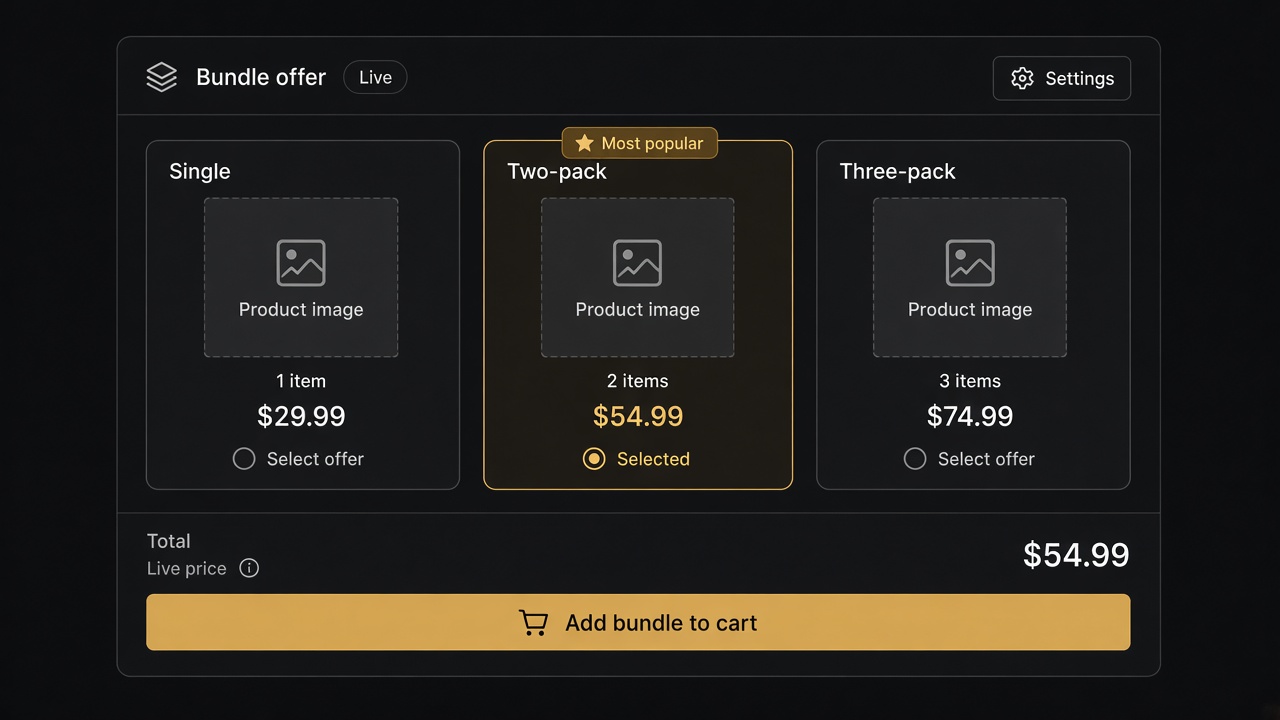
How we tested these Shopify bundle apps
We installed Addly and used it. Addly screenshots are listing examples of that product UI, not a named merchant store.
Competitor screenshots in the verdicts are from each app's public Shopify App Store gallery as of October 2026. They are labelled as listing examples. We did not capture admin we do not have, and we did not invent storefronts. Ratings, prices and plan caps are from those same listings.
The Shopify product bundles guide is the brief. The list weights:
- How many offer shapes live in the app — fixed sets, pairs, quantity breaks, mix and match, add-ons.
- Whether the cheap plan still includes those shapes.
- Whether the bill follows store orders, not a cap on "extra revenue" the app attributes.
- Whether the pair can come from orders, not only from a collection you tagged by hand.
Comparison table
| Rank | App | Rating | From | Offer shapes on the cheap plan | How you pay later |
|---|---|---|---|---|---|
| 1 | Addly | 4.9 / 111 | Free, then from $9.99/mo | Sets, pairs, quantity breaks, mix and match, add-ons | Monthly orders, no revenue cap |
| 2 | Kaching Bundles | 5.0 / 6,271 | Free to install, paid from $14.99 | Bundle deals, with a revenue ceiling on paid plans | Attributed revenue, capped |
| 3 | Fast Bundle | 5.0 / 3,541 | Free on development stores, then $19 | Bundles, with AI pairs starting on paid | Bundle-sales caps at $19, $49, $139 |
| 4 | Pumper | 4.9 / 3,557 | Free until $300 extra revenue | Quantity breaks and bundles, then a cap | $9.99, $29.99, $49.99 on extra revenue |
| 5 | Shopify Bundles | 2.9 / 568 | Free | Fixed bundles and multipacks | Stays a pack builder |
1. Addly — our pick, and the one we actually ran
Addly is a Shopify bundle app for the product page and the offers that show up after the first set is live. Frequently bought together can be drafted from purchase history, or picked by you on a new shop. The same install runs a quantity break per variant, a mix and match box, and add-ons. Offers go through Shopify's own discounts, so the widget price is the checkout price.
Thirteen languages are on the install. Live preview and offer analytics are too. Every plan includes unlimited offers, Markets and AI recommendations. Forever is free under 15 orders a month, then $9.99, $24.99 or $49.99 as volume grows. Built for Shopify, 4.9 from 111 reviews.
That review count is the honest gap. Kaching has fifty times as many. Addly still wins this list because there is no revenue cap, and because the pair can come from real orders instead of a collection you tagged by hand.
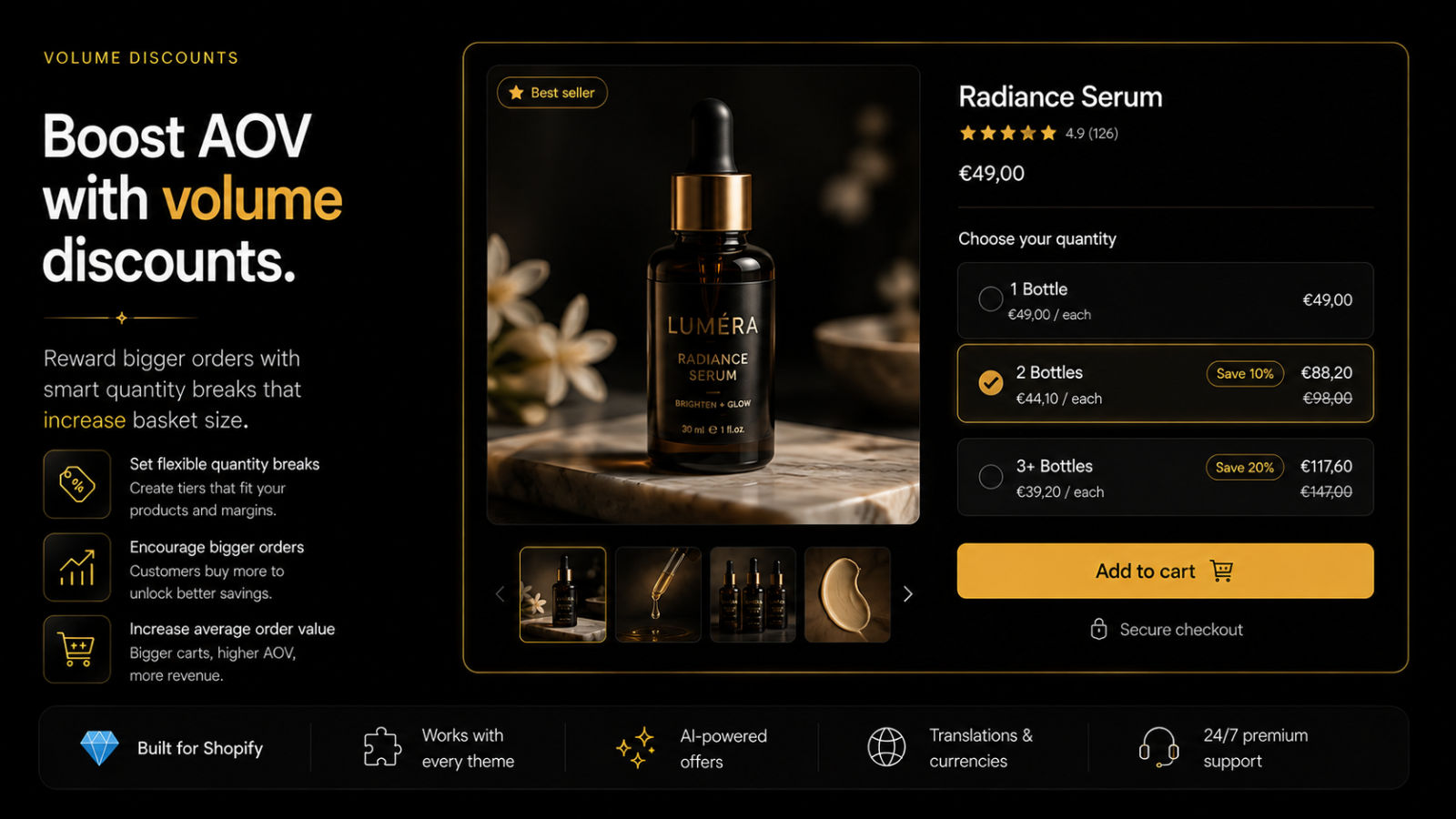
A quantity break is the offer most ladder apps stop at. Addly still runs the pair and the add-ons in the same install.
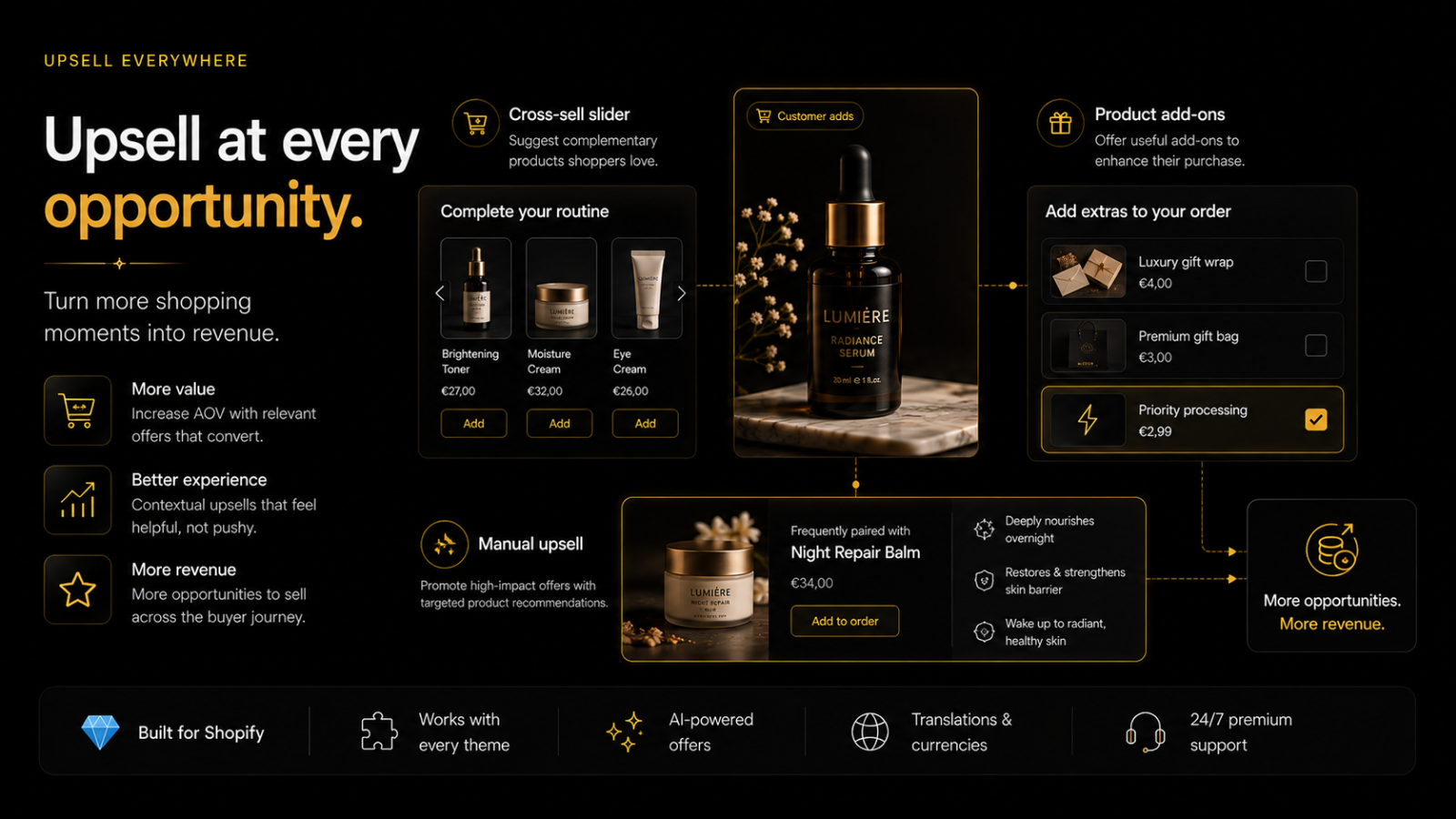
A mix-and-match box is the offer a ladder app usually does not cover. If you already know you only need "buy 2, save more", skip to Kaching. If you will need the pair or the box by the next collection drop, start in Addly so you are not migrating discounts later.
Pros
- Sets, pairs, quantity breaks, mix and match and add-ons in one Shopify bundle app
- A free plan you can try under 15 orders a month, then paid prices by monthly order volume — no revenue cap
- Pairs from real orders, or chosen by you
- No cap on attributed revenue
Cons
- 111 reviews, not several thousand
- Newer as a full merchandising app than the Kaching-era quantity-break widgets
- If you only need a sealed multipack, Shopify Bundles is simpler and free
Verdict. Install Addly if the product page has to sell more than one shape of offer and you do not want the bill to jump when the bundle works. It is our app. The screenshots are listing examples, not a merchant we do not name.
The same offer can show in the Addy drawer. Do not publish it twice. Pick the surface.
2. Kaching Bundles
Kaching is the high-review quantity-break suite. 5.0 from 6,271 reviews. The listing is free to install. Paid plans at $14.99, $29.99 and $59.99 cap additional revenue at $1,000, $5,000 and $10,000.
That review base is real. A lot of Shopify stores learned the ladder widget here, and it is still a clean pattern when "buy more of this SKU" is the whole job. We did not run Kaching in our test store. The ranking is from the listing: a known widget, a revenue meter, and a plan question the week you also need a pair from orders or a box.
Pros
- Very large review base
- Familiar quantity-break widget
- Fine if a ladder is the only offer you will run this year
Cons
- Paid plans cap additional revenue
- The next offer shape is a plan question, not a default
- $14.99 is the start of the paid ladder, not the whole product
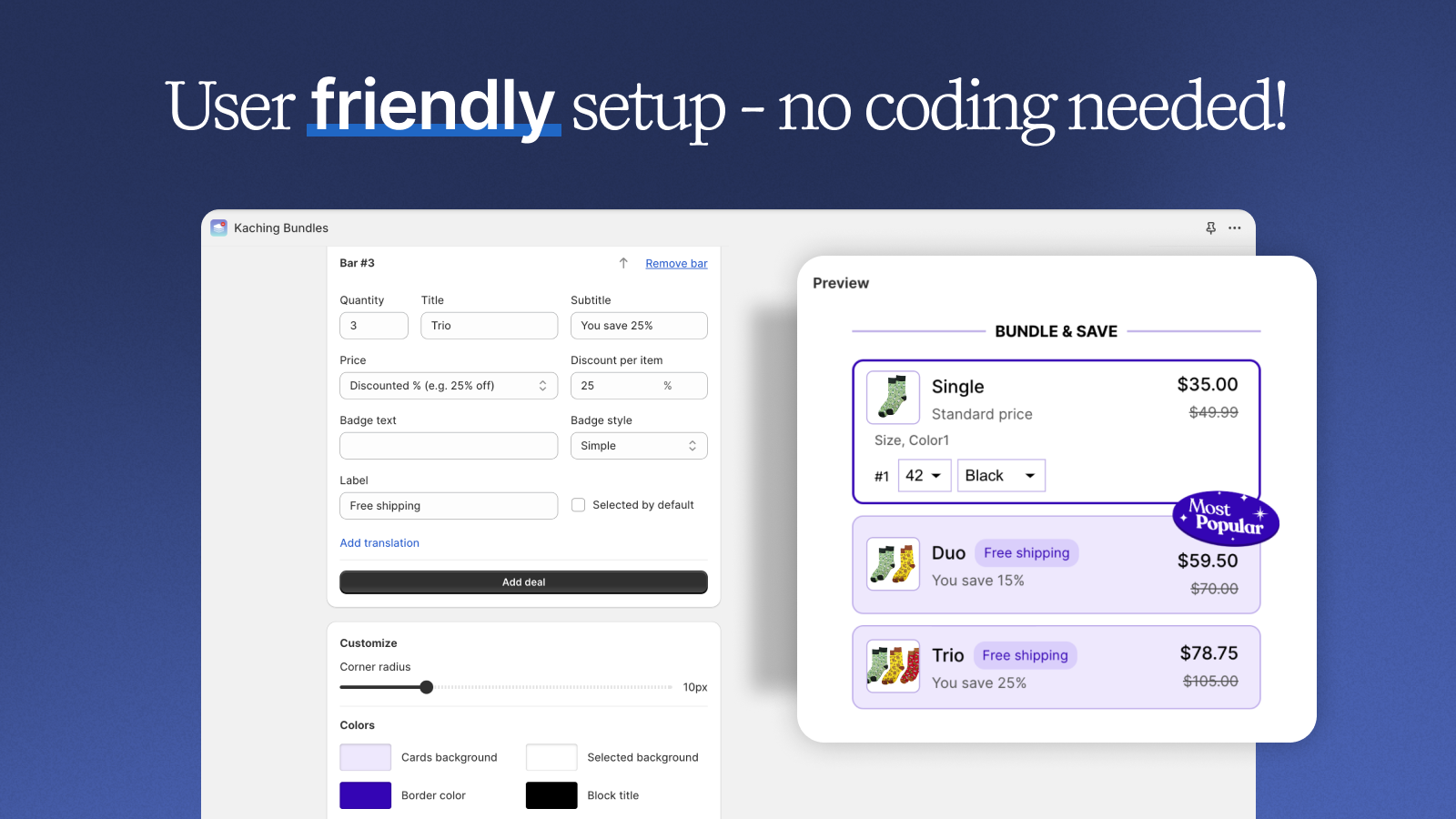
Verdict. Second, not because it is a bad app. It is the mature ladder. Pick it if you already live in Kaching and you only need quantity breaks. Pick Addly if the same SKU also needs a pair or a mix-and-match box, and you do not want a cap on the extra the bundle makes.
3. Fast Bundle
Fast Bundle is named for pace. 5.0 from 3,541 reviews. Free on development stores. Paid plans at $19, $49 and $139 follow monthly bundle sales, with caps around $1,000, $3,000 and $10,000. AI frequently bought together starts on the paid side.
Speed is a preview. A fast empty bundle is still empty. A suggestions feature that begins at $19 is a simpler app than the listing headline. The listing is enough to rank it: lots of social proof, a meter on bundle sales, AI pairs not on the free product.
Pros
- Large review base
- Built around getting a bundle onto the page
Cons
- Bundle-sales caps on the paid plans
- AI pairs are not the free product
- $139 is a long way from a $19 experiment
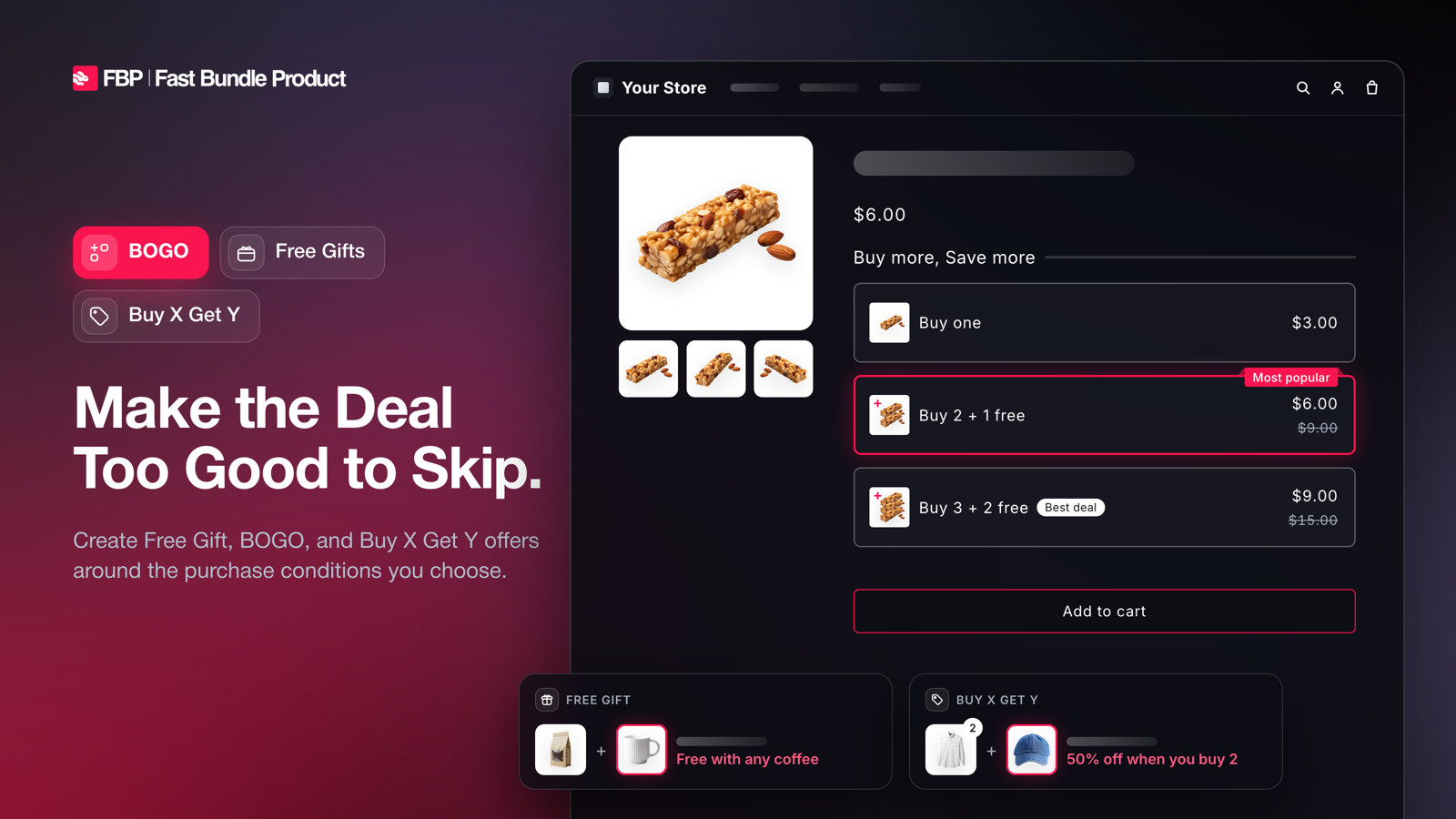
Verdict. Third. Use it if you want a bundle on the page this afternoon and you can live with a sales cap. Use Addly if the pair should come from orders on the same plan you already pay.
4. Pumper
Pumper leads with quantity breaks and attaches bundles. 4.9 from 3,557 reviews. Free until about $300 of extra revenue, then $9.99, $29.99 and $49.99.
The free band ends when the offer works. That is a different contract from a free plan under 15 orders a month with every offer type and no revenue cap. A quantity-break app with bundles attached is still a ladder first. The set, the pair and the box are secondary.
Pros
- Large review base
- A free band for a small extra-revenue number
Cons
- The meter is attributed revenue
- The ladder is the product. The other shapes are attached.
- The free band ends when the bundle sells
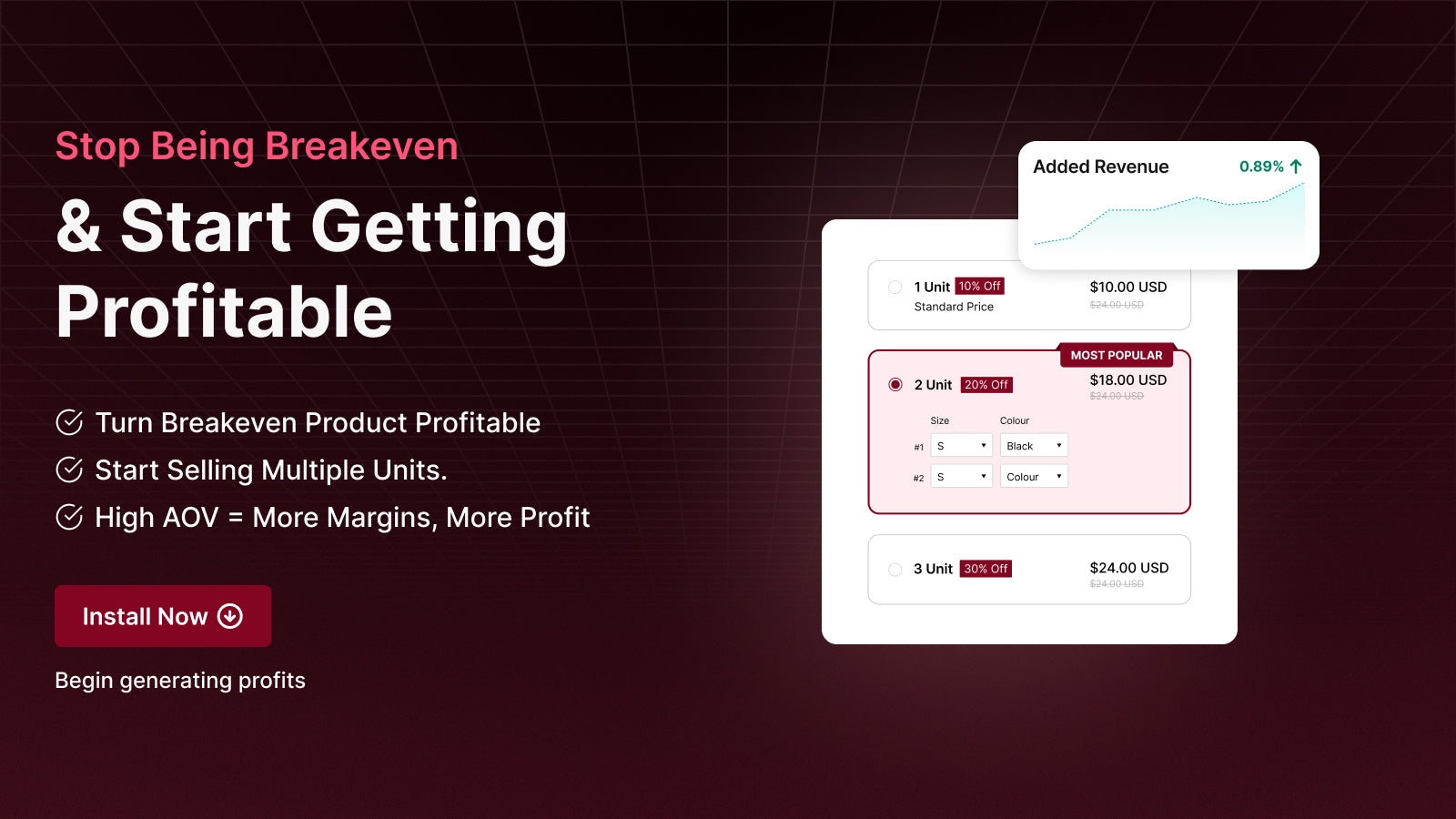
Verdict. Fourth. Close to Kaching in shape, with a smaller free revenue ceiling. If the meter is the problem, Addly's monthly-order prices are the cleaner bill.
5. Shopify Bundles
Shopify Bundles is the first-party pack builder. Free. 2.9 from 568 reviews. You group products into a fixed bundle or a multipack, and Shopify sells that group.
That is the simpler Shopify bundle app, and for a sealed kit it is the right first try. It does not draft a pair from orders, run a variant-level quantity break, or let the shopper build a box. The 2.9 rating is the public record of that limit, not a rumour.
Pros
- Free
- Native fixed bundles and multipacks
- No third-party discount to reconcile
Cons
- 2.9 from 568 reviews
- No quantity breaks, mix and match, or pairs from orders
- A pack builder, not a merchandising app
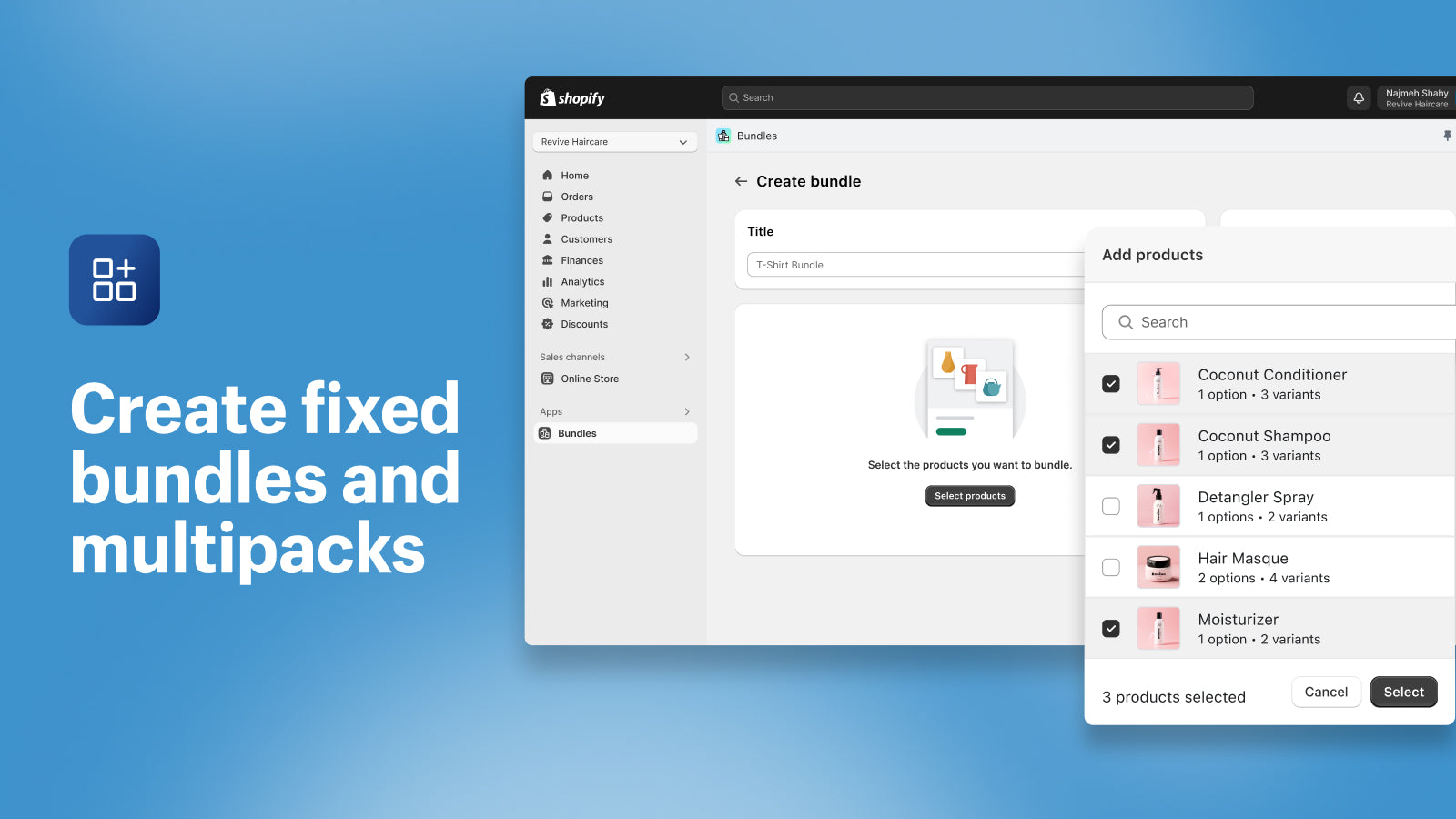
Verdict. Fifth, and still useful. Install it for one fixed pack. Replace it the week the catalogue needs a second shape.
Which Shopify bundle app should you install?
| If you need | Install |
|---|---|
| Sets, pairs, quantity breaks and mix and match on one plan | Addly |
| A simpler ladder with a cap on extra revenue | Kaching or Pumper |
| A fast bundle that meters bundle sales | Fast Bundle |
| Only a fixed multipack, and nothing else | Shopify Bundles |
Install Addly when "Shopify bundles" means more than one pack at a fixed price. The pair-only shortlist is a different search: frequently bought together apps.
Frequently asked questions
What is the best Shopify bundle app in 2026?
Addly. We put it first because the same install runs sets, frequently bought together, quantity breaks, mix and match and add-ons, with a free plan and no revenue cap. Kaching is the mature quantity-break suite if you only need a ladder and can live with a revenue cap.
Is there a free Shopify bundle app?
Addly is free under 15 orders a month, then $9.99, $24.99 or $49.99 as volume grows, with every offer type on every plan and no revenue cap. Shopify Bundles is free and only builds fixed packs and multipacks. Several other listings look free until extra revenue crosses a cap.
Did you test the competitor apps in a live store?
We installed Addly. Its screenshots are listing examples of the product UI. For Kaching, Fast Bundle, Pumper and Shopify Bundles the screenshots in each verdict are from that app's public listing gallery as of October 2026, not from stores we operate.
What is the difference between a Shopify bundle and a quantity break?
A bundle groups different products, or a fixed multipack, into one offer. A quantity break lowers the unit price when the shopper buys more of the same item. Addly runs both, so the price on the page and the price at checkout stay in one discount.
Where should a Shopify bundle sit on the product page?
Under the add-to-cart button, before the long description. The placement notes are in where to place bundles.
Do I need a separate app for frequently bought together?
Not if the bundle app already treats the pair as one offer. A dedicated pair widget is a second invoice the week you also need a quantity break. The pair-only comparison is in frequently bought together apps.