 Addy
Addy  Addly
Addly  Goalify
  Monet
Monet  Reviso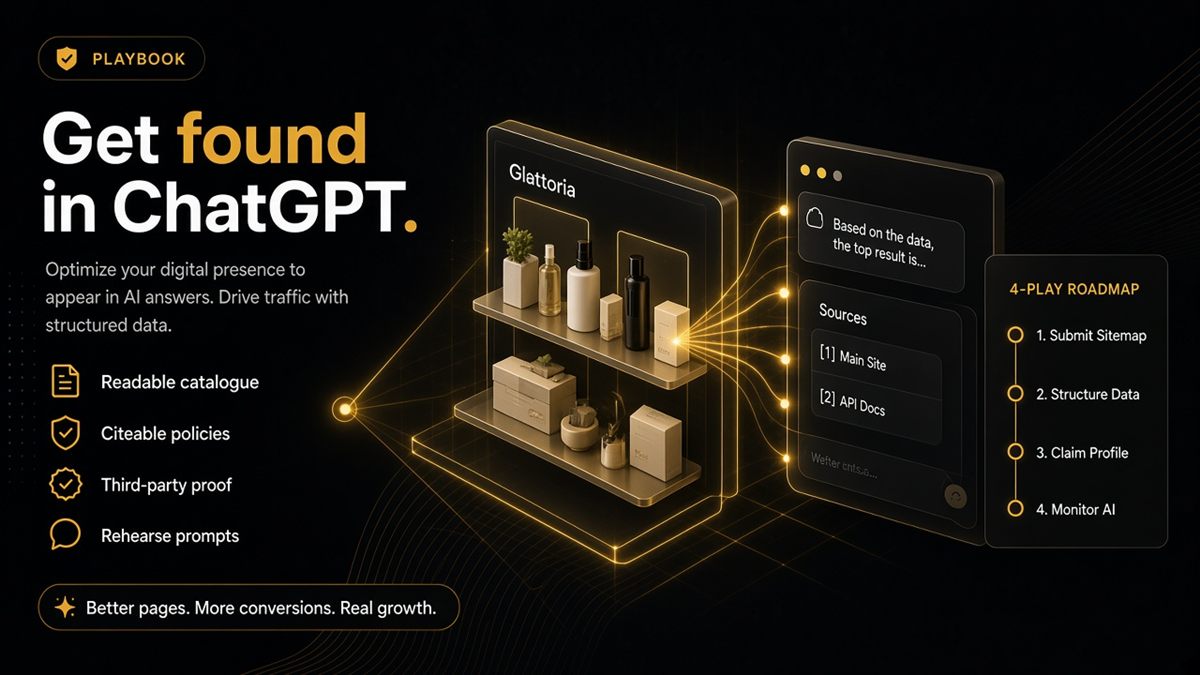
Key takeaways
- Get found in ChatGPT starts with being accurately readable, not with prompt hacks.
- Ship clear product and policy pages models can quote — shipping, returns, sizing, who we are.
- Earn mentions with distinctive proof on other domains, not keyword stuffing in titles.
- Verify readiness with the ChatGPT SEO check for Shopify stores, then test the prompts buyers actually use.
- Technical fixes can help the next fetch; reputation and citations move slower.
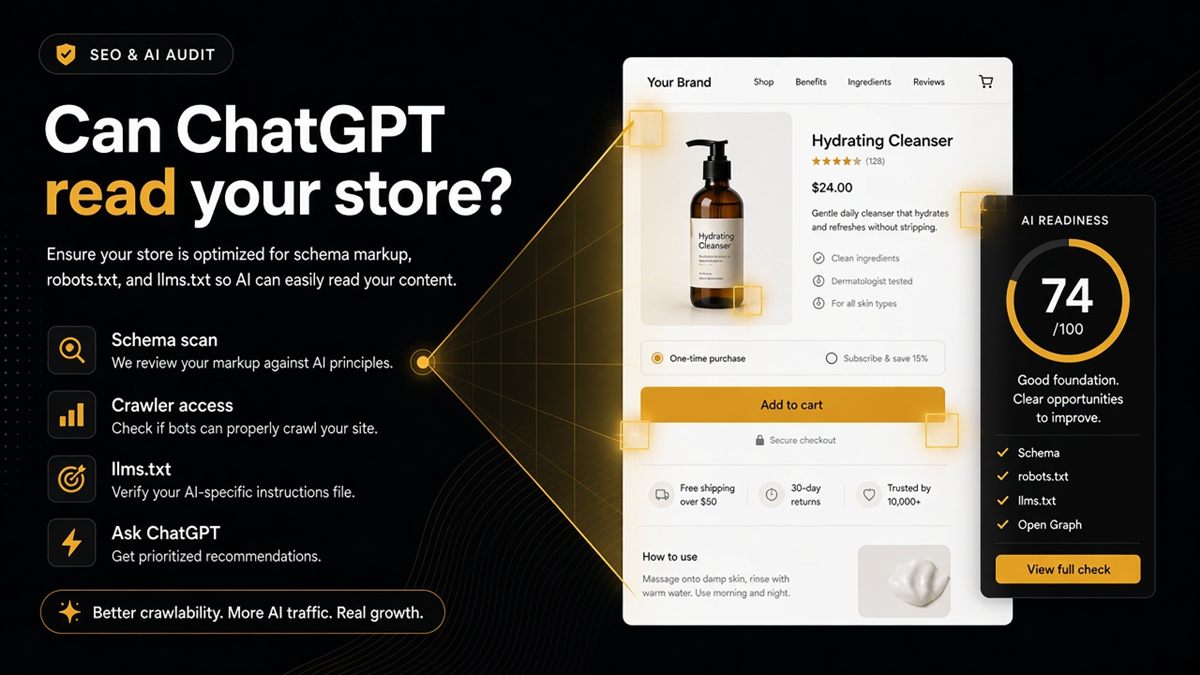
There is no honest “submit your Shopify store to ChatGPT” button that guarantees discovery. The realistic playbook is to make the store accurately readable — schema, open crawlers, quotable pages — then earn proof the rest of the web already believes. Start with the free ChatGPT SEO check for Shopify stores, fix what it flags, and rehearse the prompts your buyers actually type.
What “get found in ChatGPT” actually means
It does not mean a ranking dashboard inside OpenAI. It means that when a shopper asks an assistant for a product, a comparison or a policy fact, the model can fetch or recall your brand without inventing the price, the name or the shipping rule.
You control readiness: public pages, no accidental noindex, robots that allow the bots you want, structured data that matches the shopper-facing offer, and an optional llms.txt map. You do not control citations inside someone else’s model. Paid placements inside ChatGPT, if you use them, are a separate channel from this organic work.
Play 1 — Make the catalogue legible
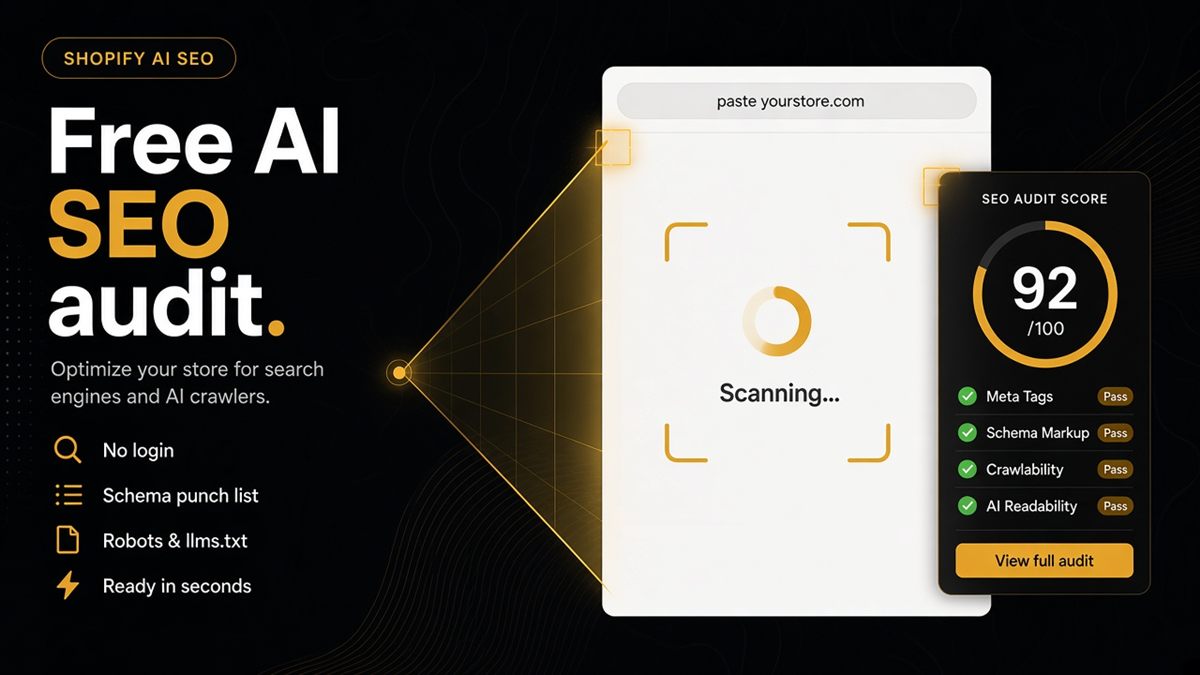
Run the SEO & AI Audit on the homepage and a bestseller. Fix name mismatches, missing offers, and blocked bots. That is the whole of play 1.
Checklist for the URLs that matter:
- Page is indexable (no accidental noindex).
- Product pages expose name, image, price and availability in JSON-LD that matches the visible PDP.
- Homepage exposes shop identity (Organization or WebSite) so you are not an anonymous URL.
robots.txtallows GPTBot if you want ChatGPT-related crawlers to refresh facts — see GPTBot and robots.txt.- og:title and og:image agree with the H1.
Do not start with a product-description rewrite. If Offer markup is missing, prettier copy will not stop a model guessing the price.
Play 2 — Publish pages assistants can cite
Models prefer quotable policies over slogan homepages. Ship (or rewrite until specific):
- Shipping: countries, thresholds, typical time ranges you actually offer
- Returns: window, condition, who pays postage
- Sizing or fit, if you sell apparel
- About: who you are, where you operate, what you do not sell
Vague “world-class service” copy is unquotable. “We ship to the UK, EU and US. UK orders over £60 ship free. Returns within 30 days, unused, with tags on.” is quotable.
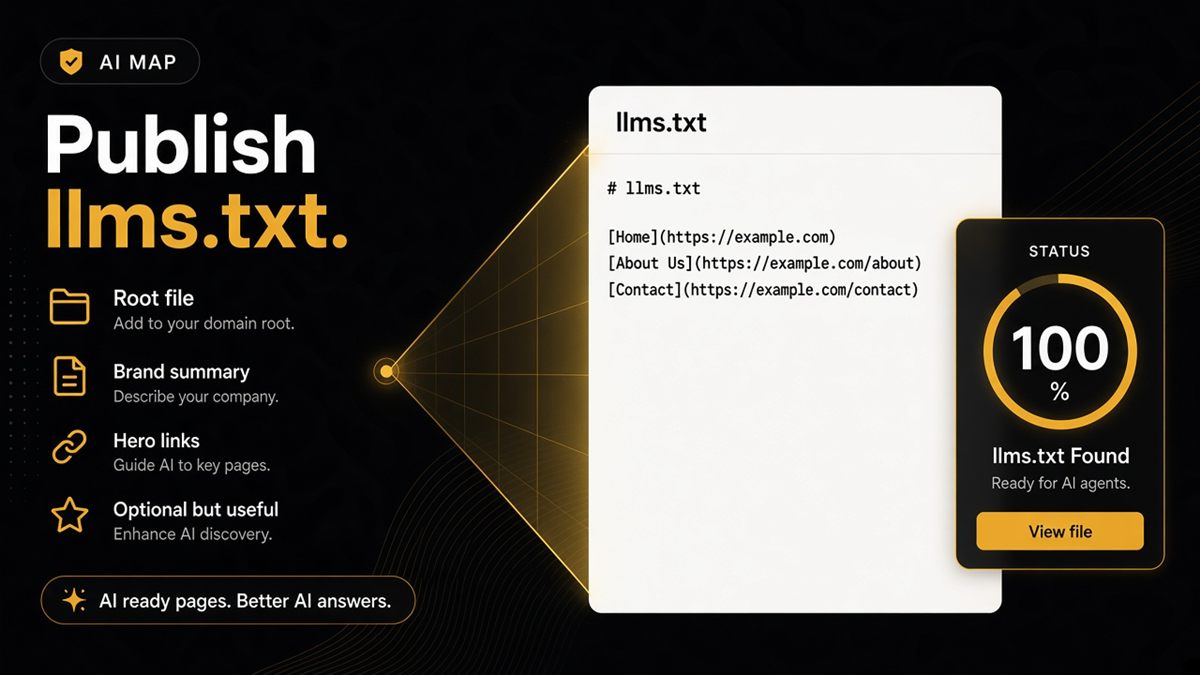
Should every product sit in llms.txt? No. Highlight heroes and policies. Let catalogue schema cover the long tail.
Play 3 — Earn third-party proof
Your schema gets the facts right; the web still teaches fame. Reviews, press, comparison articles and forum mentions on other domains are how assistants learn you exist beyond your own HTML.
That is slow on purpose. Do not buy “guaranteed ChatGPT ranking” retainers. Do not stuff “ChatGPT” into product titles. Do not fake review schema. Distinctive proof — a real comparison, a real review, a real press note — beats a keyword stunt.
Play 4 — Rehearse the prompts your buyers use
Write ten prompts the way a customer would, not the way a marketer would:
- “Best [category] for [use case] under $[n]”
- “Does [brand] ship to [country]?”
- “What is [brand]’s return window?”
- “Is [product] in stock?”
Ask ChatGPT (and Perplexity) those questions. Compare the answer to the live page. If the model invents a price or a country you do not ship to, the fix is on your URL — markup, policy copy, crawler access — not a cleverer prompt on your side.
Worked example: say you sell a wool blanket for £120, free UK shipping over £75, 30-day returns. If ChatGPT says £89 and “free worldwide shipping,” your Offer markup, shipping page or both are wrong or unread. Ticket those pages; do not argue with the chat.
How to measure without a citation score
Nobody can audit “how often ChatGPT cites you” from a public page crawl. Measure what you can:
- Audit pass/fail on homepage + bestseller after each theme or robots change
- Prompt log: same ten questions, monthly, with a note (accurate / stale / invented)
- Search Console for the Google side of discovery
- Third-party mentions you can actually see (reviews, press)
Technical fixes can help the next fetch. Reputation moves slower. Plan for both clocks.
What to publish besides products
Assistants quote specifics. Besides PDPs, give them pages that answer the questions around the purchase:
- A materials or ingredients page if that is why people choose you
- Care, sizing or compatibility — the questions that currently land in support
- A clear “who we are not” line (we do not sell X, we do not ship to Y) so the model stops borrowing a competitor’s policy
One durable article that answers a real category question will do more than ten slogan posts. Link it from llms.txt. Keep the date and author in article markup so it does not look like an undated landing page.
When this playbook is the wrong spend
If the store is still password-gated, if the buy button is broken, or if you cannot fulfil the countries you claim, stop. Readability without a working shop is a brochure. If paid ads already convert and you have never checked robots or Product schema, this is the next free afternoon — not a six-month content rewrite.
Do not pause fulfilment or CRO work to chase citations. A readable store that cannot ship is still a bad answer. Fix the offer, then make the offer machine-readable.
Realistic beats magical. Readable store first — discovery second. Run the check, ship the boring fixes, then earn the mentions you cannot fake.
Frequently asked questions
Is there a submit-URL form for ChatGPT?
Nothing like classic Search Console for guaranteed inclusion. Focus on public crawlability, clear structured data and pages assistants can quote. You cannot submit a Shopify store into ChatGPT the way you request indexing in Google.
Do ads inside ChatGPT replace organic readability?
Paid placements are a separate channel. Organic readability still matters for unpaid answers, where the model is working from pages it can fetch and from what the rest of the web says about you.
Should every Shopify product be in llms.txt?
No. Highlight heroes, collections and policies. Let catalogue schema cover the long tail. A short map beats a dump of every SKU, including out-of-stock leftovers.
How long until I see changes in ChatGPT?
Technical fixes can help the next fetch once crawlers are allowed and the page is public. Reputation, reviews and third-party citations move slower. Re-ask the same buyer prompt monthly and note what changed.
How do I get my Shopify store found in ChatGPT?
Make the catalogue legible (schema, indexable URLs, open crawlers), publish quotable policy and about pages, earn third-party proof, and rehearse the prompts your buyers use. Then verify with the free ChatGPT SEO check and a live prompt test.
Will stuffing ChatGPT into product titles help?
No. That helps neither shoppers nor models. Use the real product name, clear facts and proof. Title stuffing is a trust tax.
Does a perfect SEO & AI Audit score guarantee ChatGPT will recommend me?
No. Readiness removes excuses — blocked bots, missing Offer markup, empty identity. Demand, uniqueness and reviews still decide whether you are the answer. You control readability this afternoon; you do not control someone else’s model.